Amphibia in crisis
512 records. Red List version 2026-1
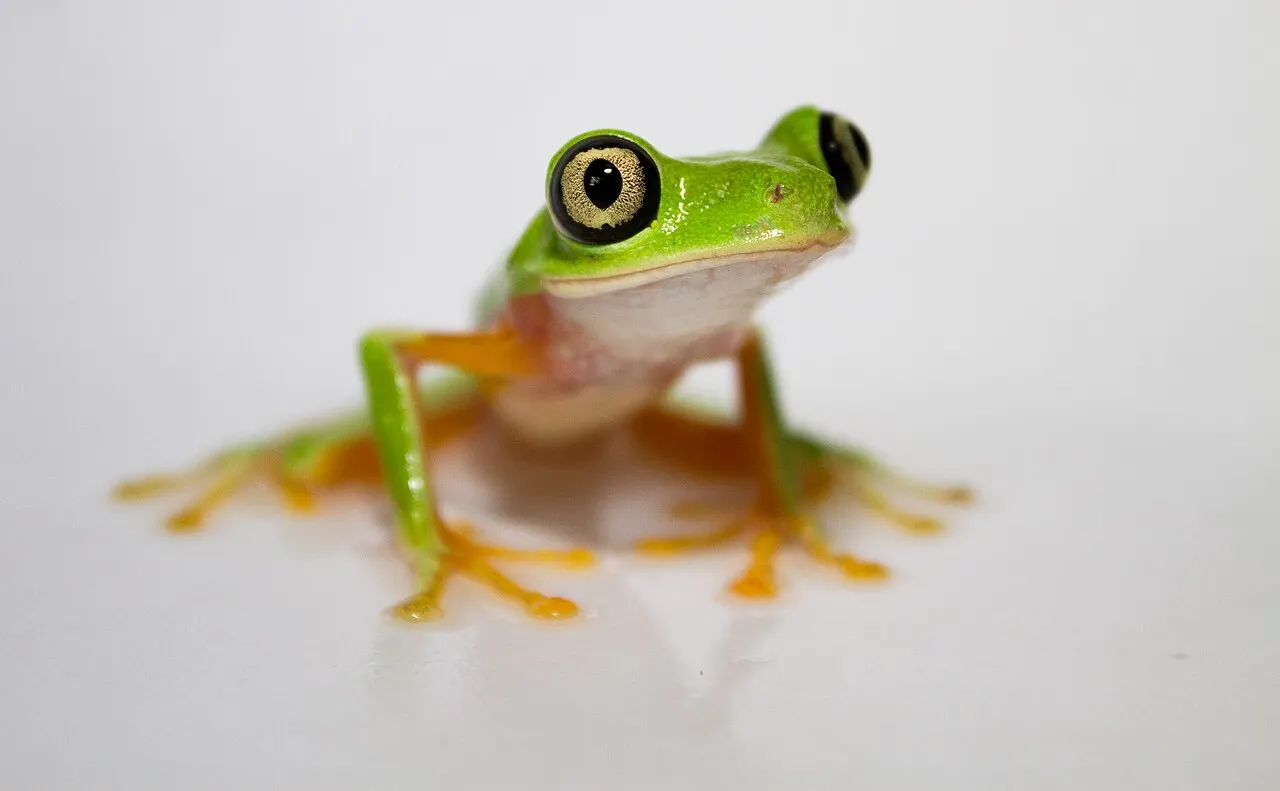
In this catalog, Amphibia stands for frogs, toads, salamanders and caecilians. We list 512 amphibians that the IUCN Red List records as threatened enough to be Critically Endangered, Endangered or Extinct in the Wild: 175 Critically Endangered, 335 Endangered and 2 Extinct in the Wild.
The biggest groups are the orders Anura (425), Caudata (84) and Gymnophiona (3), and the families with the most listed species are Bufonidae (62), Plethodontidae (54) and Rhacophoridae (48). The full list below is grouped by order.
A class is a filing shelf, not a measure of risk: it says nothing about how fast any one species is declining. Status and assessment years come from the IUCN Red List (version 2026-1); how to read an IUCN assessment explains what the categories and criteria mean, and each record links to its own assessment.
Some of these animals are also kept or traded as pets. For the legal side in each US state, see exotic pet laws by state.
Status breakdown
512 records: Critically Endangered 175; Endangered 335; Extinct in the Wild 2.
All species
Anura (425)
- Adenomus kandianus EN
- Afrixalus clarkei EN
- Agalychnis lemur CR
- Aglyptodactylus australis EN
- Alcalus mariae EN
- Allophryne relicta EN
- Alsodes barrioi EN
- Alsodes cantillanensis CR
- Alsodes pehuenche CR
- Alsodes valdiviensis EN
- Alsodes vanzolinii EN
- Alsodes verrucosus EN
- Altiphrynoides malcolmi EN
- Alytes maurus EN
- Amami tip-nosed frog Odorrana amamiensis EN
- Amargosa toad Anaxyrus nelsoni CR
- Ameerega boehmei EN
- Ameerega shihuemoy EN
- Andinobates geminisae CR
- Andinobates victimatus EN
- Anhydrophryne rattrayi EN
- Anodonthyla emilei EN
- Anodonthyla jeanbai EN
- Anodonthyla moramora EN
- Anodonthyla nigrigularis EN
- Anodonthyla pollicaris EN
- Anodonthyla rouxae EN
- Anodonthyla theoi CR
- Anodonthyla vallani CR
- Anomaloglossus beebei EN
- Anomaloglossus degranvillei CR
- Anomaloglossus kaiei EN
- Anomaloglossus praderioi EN
- Anomaloglossus roraima EN
- Ansonia latidisca EN
- Archey's frog Leiopelma archeyi CR
- Arroyo toad Anaxyrus californicus EN
- Arthroleptella subvoce CR
- Arthroleptides dutoiti CR
- Arthroleptis tanneri EN
- Astylosternus laurenti EN
- Astylosternus perreti EN
- Astylosternus ranoides EN
- Atelognathus patagonicus CR
- Atelopus arsyecue CR
- Atelopus arthuri CR
- Atelopus balios CR
- Atelopus certus CR
- Atelopus coynei CR
- Atelopus elegans EN
- Atelopus glyphus CR
- Atelopus ignescens CR
- Atelopus laetissimus EN
- Atelopus limosus CR
- Atelopus longirostris CR
- Atelopus mucubajiensis CR
- Atelopus nahumae EN
- Atelopus palmatus CR
- Atelopus patazensis CR
- Atelopus petersi CR
- Atelopus varius CR
- Baw Baw frog Philoria frosti CR
- Betic midwife toad Alytes dickhilleni EN
- Big-eyed Tree Frog Leptopelis vermiculatus EN
- Black-eared mantella Mantella milotympanum CR
- black-legged dart frog Phyllobates bicolor EN
- Bleeding toad Leptophryne cruentata CR
- Blomberg's toad Rhaebo blombergi CR
- Blue-legged mantella Mantella expectata EN
- Bokermannohyla izecksohni CR
- Bokermannohyla vulcaniae EN
- Boophis anjanaharibeensis EN
- Boophis ankarafensis CR
- Boophis boehmei EN
- Boophis boppa EN
- Boophis elenae EN
- Boophis jaegeri EN
- Boophis lilianae EN
- Boophis rhodoscelis EN
- Boophis sandrae EN
- Boophis williamsi CR
- Brachycephalus alipioi EN
- Callulina dawida CR
- Callulina meteora CR
- Cape clawed toad Xenopus gilli EN
- Capensibufo rosei CR
- Cardioglossa annulata EN
- Cardioglossa oreas EN
- Cardioglossa trifasciata CR
- Carrikeri harlequin frog Atelopus carrikeri EN
- Centrolene ballux EN
- Centrolene buckleyi CR
- Chaunus achalensis Rhinella achalensis EN
- Colostethus chalcopis Allobates chalcopis CR
- Colostethus imbricolus EN
- Cophyla berara EN
- Cophyla mavomavo EN
- Cophyla tetra EN
- Cophyla tsaratananaensis EN
- corroboree frog Pseudophryne corroboree CR
- Cowan's mantella Mantella cowanii EN
- Craugastor escoces CR
- Craugastor evanesco CR
- Craugastor inachus CR
- Craugastor pozo CR
- Craugastor punctariolus CR
- Craugastor sandersoni EN
- Craugastor taurus EN
- Cretan frog Pelophylax cretensis EN
- Crossodactylus dantei CR
- Cycloramphus brasiliensis EN
- Cycloramphus stejnegeri CR
- Darwin's frog Rhinoderma darwinii EN
- Dixie Valley toad Anaxyrus williamsi CR
- Dryophytes suweonensis EN
- Duellmanohyla chamulae EN
- Duellmanohyla soralia EN
- Duttaphrynus kotagamai EN
- Dwarf coqui Eleutherodactylus unicolor CR
- Ecnomiohyla rabborum CR
- Elachistocleis erythrogaster EN
- Eleutherodactylus albipes CR
- Eleutherodactylus cooki EN
- Eleutherodactylus cubanus EN
- Eleutherodactylus diplasius CR
- Eleutherodactylus grandis Eleutherodactylus grandis EN
- Eleutherodactylus intermedius EN
- Eleutherodactylus luteolus EN
- Eleutherodactylus minutus EN
- Eleutherodactylus orientalis CR
- Eleutherodactylus oxyrhyncus CR
- Eleutherodactylus pinchoni EN
- Eleutherodactylus ruizi Strabomantis ruizi EN
- Eleutherodactylus ruthae EN
- Eleutherodactylus semipalmatus CR
- Eleutherodactylus turquinensis CR
- Eleutherodactylus zeus EN
- Engystomops coloradorum EN
- Ericabatrachus baleensis CR
- Eungella torrent frog Taudactylus eungellensis EN
- Euparkerella robusta CR
- Eupsophus insularis CR
- Eupsophus migueli EN
- Fejervarya greenii EN
- Fleay's barred frog Mixophyes fleayi EN
- Frei Caneca Tree Frog Hypsiboas freicanecae EN
- Gastrotheca cuencana EN
- Gastrotheca litonedis CR
- Geobatrachus walkeri EN
- Gephyromantis atsingy EN
- Gephyromantis corvus EN
- Gephyromantis webbi EN
- Gephyromantis zavona EN
- Ghatixalus variabilis EN
- Glandirana susurra EN
- Golden coquí Eleutherodactylus jasperi CR
- golden mantella Mantella aurantiaca EN
- golden poison frog Phyllobates terribilis EN
- Goliath frog Conraua goliath EN
- Gracixalus lumarius EN
- Gracixalus nonggangensis EN
- Green eyed bushfrog Raorchestes chlorosomma EN
- Green mantella Mantella viridis EN
- Guibemantis punctatus CR
- Haraldmeier's mantella Mantella haraldmeieri EN
- Harlequin poison frog Oophaga histrionica CR
- Heleioporus australiacus EN
- Hemiphractus panamensis CR
- Hewitt's ghost frog Heleophryne hewitti EN
- Hong Kong Cascade Frog Amolops hongkongensis EN
- Horned marsupial frog Gastrotheca cornuta CR
- Hosmer's frog Cophixalus hosmeri EN
- Houston toad Anaxyrus houstonensis CR
- Hyalinobatrachium yaku EN
- Hyloscirtus colymba EN
- Hyloscirtus princecharlesi CR
- Hyloscirtus tapichalaca EN
- Hyloxalus anthracinus CR
- Hyperolius davenporti CR
- Hyperolius puncticulatus EN
- Hyperolius rubrovermiculatus EN
- Hyperolius tanneri CR
- Hyperolius thomensis EN
- Hyperolius ukwiva EN
- Hyperolius watsonae CR
- Hypsiboas buriti EN
- Hypsiboas ericae EN
- Incilius cavifrons EN
- Incilius cristatus EN
- Incilius spiculatus EN
- Indirana beddomii EN
- Indirana phrynoderma EN
- Insuetophrynus acarpicus EN
- Ischnocnema manezinho EN
- Ishikawa's frog Odorrana ishikawae EN
- Isthmohyla debilis CR
- Isthmohyla pictipes CR
- Isthmohyla rivularis EN
- Isthmohyla tica CR
- Kihansi Spray Toad Nectophrynoides asperginis EW
- Knysna banana frog Afrixalus knysnae EN
- La Selle red-legged frog Eleutherodactylus furcyensis CR
- Lake Oku clawed frog Xenopus longipes CR
- Lankanectes pera CR
- Las Gralarias glassfrog Nymphargus lasgralarias EN
- Latonia nigriventer CR
- Leptobrachium boringii EN
- Leptobrachium tenasserimense EN
- Leptodactylus fallax CR
- Leptopelis parkeri EN
- Limnonectes microtympanum EN
- Lithobates omiltemanus EN
- Lithobates tlaloci CR
- Litoria booroolongensis EN
- Litoria castanea CR
- Litoria myola CR
- Long-toed Tree Frog Leptopelis xenodactylus EN
- Magnificent brood frog Pseudophryne covacevichae EN
- Majorcan midwife toad Alytes muletensis EN
- Mantidactylus albofrenatus EN
- Mantidactylus bourgati EN
- Mantidactylus pauliani CR
- Marañón poison frog Excidobates mysteriosus EN
- Mazumbai warty frog Callulina kisiwamsitu EN
- Megophrys acuta CR
- Megophrys lini EN
- Melanophryniscus admirabilis CR
- Melanophryniscus cambaraensis CR
- Mertensophryne usambarae CR
- Micrixalus kottigeharensis CR
- Micrixalus silvaticus EN
- Micrixalus thampii EN
- Micro frog Microbatrachella capensis EN
- Microhyla beilunensis CR
- Microhyla karunaratnei EN
- Microhyla zeylanica EN
- Mindoro tree frog Philautus schmackeri EN
- Mississippi gopher frog Lithobates sevosus CR
- Mistbelt Moss Frog Anhydrophryne ngongoniensis EN
- Mountain yellow-legged frog Rana muscosa EN
- Myers' Surinam toad Pipa myersi EN
- Namiye's frog Limnonectes namiyei EN
- Nannophrys marmorata EN
- Nannophrys naeyakai EN
- Nectophrynoides laticeps CR
- Nectophrynoides paulae CR
- Niceforonia adenobrachia EN
- Nimbaphrynoides occidentalis CR
- Noblella coloma CR
- Noblella madreselva CR
- northern corroboree frog Pseudophryne pengilleyi CR
- Nothophryne broadleyi EN
- Nothophryne unilurio CR
- Nyctibatrachus beddomii EN
- Nyctibatrachus danieli EN
- Nyctibatrachus dattatreyaensis EN
- Nyctibatrachus karnatakaensis EN
- Nyctibatrachus major EN
- Nyctibatrachus minor EN
- Nymphargus anomalus EN
- Nymphargus laurae EN
- Odontobatrachus fouta EN
- Odorrana splendida EN
- Odorrana supranarina EN
- Odorrana utsunomiyaorum EN
- Oophaga lehmanni CR
- Oophaga vicentei EN
- Oreophryne cameroni EN
- Oreophryne monticola EN
- Oreophrynella quelchii EN
- Osornophryne angel EN
- Osornophryne antisana EN
- Osornophryne cofanorum CR
- Osornophryne occidentalis EN
- Osornophryne puruanta EN
- Osornophryne simpsoni EN
- Otton frog Babina subaspera EN
- Paedophryne kathismaphlox CR
- Panamanian golden frog Atelopus zeteki CR
- Paradoxophyla tiarano EN
- Pelophylax cerigensis EN
- Philautus everetti EN
- Philautus travancoricus Raorchestes travancoricus EN
- Phrynobatrachus jimzimkusi CR
- Phrynobatrachus ungujae EN
- Phrynopus cophites Bryophryne cophites EN
- Phrynopus inti EN
- Phrynopus juninensis CR
- Phrynopus kauneorum EN
- Phyllomedusa rustica CR
- Phytotriades auratus EN
- Pickersgill's Reed Frog Hyperolius pickersgilli EN
- Platymantis insulatus CR
- Plectrohyla acanthodes EN
- Plectrohyla dasypus CR
- Plectrohyla exquisita CR
- Plectrohyla hartwegi EN
- Plectrohyla quecchi EN
- Plectrohyla teuchestes CR
- Pristimantis acerus EN
- Pristimantis andinogigas CR
- Pristimantis bacchus EN
- Pristimantis bellae EN
- Pristimantis caprifer CR
- Pristimantis dorado EN
- Pristimantis ecuadorensis EN
- Pristimantis erythros CR
- Pristimantis imthurni CR
- Pristimantis inusitatus EN
- Pristimantis jamescameroni CR
- Pristimantis mallii CR
- Pristimantis mindo EN
- Pristimantis orestes EN
- Pristimantis ornatissimus EN
- Pristimantis parectatus EN
- Pristimantis phoxocephalus CR
- Pristimantis pycnodermis EN
- Pristimantis surdus EN
- Pristimantis teslai CR
- Pristimantis tiktik EN
- Probreviceps loveridgei EN
- Proceratophrys palustris CR
- Pseudophilautus alto EN
- Pseudophilautus asankai EN
- Pseudophilautus auratus EN
- Pseudophilautus caeruleus EN
- Pseudophilautus cuspis EN
- Pseudophilautus femoralis EN
- Pseudophilautus frankenbergi EN
- Pseudophilautus hypomelas EN
- Pseudophilautus lunatus CR
- Pseudophilautus macropus EN
- Pseudophilautus microtympanum EN
- Pseudophilautus mooreorum CR
- Pseudophilautus nemus EN
- Pseudophilautus poppiae CR
- Pseudophilautus puranappu EN
- Pseudophilautus sarasinorum EN
- Pseudophilautus schmarda EN
- Pseudophilautus semiruber EN
- Pseudophilautus silus EN
- Pseudophilautus stuarti CR
- Pseudophilautus tanu EN
- Ptychadena nana EN
- Ptychohyla spinipollex EN
- Puca Sapo Atelopus guanujo CR
- Puerto Rican crested toad Peltophryne lemur EN
- Puerto Rican wetland frog Eleutherodactylus juanariveroi CR
- Pyrenean Frog Rana pyrenaica EN
- Rana holtzi CR
- Rancho Grande Harlequin Frog Atelopus cruciger CR
- Ranitomeya claudiae Andinobates claudiae EN
- Ranitomeya summersi EN
- Raorchestes chotta EN
- Raorchestes coonoorensis EN
- Raorchestes flaviocularis EN
- Raorchestes jayarami EN
- Raorchestes johnceei EN
- Raorchestes kaikatti EN
- Raorchestes manohari EN
- Raorchestes marki CR
- Raorchestes munnarensis EN
- Raorchestes resplendens EN
- Raorchestes signatus EN
- Raorchestes sushili EN
- Raorchestes tinniens EN
- Relict leopard frog Lithobates onca EN
- Rhacophorus helenae EN
- Rhaebo caeruleostictus CR
- Rhombophryne botabota EN
- Rhombophryne longicrus EN
- Rhombophryne serratopalpebrosa EN
- Rhombophryne vaventy EN
- Romer's Tree Frog Liuixalus romeri EN
- Rose's ghost frog Heleophryne rosei EN
- Rough Moss Frog Arthroleptella rugosa CR
- Rusty robber frog Strabomantis bufoniformis EN
- Ryukyu Tip-nosed Frog Odorrana narina EN
- Sachatamia electrops EN
- Sarcohyla mykter Plectrohyla mykter EN
- Scaphiophryne gottlebei EN
- Scutiger spinosus CR
- Sechellophryne gardineri EN
- Seychelle Islands Tree Frog Tachycnemis seychellensis EN
- Seychelles frog Sooglossus sechellensis EN
- Short-legged horned toad Megophrys brachykolos EN
- Siamophryne troglodytes CR
- Southern pastel frog Eleutherodactylus leoncei EN
- Spencer's River Tree Frog Litoria spenceri CR
- Spinomantis brunae EN
- Spiny giant frog Eleutherodactylus nortoni CR
- Strabomantis anomalus CR
- Tamá harlequin frog Atelopus tamaense CR
- Taruga eques EN
- Taruga fastigo EN
- Telmatobius atacamensis EN
- Telmatobius brachydactylus EN
- Telmatobius chusmisensis EN
- Telmatobius culeus EN
- Telmatobius intermedius EN
- Telmatobius marmoratus EN
- Telmatobius simonsi CR
- Telmatobius ventriflavum CR
- Telmatobufo bullocki EN
- Telmatobufo venustus EN
- Thomasset's Seychelles Frog Sooglossus thomasseti CR
- Three-coloured harlequin toad Atelopus tricolor CR
- Uperoleia mahonyi EN
- Upland Coqui Eleutherodactylus portoricensis EN
- Varaldi's spadefoot toad Pelobates varaldii EN
- Venezuelan Yellow Frog Atelopus carbonerensis CR
- Werneria bambutensis CR
- Western leopard toad Sclerophrys pantherina EN
- Wolterstorffina parvipalmata CR
- Wyoming toad Anaxyrus baxteri EW
- Xanthophryne koynayensis EN
- Xanthophryne tigerina EN
- Yellow mottled coqui Eleutherodactylus lentus EN
- Yunganastes bisignatus EN
Caudata (84)
- Abe's Salamander Hynobius abei EN
- Ambrosi's Cave Salamander Speleomantes ambrosii CR
- Ambystoma andersoni CR
- Ambystoma dumerilii CR
- Ambystoma leorae CR
- Aneides iecanus EN
- Aneides niger EN
- axolotl Ambystoma mexicanum CR
- Baja Verepaz' salamander Cryptotriton veraepacis CR
- Barton Springs salamander Eurycea sosorum EN
- Batrachuperus yenyuanensis EN
- Berry Cave salamander Gyrinophilus gulolineatus EN
- Bigfoot splayfoot salamander Chiropterotriton magnipes EN
- Bolitoglossa cataguana CR
- Bolitoglossa centenorum CR
- Bolitoglossa leandrae CR
- Bolitoglossa pandi EN
- Camp Sasardi Salamander Bolitoglossa cuna EN
- Celaque climbing salamander Bolitoglossa celaque CR
- Central Asian salamander Ranodon sibiricus EN
- Cerro Pando salamander Bolitoglossa compacta EN
- Chinese giant salamander Andrias davidianus CR
- Cloud forest salamander Bolitoglossa carri CR
- Common Splayfoot Salamander Chiropterotriton chiropterus CR
- Dendrotriton rabbi CR
- El Cusuco salamander Bolitoglossa diaphora EN
- Eurycea nana CR
- Eurycea rathbuni CR
- Frosted flatwoods salamander Ambystoma cingulatum EN
- Georgetown salamander Eurycea naufragia CR
- Hickory Nut Gorge green salamander Aneides caryaensis CR
- Holy-mountain salamander Bolitoglossa heiroreias EN
- Hynobius abuensis EN
- Hynobius arisanensis EN
- Hynobius formosanus EN
- Hynobius iwami EN
- Hynobius sonani EN
- Italian Cave Salamander Speleomantes italicus EN
- Jollyville Plateau salamander Eurycea tonkawae EN
- Kori salamander Hynobius yangi EN
- Lake Lerma salamande Ambystoma lermaense EN
- Lanza's alpine salamander Salamandra lanzai CR
- Luschan's salamander Lyciasalamandra luschani EN
- Lyciasalamandra antalyana EN
- Monte Albo Cave Salamander Speleomantes flavus EN
- Montseny Brook Newt Calotriton arnoldi CR
- Mountain stream salamander Ambystoma altamirani EN
- Neurergus microspilotus CR
- Nototriton lignicola EN
- Oaxacan Climbing Salamander Bolitoglossa macrinii EN
- Odaigahara salamander Hynobius boulengeri EN
- Oedipina gephyra CR
- Oedipina kasios EN
- Oedipina taylori EN
- Oedipina tomasi CR
- Pacaya mushroomtongue salamander Bolitoglossa pacaya EN
- Paradactylodon gorganensis CR
- Plethodon asupak EN
- Pleurodeles poireti EN
- Pseudoeurycea juarezi EN
- Pseudoeurycea lynchi EN
- Pseudoeurycea mystax EN
- Pseudoeurycea robertsi CR
- Pseudoeurycea saltator CR
- Pseudoeurycea tlilicxitl EN
- Pseudoeurycea unguidentis CR
- Pseudoeurycea werleri EN
- Pygmy Splayfoot Salamander Chiropterotriton lavae CR
- Red Hills salamander Phaeognathus hubrichti EN
- Salado Springs Salamander Eurycea chisholmensis EN
- Salamandrina perspicillata EN
- Santa Barbara moss salamander Nototriton limnospectator EN
- Sardinian brook salamander Euproctus platycephalus EN
- Shenandoah Salamander Plethodon shenandoah CR
- Speleomantes sarrabusensis CR
- Speleomantes strinatii EN
- Supramonte Cave Salamander Speleomantes supramontis EN
- Taylor's salamander Ambystoma taylori CR
- Terrestrial Splayfoot Salamander Chiropterotriton terrestris CR
- Tylototriton yangi EN
- Yellow-legged mushroomtongue salamander Bolitoglossa flavimembris EN
- Yellow-peppered Salamander Ambystoma flavipiperatum EN
- Zapotec Salamander Bolitoglossa zapoteca EN
- Zarciadero web-footed salamander Bolitoglossa oresbia CR
Gymnophiona (3)
The A to Z index lists the species with a full account; the catalog search finds any record by name.
Quick answers
- How many amphibians are in this catalog?
- 512, listed by the IUCN Red List as 175 Critically Endangered, 335 Endangered, 2 Extinct in the Wild.
- What is Amphibia?
- Here, Amphibia means frogs, toads, salamanders and caecilians. It is a taxonomic class used to group the catalog.
- Where do the statuses come from?
- From the IUCN Red List (version 2026-1), with a link to each species' assessment on iucnredlist.org.