Endangered
Boophis sandrae
Boophis sandrae
Boophis sandrae is a slender green treefrog from the rainforests around Ranomafana in south-eastern Madagascar. It was described in 2010 and has no widely used common name. The IUCN Red List rated it Endangered in 2015, with a decreasing population, because it lives in a small area where forest is still being cleared.
How to recognise it
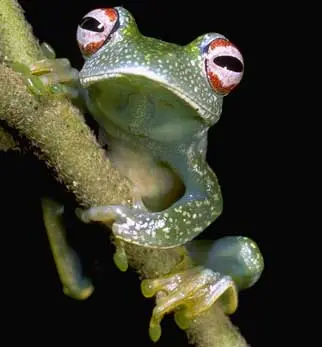
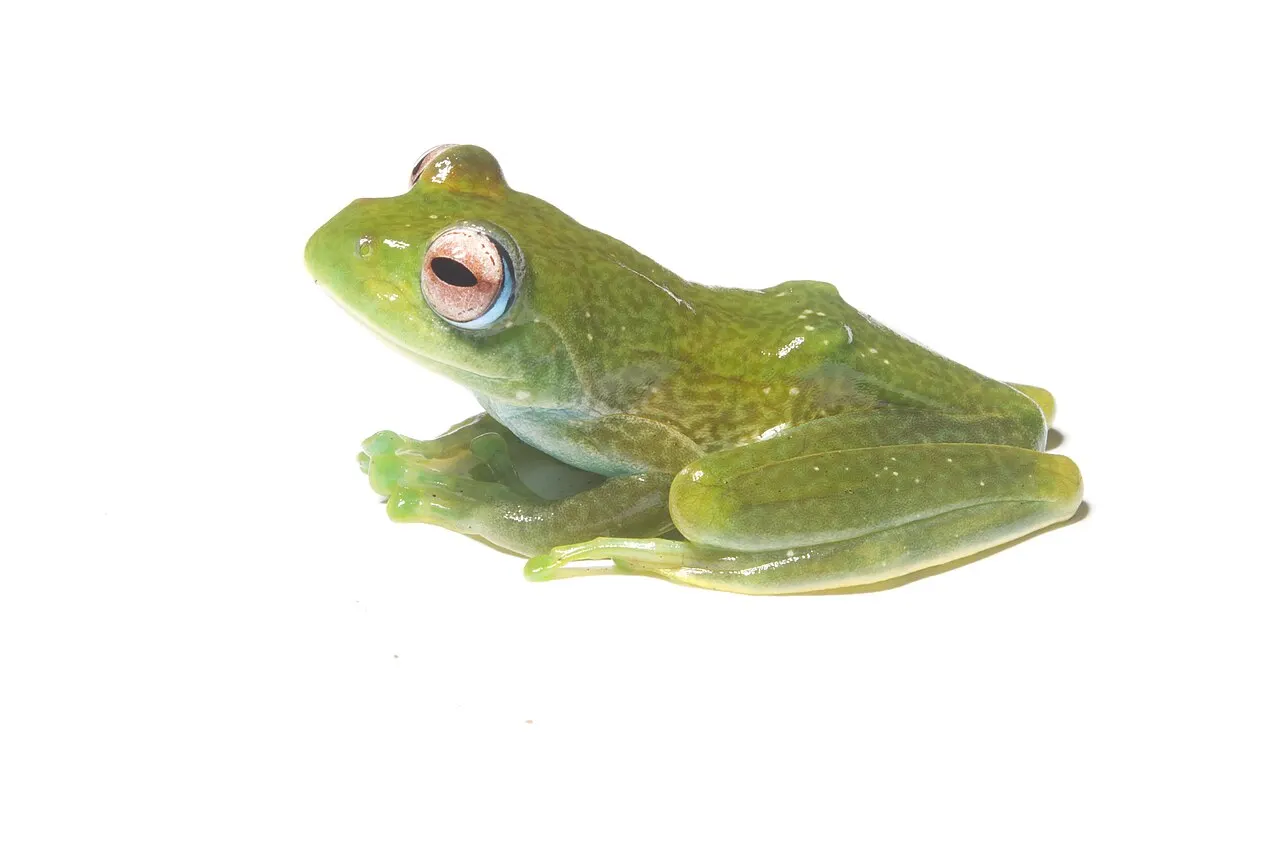
Males measure about 36 to 48 mm from snout to vent, and females are larger, averaging around 144 percent of male length. In life the back is translucent light green with darker green spotting, and small white spots can be scattered over the head, back and legs. The frog has white fringes along the forearm, ankle and heel, enlarged toe discs and webbed hands and feet.
The eyes are the best clue. The iris has no red in it, which separates the species from the lookalikes Boophis elenae and Boophis luteus. A calling male has a two-lobed vocal sac under the throat.
Where it lives
The species was described from the Ranomafana area, where the type specimens come from Ranomafana village, the Andranoroa river near Ranomafanakely, Ambatolahy forest and other sites. They were collected between roughly 619 and 1,152 metres above sea level. The IUCN estimates an extent of occurrence of 685 square kilometres, in 1 to 4 locations, and says it occurs in at least one protected area.
Frogs that look similar have been photographed and collected near Andasibe, but tadpole DNA from there differs clearly from the Ranomafana animals. Those populations may belong to another species, so they are not counted here.
Pins are Wikidata “endemic to” fields. Orange dots, when present, are GBIF occurrence tiles — survey bias included.
How it lives
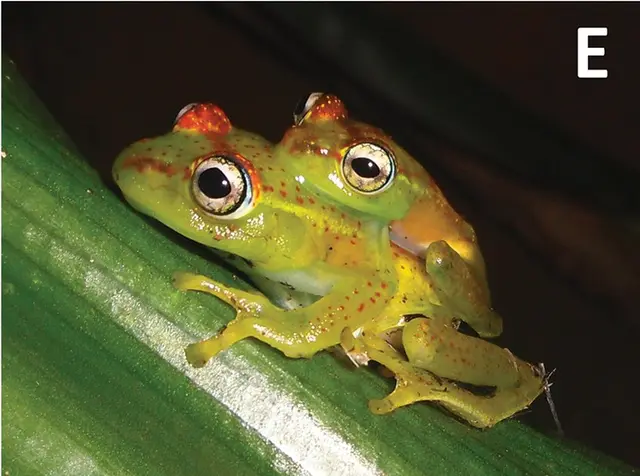
Around Ranomafana it is a common frog. It calls from dense rainforest, but just as often from degraded or secondary forest and, in cleared country, from large trees beside streams and rivers. Males usually sit 2 to 4 metres up on thin branches rather than leaves. Pairs can be seen mating in the evening, lower in the vegetation along streams, with the male gripping the female around the body behind the arms.
In the 2010 description, the call is a very long run of short, pulsed notes in rapid succession, about 22 notes per second. One recorded series lasted 33.6 seconds. The frog often shares stretches of stream with Boophis luteus but has not been found in the same stretch as B. elenae.
Why it is in trouble
The IUCN gives the population a decreasing trend and records a continuing loss of habitat. It lists small-holder farming, shifting agriculture, grazing, housing, mining and quarrying and unintentional harvest effects as ongoing threats.
The species can tolerate degraded forest, which helps, but its known range is small. That small range, together with the continuing habitat loss, is what puts it in the Endangered category.
What is being done
The IUCN lists protection of sites and of resources and habitat as the conservation actions needed. It records that the species occurs in at least one protected area, and the 2010 description reports a calling male near Vohiparara in Ranomafana National Park. The IUCN gives no specific recovery programme for this frog.
Sources
Written for this catalog in our own words from the sources below, checked against them on 12 November 2026. Population figures are estimates and carry the year they were made. Status and assessment year: IUCN. 2026. The IUCN Red List of Threatened Species. Version 2026-1. iucnredlist.org.