Endangered
Boophis anjanaharibeensis
Boophis anjanaharibeensis
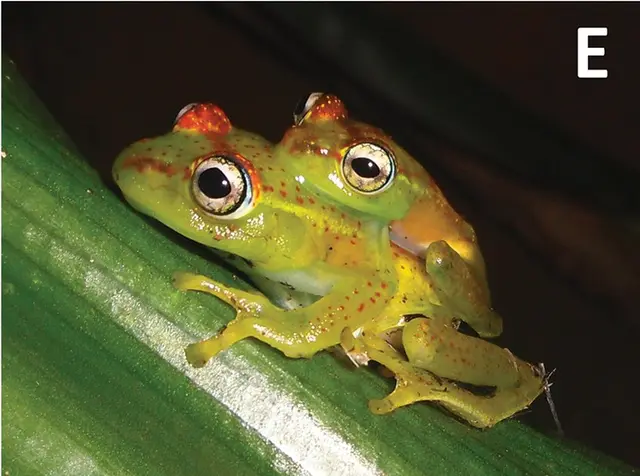
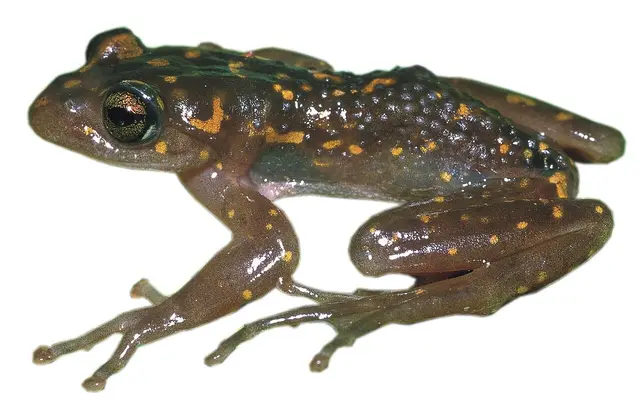
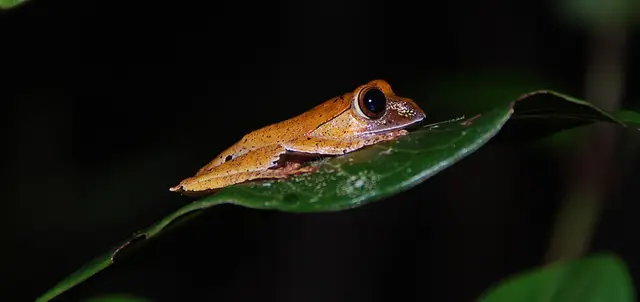
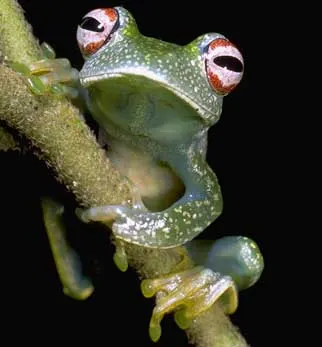
Boophis anjanaharibeensis, the Anjanaharibe bright-eyed frog, is a tree frog known only from the rainforests of north-eastern Madagascar. The IUCN Red List rated it Endangered in 2016 because its range is small, split between three locations and still losing forest. Little of its natural history has been recorded.
How to recognise it
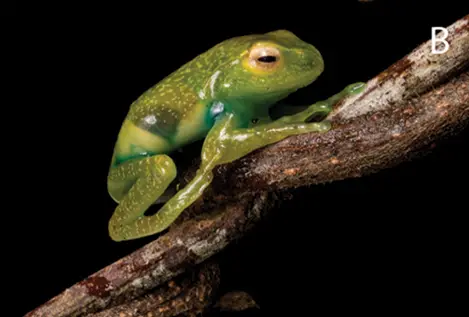
It belongs to Boophis, the bright-eyed frogs, a group of nearly 80 species found only in Madagascar and on Mayotte in the Comoros. Members are tree frogs with large eyes, often brightly coloured irises, expanded toe discs and long hind legs. Many species have nearly see-through skin, which is why some are called skeleton frogs.
This species was named by Franco Andreone in 1996, in the journal Aqua. New bright-eyed species are still being described every few months, on average.
Where it lives
The frog was described from rainforest near Ranomafana village inside Anjanaharibe-Sud Special Reserve, in the far north-east of the island. That reserve, designated in 1958, lies about 25 km south-west of the village of Andapa and holds some of the last intact primary rainforest in the region. Access is difficult, and the best way in is by four-wheel drive.
Other areas, including Marojejy National Park, have reportedly produced unofficial records. The Red List assessment gives an elevation range of 800 to 1,000 m and counts three locations, with an overall extent of about 3,800 square kilometres. It lists lowland moist forest, moist montane forest and permanent streams, including waterfalls, as habitat.
Pins are Wikidata “endemic to” fields. Orange dots, when present, are GBIF occurrence tiles — survey bias included.
Why it is in trouble
The assessment records a decreasing population and a continuing decline in the area it occupies. The threats it names are small-holder farming, shifting agriculture, housing and urban growth, and small-scale grazing, all of which turn forest into fields. Timber extraction, charcoal making and invasive eucalyptus trees have also reportedly contributed to habitat loss.
The frog's range is not considered severely fragmented, but with only three locations a clearing in the wrong place could hurt it badly.
What is being done
The one place where it is officially known to occur, Anjanaharibe-Sud, is protected, and the assessment lists site protection and resource and habitat protection as the actions in place or needed. The assessment gives no population size. The species was listed as Data Deficient on the 2007 Red List, so the Endangered rating reflects better information since then.
Sources
Written for this catalog in our own words from the sources below, checked against them on 12 November 2026. Population figures are estimates and carry the year they were made. Status and assessment year: IUCN. 2026. The IUCN Red List of Threatened Species. Version 2026-1. iucnredlist.org.