Endangered
Boophis boppa
Boophis boppa
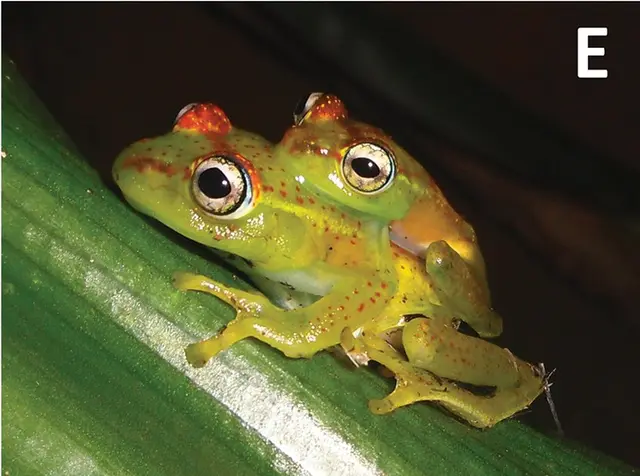
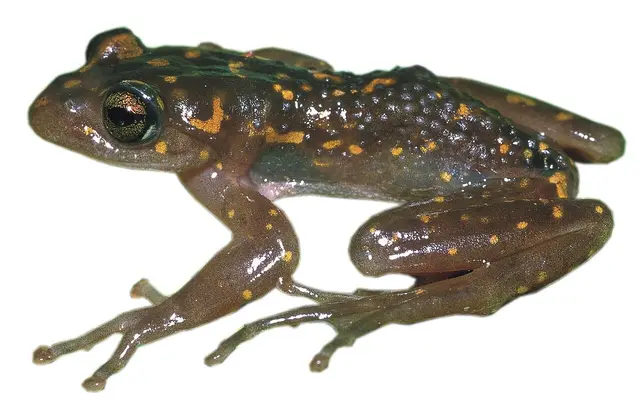
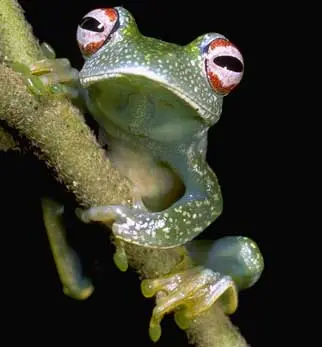
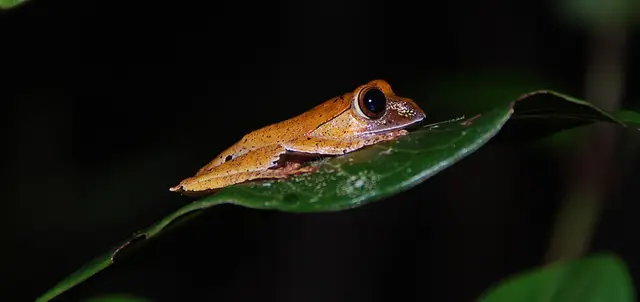
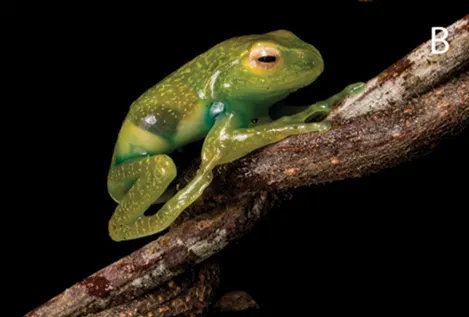
Boophis boppa is a bright-eyed treefrog from the montane rainforest of south-eastern Madagascar, known from only two locations around Ranomafana National Park and Antoetra. It was described in 2015 and is listed as Endangered (2020 assessment), with a decreasing population.
A frog told apart by its voice
Boophis boppa belongs to the Boophis ankaratra complex, a group of treefrogs that look very much alike. The 2015 description in Zootaxa, by Hutter and colleagues, found that differences in body form within the complex are hard to find, so the advertisement call does much of the work. This frog has the longest notes and the longest gaps between notes of its close relatives. Its DNA differs from theirs by 1.9 to 3.7% in the mitochondrial 16S gene.
The name honours Nicholas Jay Pritzker, a philanthropist and conservationist. Boppa was an affectionate family nickname, and his youngest son proposed the dedication.
Where it lives
The Red List counts just 2 locations, at roughly 1,046 to 1,312 m above sea level, with an extent of occurrence of about 1,194 square kilometres. It is endemic to Madagascar and known from Ranomafana National Park and the area around Antoetra, in the south-central east of the island.
It lives in montane rainforest and along streams. In the original study it was locally abundant only in undisturbed primary forest, mainly beside fast-flowing streams and occasionally along slower tributaries.
Pins are Wikidata “endemic to” fields. Orange dots, when present, are GBIF occurrence tiles — survey bias included.
How it lives
Males call from vegetation less than 3 m above the ground. At Maharira in Ranomafana it shares its streams with relatives including Boophis ankaratra and B. schuboeae, and calling males of B. ankaratra can sit less than a metre away. Every case of species living together in the complex involves strongly different calls, which may reflect call evolution, though the 2015 study allows that non-adaptive causes are also possible.
Why it is in trouble
The population is decreasing and the area it occupies is still shrinking. The Red List lists small-holder farming and grazing, shifting agriculture, housing, and more frequent fire as ongoing pressures. All of these damage or convert the forest and stream habitat the frog depends on.
What is being done
The species occurs in at least one protected area, and the Red List calls for site protection and habitat protection. Little else is documented, and no population estimate exists.
Sources
Written for this catalog in our own words from the sources below, checked against them on 12 November 2026. Population figures are estimates and carry the year they were made. Status and assessment year: IUCN. 2026. The IUCN Red List of Threatened Species. Version 2026-1. iucnredlist.org.