Endangered
Utsunomiya's tip-nosed frog
Utsunomiya's tip-nosed frog
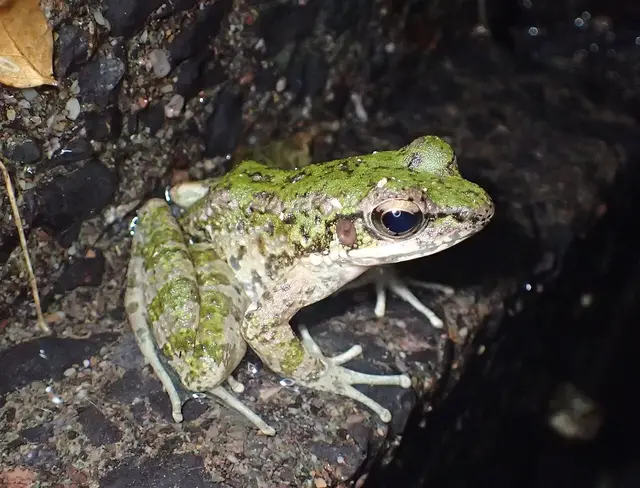
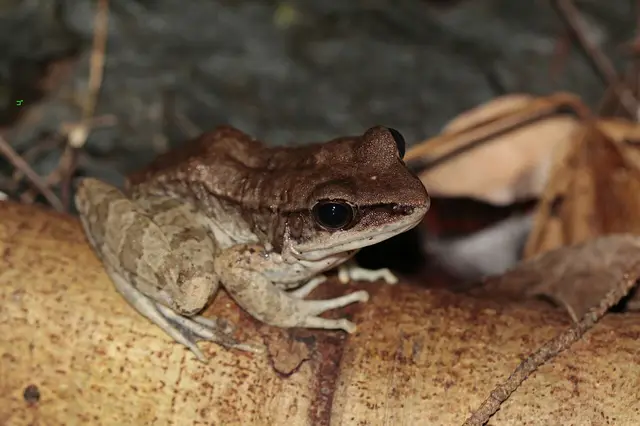
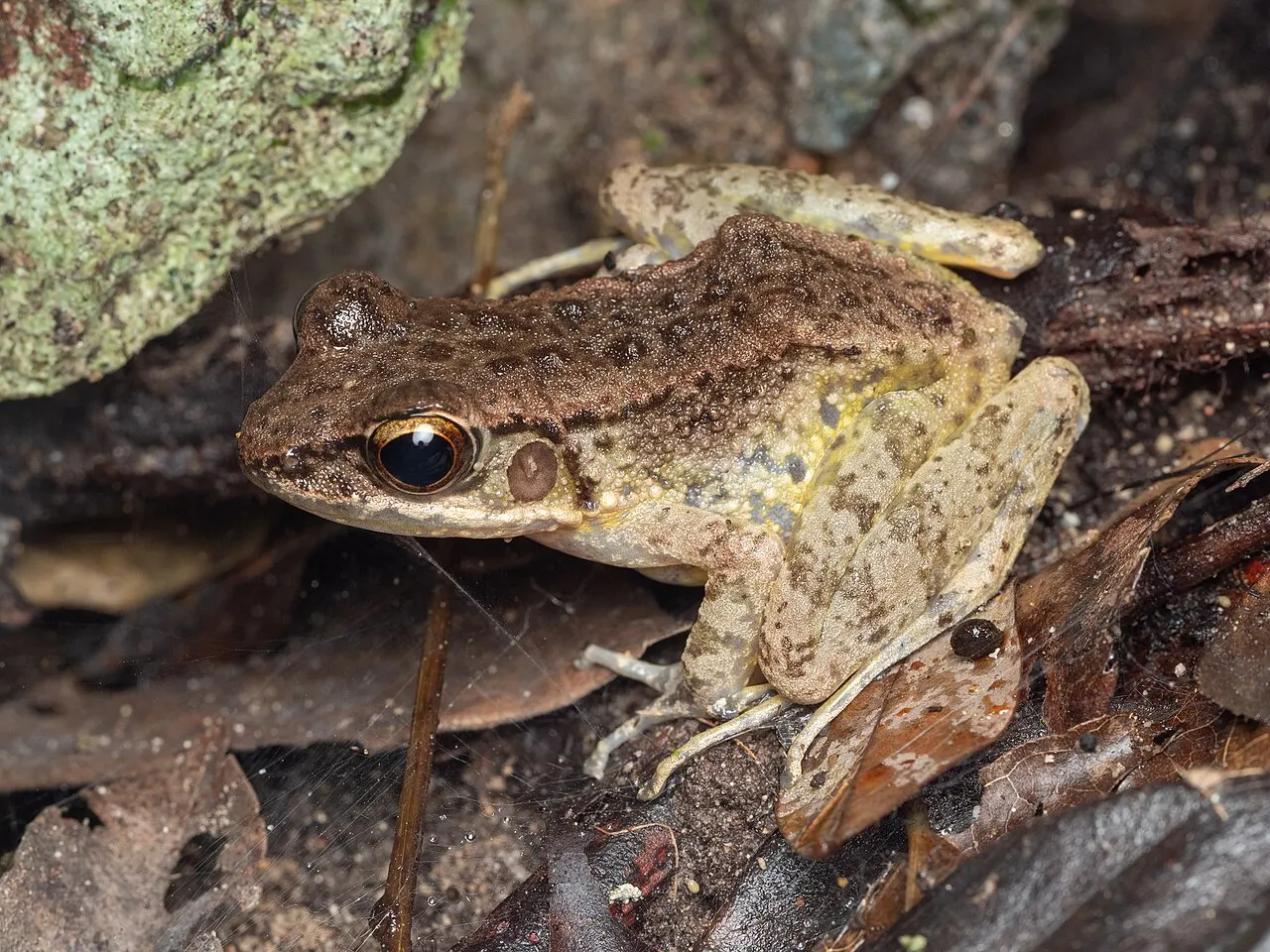
Utsunomiya's tip-nosed frog (Utsunomiya's tip-nosed frog) is a stout, brown stream frog found only on Ishigaki and Iriomote, two islands of Japan's Yaeyama Group. The IUCN Red List assessed it as Endangered in 2021 because its range is small and its forest habitat is shrinking. It is a dwarf relative of a much bigger frog living in the same hills.
How to recognise it
This is a medium-sized frog. Males measure about 39 to 48 mm from snout to vent, and females are larger at roughly 46 to 59 mm. The body is stocky, with a triangular head and a bluntly pointed snout. The back is covered in small bumps and ranges from light brown to greenish brown, with dark blotches and incomplete dark bars across the legs.
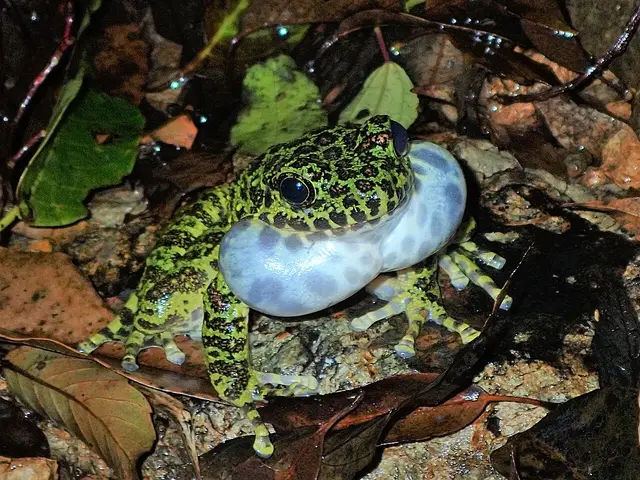
Males have paired vocal sacs under the chin. The fingers are unwebbed and end in small discs, while the toes are well webbed. Where it shares streams with the much larger Odorrana supranarina, size alone tells them apart.
Where it lives
The species is known only from Ishigaki and Iriomote, in the Ryukyu Archipelago. The IUCN estimates its extent of occurrence at about 1,426 km2, treats each island as one location, and puts it between about 50 and 450 m above sea level.
It is found along mountain streams in upstream areas surrounded by broad-leaved evergreen forest. Where the larger Odorrana supranarina is present, this frog tends to use the smaller streams.
Pins are Wikidata “endemic to” fields. Orange dots, when present, are GBIF occurrence tiles — survey bias included.
How it lives
Breeding runs from late February to April. The frogs spawn in shallow streams, and the egg masses are stuck to stones underwater. A single record of it catching insects exists, and little else has been published about its diet or day-to-day behaviour.
Why it is in trouble
No population estimate exists, but the IUCN infers a decrease from the ongoing loss and degradation of its forest. Populations on Ishigaki have reportedly fallen sharply because of housing development, and deforestation from expanding settlements and logging is listed as a major threat.
Introduced cane toads (Rhinella marina, listed by the IUCN under its older name Bufo marinus) are also a concern. Their numbers are rising, especially on Ishigaki, and they compete with the native frogs. Unintentional effects of small-scale harvest are listed as a further pressure.
What is being done
Both islands lie within Iriomote-Ishigaki National Park, though forest habitat there still needs better protection. Japan's Ministry of the Environment rates the frog Endangered (category IB) on its national Red List, and it was designated a domestic endangered species of wild fauna and flora under Japanese law in 2019.
The IUCN calls for stronger protection and management of occupied areas, control of invasive toads inside protected areas, and population monitoring. The species was already rated Endangered in 2004, so the picture has not improved.
Sources
Written for this catalog in our own words from the sources below, checked against them on 12 November 2026. Population figures are estimates and carry the year they were made. Status and assessment year: IUCN. 2026. The IUCN Red List of Threatened Species. Version 2026-1. iucnredlist.org.