Endangered
Greater tip-nosed frog
Greater tip-nosed frog
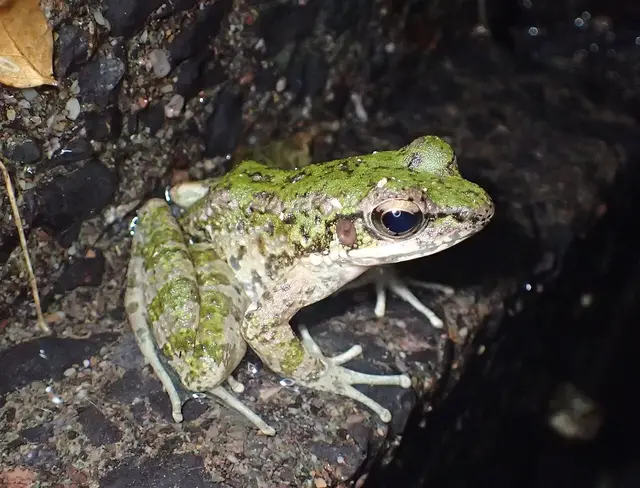
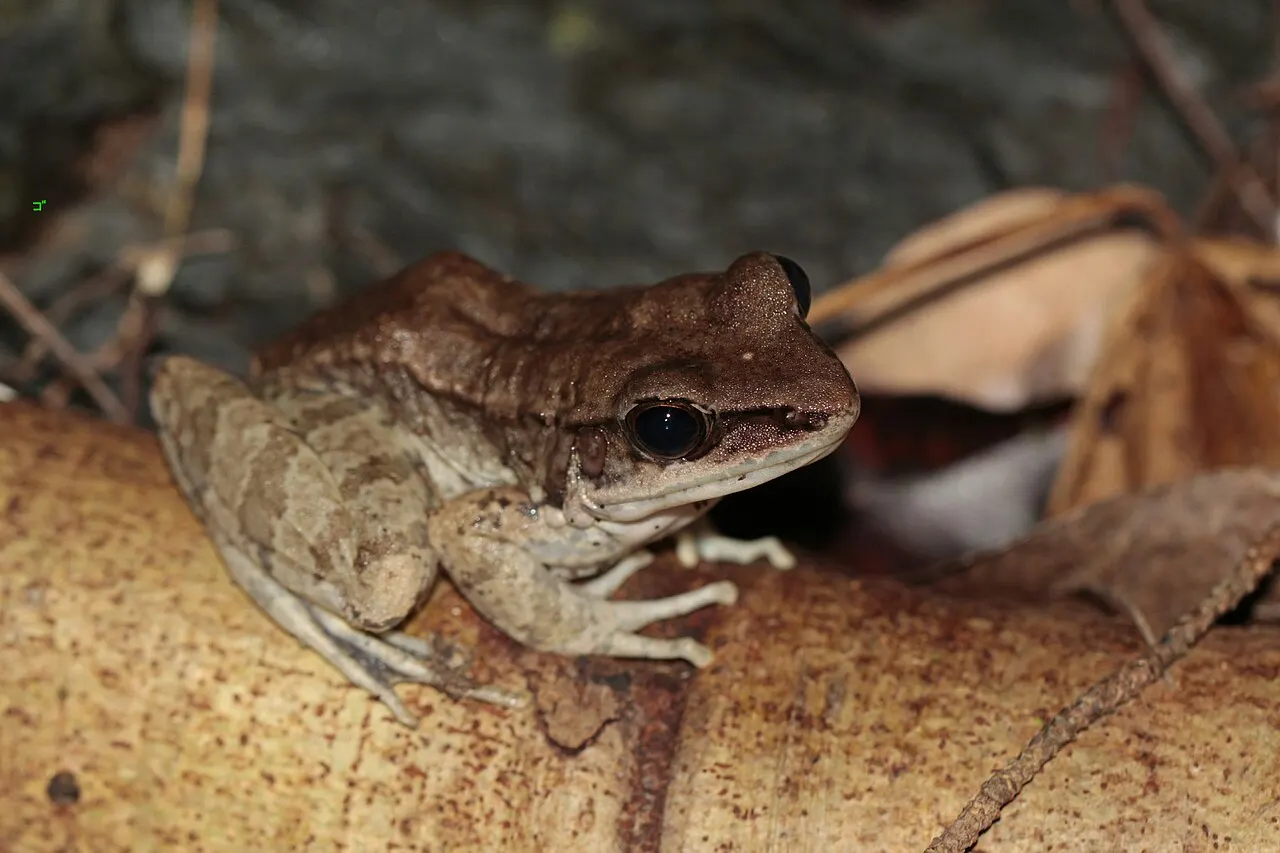
The greater tip-nosed frog (Greater tip-nosed frog) is a large stream frog found only on Ishigaki and Iriomote, two of Japan's Yaeyama Islands. The IUCN Red List rated it Endangered in 2021. Females can pass 10 cm, and the frogs breed over a long season in forest streams.
How to recognise it
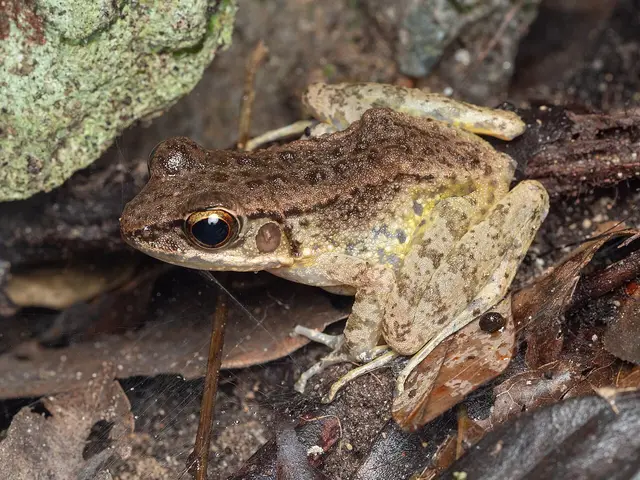
It was the largest member of the Rana narina group when Masafumi Matsui described it in 1994, and its scientific name refers to that size. Males measure roughly 6 to 7.7 cm and females about 8 to 11.5 cm, depending on the source.
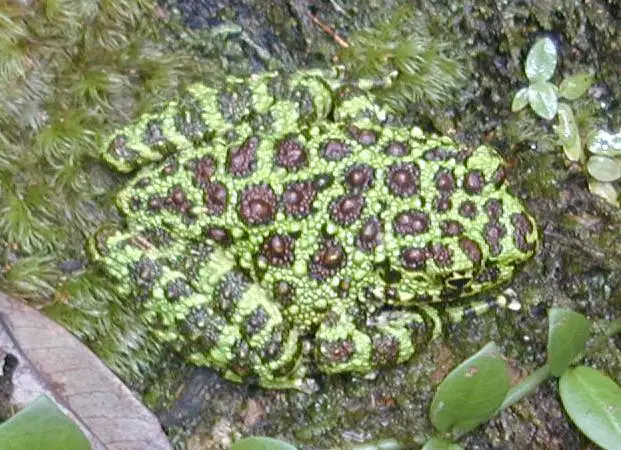
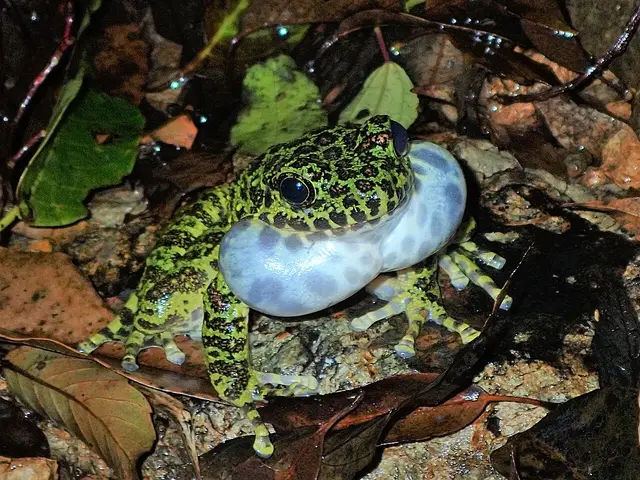
The body is stout, with a triangular head, a pointed snout and a clear eardrum. The back is smooth and light brown to greenish brown, without a distinct pattern. Dark marks run beneath the snout edge and around the eardrum, and the limbs carry dark crossbars. The toes are well webbed, and males have a pair of vocal sacs under the chin. Tadpoles are slender with long muscular tails, and newly changed froglets are about 13 mm.
Where it lives
The species is endemic to Japan, known only from Ishigaki and Iriomote. The type specimens came from a river in the Furumi area of Iriomote. The IUCN counts two locations, an extent of occurrence of about 1,426 square kilometres and an elevation range of 50 to 450 m.
It lives in broad-leaved evergreen forest beside mountain streams, and also in coastal and riverside forest just outside mangroves. The IUCN lists rivers and streams, moist lowland forest and small freshwater pools and marshes. It avoids water clouded with silt. On both islands it shares its forest with a smaller relative, Odorrana utsunomiyaorum, and the difference in size between the two may have come from competition.
Pins are Wikidata “endemic to” fields. Orange dots, when present, are GBIF occurrence tiles — survey bias included.
How it lives
Breeding runs through a long season. Accounts range from October to March to mid-October to June, and one Japanese source starts as early as late July. Eggs are laid in shallow streams, pools and marshes and stuck to stones or dead leaves underwater. A female carries between 680 and 1,600 mature eggs.
The frogs eat small invertebrates from the forest floor, including cockroaches and woodlice.
Why it is in trouble
The IUCN gives the population trend as decreasing and lists housing development and small-scale harvest effects as ongoing but low-impact threats. Logging and settlement have damaged forest habitat, especially on Ishigaki.
A Japanese encyclopedia entry also names the introduced cane toad on Ishigaki as a concern for the frog.
What is being done
Much of Iriomote is national park, and the IUCN notes that the frog occurs in at least one protected area. Even so, its forest habitats there are described as needing better protection. The IUCN lists site protection and site management among the conservation actions.
Sources
Written for this catalog in our own words from the sources below, checked against them on 12 November 2026. Population figures are estimates and carry the year they were made. Status and assessment year: IUCN. 2026. The IUCN Red List of Threatened Species. Version 2026-1. iucnredlist.org.