Endangered
Odorrana splendida
Odorrana splendida
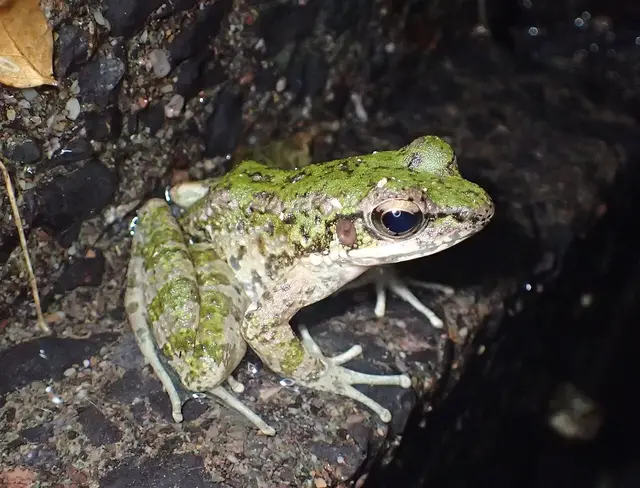
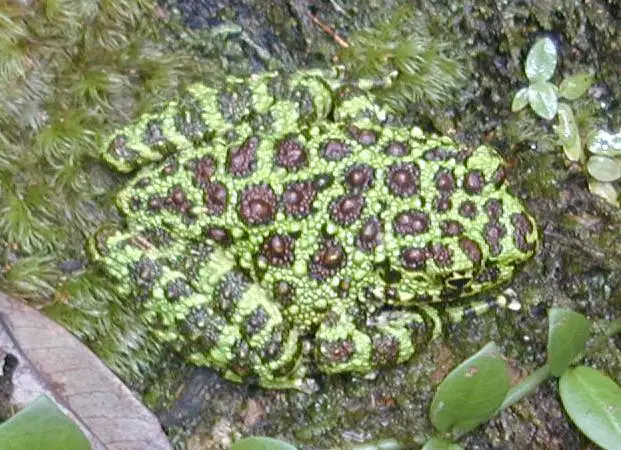
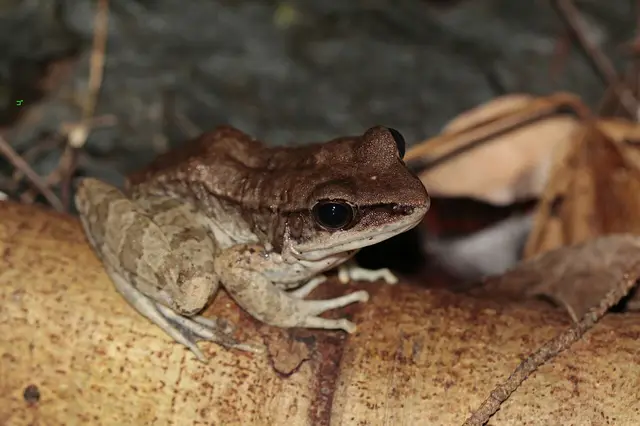
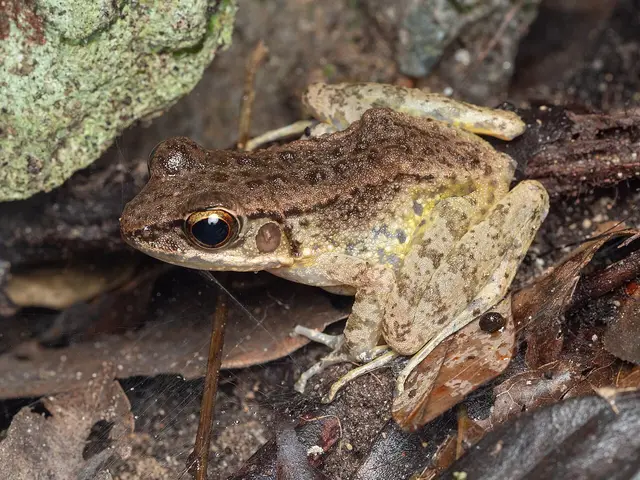
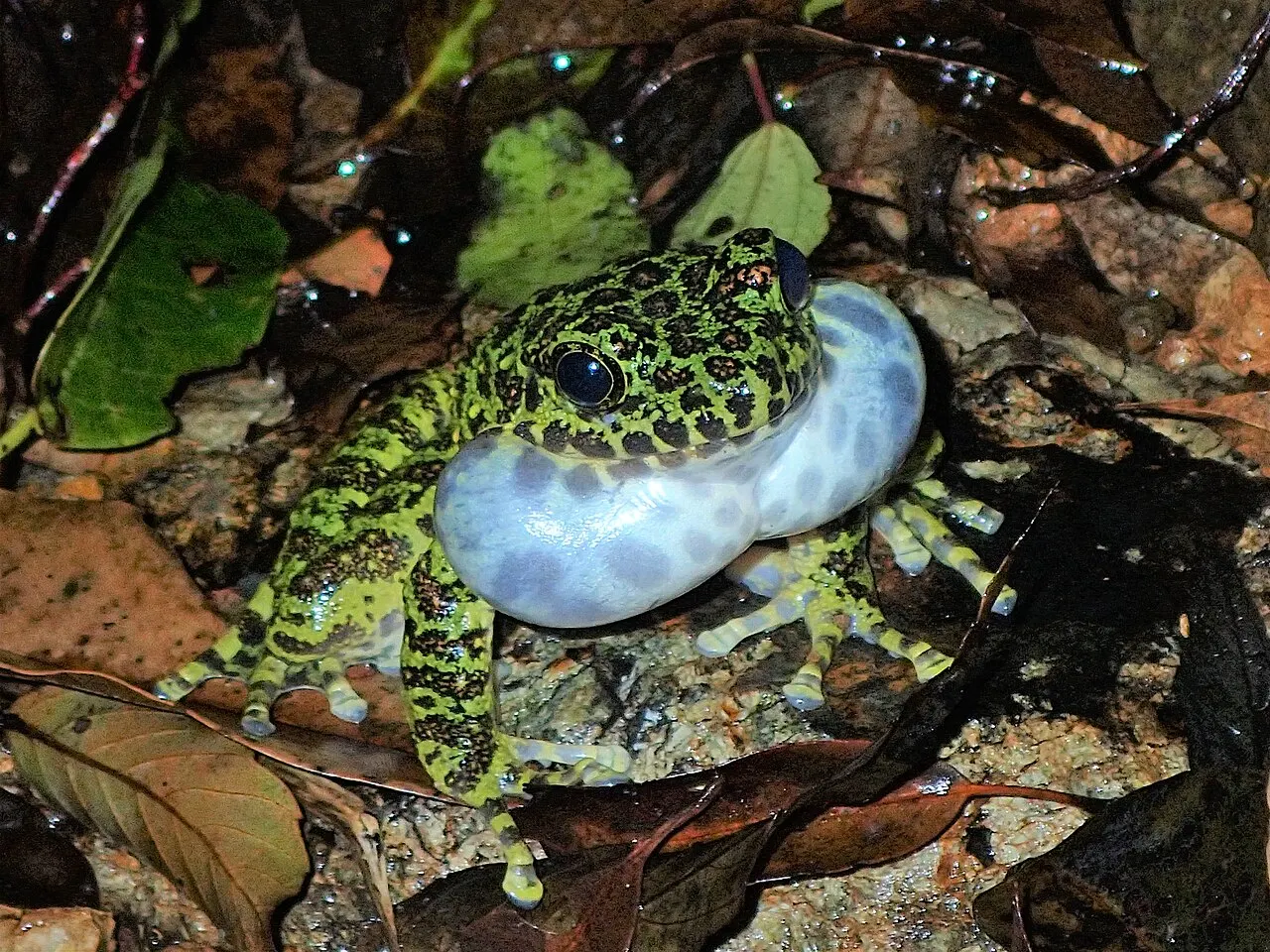
The Amami Oshima frog (Odorrana splendida) is a large stream frog found only on Amami Oshima, in Japan's Ryukyu Islands. It was named as its own species in 2011, split from Ishikawa's frog of Okinawa. The Red List lists it as Endangered (2021 assessment), with a stable trend.
How to recognise it
This is a big frog. One account gives female lengths of roughly 95 to 137 mm and male lengths of 74 to 124 mm, in two ranges for each sex. Two forms are described, a smaller and a larger one, and the larger form is reported from the Uken area of the island.
Its closest relative is Ishikawa's frog (Odorrana ishikawae) of Okinawa, and the two were treated as one species until 2011. They are reported not to interbreed.
Where it lives
The frog is found only on Amami Oshima, the second-largest island in the Ryukyu chain. The Red List counts a single location, with an estimated extent of occurrence of about 893 square kilometres and an area of occupancy of about 436 square kilometres, from sea level up to 694 m.
It lives in and beside forest streams, mostly upstream stretches surrounded by broadleaved evergreen forest. The assessment lists permanent and seasonal streams and temperate forest as habitat, and describes the population as severely fragmented.
Pins are Wikidata “endemic to” fields. Orange dots, when present, are GBIF occurrence tiles — survey bias included.
How it lives
Breeding runs from late January to May and peaks in February and March. Males gather at breeding streams and call from rocks and trees. A pair moves to the stream and looks for slower water, where the female lays eggs and the male fertilises them. Neither parent guards them.
Tadpoles take a long time to grow and change into frogs in the summer of the following year, or a year after that. A two-year field study tagged 283 tadpoles in a 303 m stream. The tagged tadpoles drifted downstream up to about 130 m over a year, with typical maximum drift of 85 to 95 m.
Why it is in trouble
The range is small and broken up, and the Red List records continuing decline in the area the frog occupies. It lists roads and dams among the threats, and logging and river works are also cited elsewhere. Use of the frog for the pet and display trade is recorded too, though how much collecting happens is unknown.
The biggest threat on the Red List is an invasive predator, the small Indian mongoose. About 30 were released near Naze in 1979 and spread across the island. Japan's Environment Ministry declared the mongoose eradicated on 3 September 2024, after its last capture in April 2018, and lists this frog among species that recovered as control progressed.
What is being done
The Red List records a systematic monitoring scheme, a regional management plan, awareness programmes, invasive species control and a captive population, and notes the frog occurs in at least one protected area. It also calls for site and area protection and management. Kagoshima Prefecture lists the species as a natural monument.
The tadpole study argues that protecting the frog means caring for downstream conditions as well as the places where eggs are laid.
Sources
Written for this catalog in our own words from the sources below, checked against them on 12 November 2026. Population figures are estimates and carry the year they were made. Status and assessment year: IUCN. 2026. The IUCN Red List of Threatened Species. Version 2026-1. iucnredlist.org.