Critically Endangered
Tesla's Rain Frog
Pristimantis teslai
Tesla's rain frog, Pristimantis teslai, is a small warty frog from high-altitude grassland in the Ecuadorian Andes, known from just two sites in Tungurahua Province. The IUCN Red List (2022) lists it as Critically Endangered, with a decreasing population and one location.
How to recognise it
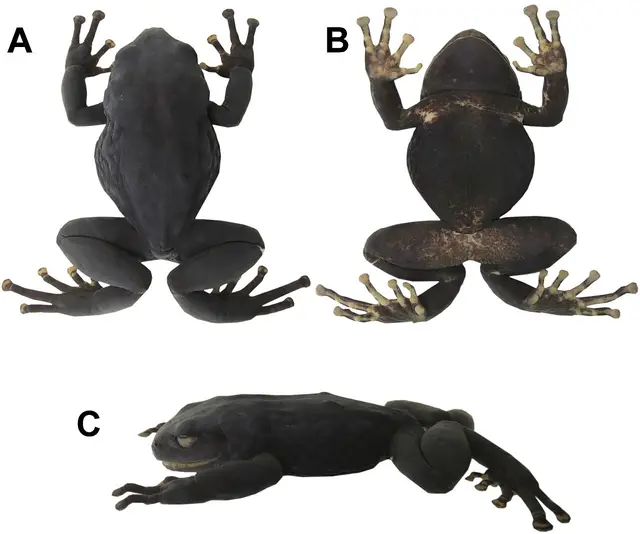
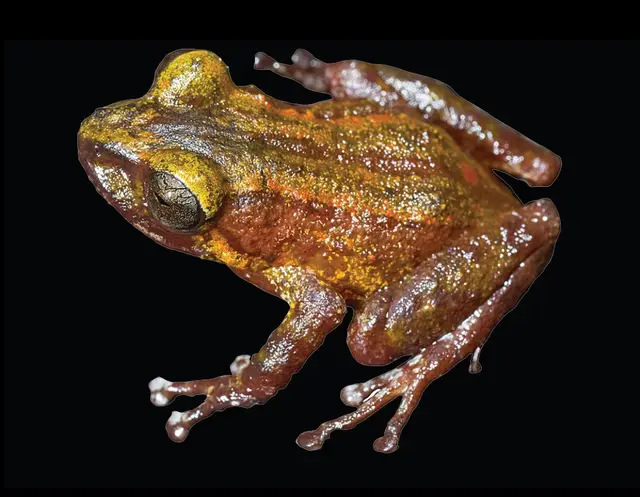
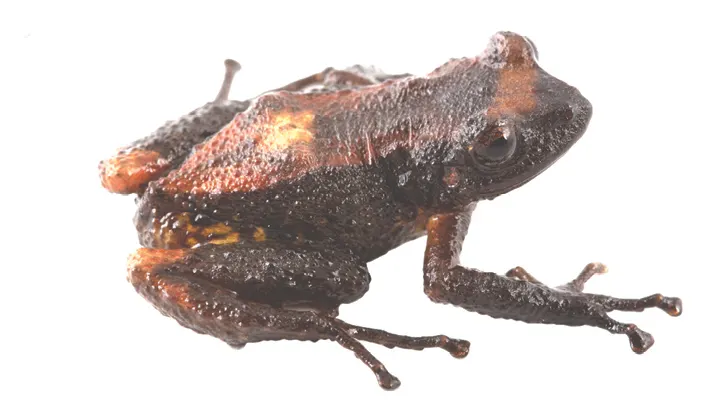
Adult males measure about 23 to 27 millimetres from snout to rump (four measured males averaged 25.2 millimetres). Females have not been measured. The back is covered in prominent rounded tubercles, with a snout that comes to a point and a small fleshy keel on its tip.
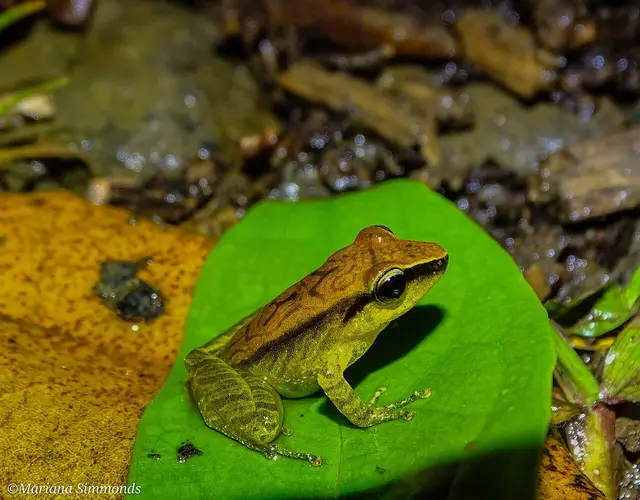
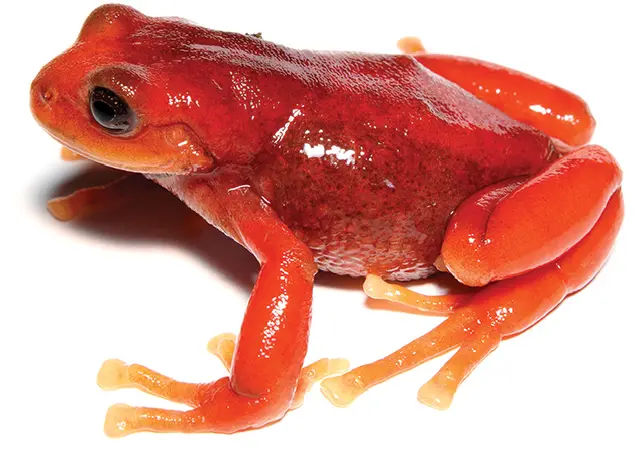
In life the back ranges from olive to reddish brown, sometimes with red or cream blotches. The groin and front of the thighs are dark brown with yellow patches, the belly is dusty white with scattered brown flecks, and the iris is copper with thin black lines. Only two living animals were photographed for the original description, so the full range of colour is poorly documented.
Where it lives
The species is found only in Ecuador. It is known from two páramo sites on the eastern slopes of the Andes in Tungurahua Province, including the edge of Llanganates National Park. The type specimen came from Llanganatillo at 3,600 metres, and the IUCN gives that same elevation as its range.
Páramo is high-altitude Andean grassland. The national park is largely unexplored, so other populations could exist.
Pins are Wikidata “endemic to” fields. Orange dots, when present, are GBIF occurrence tiles — survey bias included.
How it lives
Little is known. By day the frogs were found under rocks and among moss or bunch grasses. At night they were seen active on low vegetation up to 80 centimetres off the ground. Rain frogs of this genus generally lay eggs on land and skip the tadpole stage, though breeding in this species has not been described.
Why it is in trouble
The IUCN lists small-scale grazing, ranching and farming, more frequent and intense fires, shifting habitat and drought as threats, and records an ongoing decline in its area. With a single location, one fire or one change in land use could affect the whole known population.
The frog was first formally described in 2019, and its describers rated it Data Deficient because so little was known. The 2022 assessment placed it in the Critically Endangered category under criterion B1ab(iii), which covers very small ranges with continuing habitat decline.
What is being done
The IUCN notes that the species occurs in at least one protected area, and lists national-level action and site or area management as conservation measures in place. Further surveys of the Llanganates region would show whether it lives elsewhere.
Sources
Written for this catalog in our own words from the sources below, checked against them on 12 November 2026. Population figures are estimates and carry the year they were made. Status and assessment year: IUCN. 2026. The IUCN Red List of Threatened Species. Version 2026-1. iucnredlist.org.