Critically Endangered
Giant Andean Rainfrog
Pristimantis andinogigas
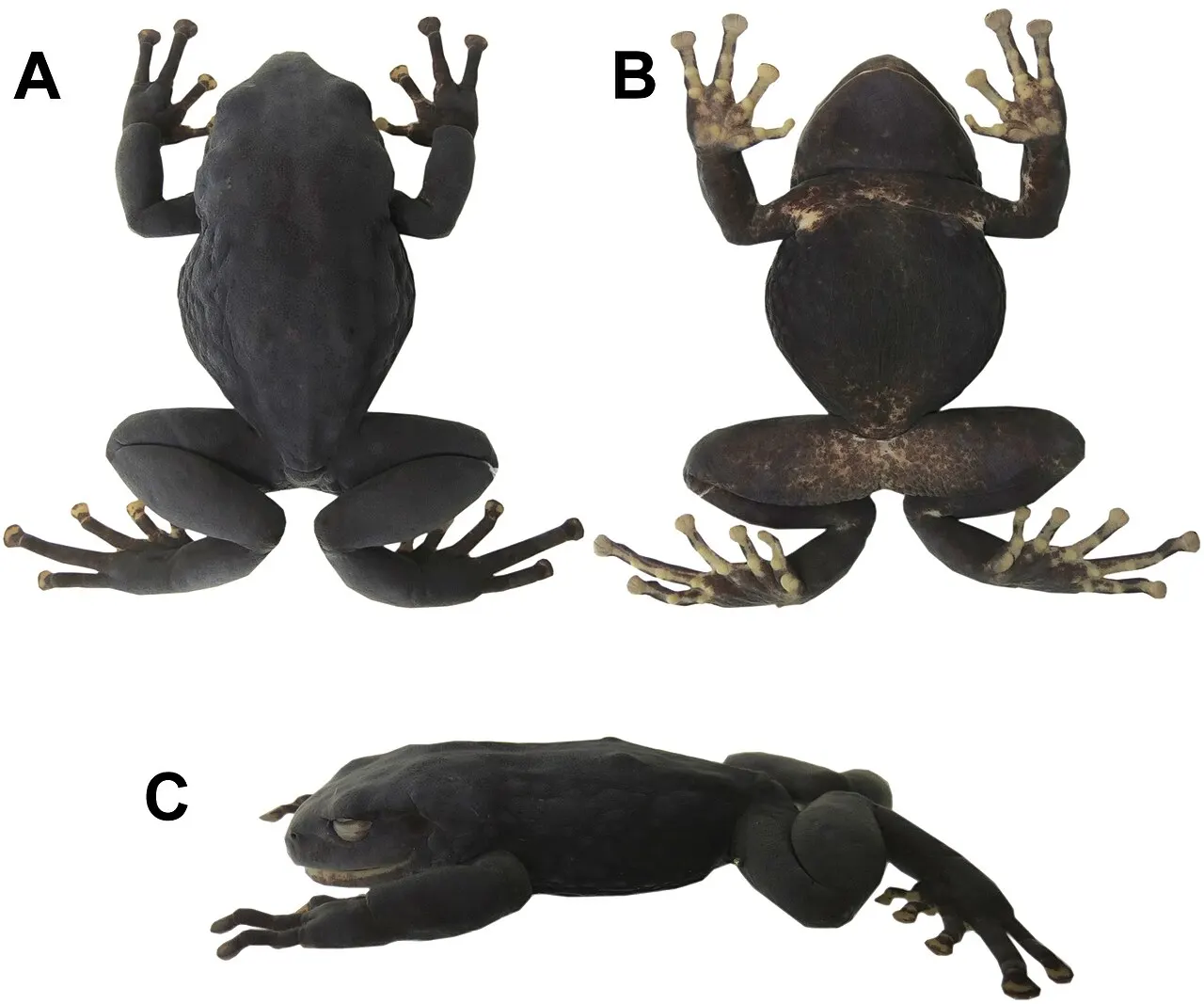
The giant Andean rainfrog (Pristimantis andinogigas) is a large ground frog known from a single high-altitude grassland site in southern Ecuador. It was described only in 2019. The IUCN Red List assessed it as Critically Endangered in 2022 after numbers there fell sharply within a decade.
How to recognise it
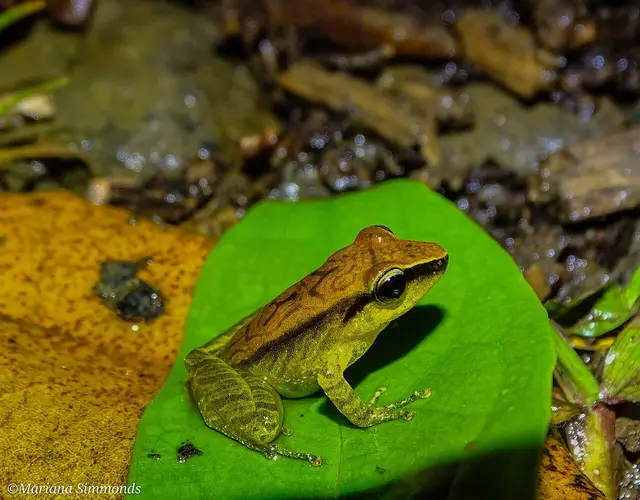
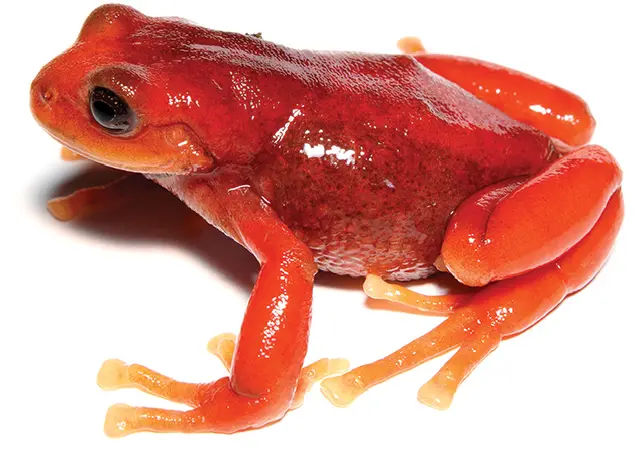
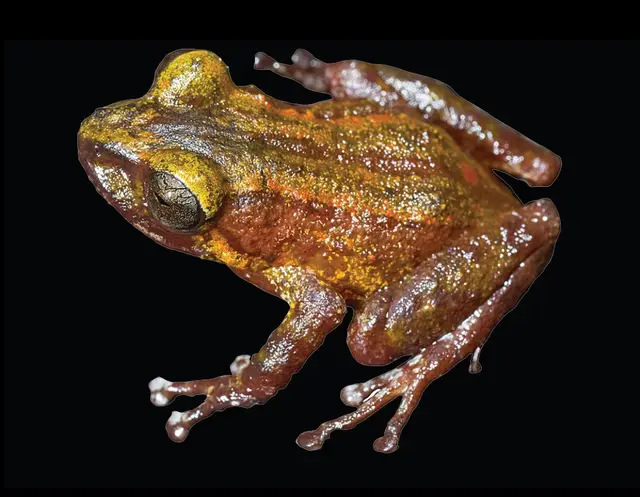
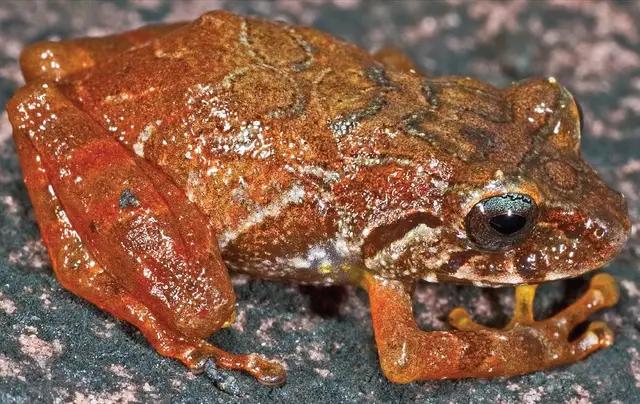
For a ground-dwelling rainfrog it is large, reported at about 5 to 6 centimeters long. Its skin is porous, with glandular patches on the forearms, hind limbs, flanks and behind the eardrum. Researchers consider it easy to spot and identify because of its size and striking coloration.
The description, published in ZooKeys, took nearly ten years. No DNA samples were available when the work began, so the identification rested on comparing the animals with museum specimens.
Where it lives
The frog is known only from the Nudo de Cajanuma in Podocarpus National Park, in the Cordillera Oriental of southern Ecuador, on the border of Loja and Zamora Chinchipe provinces. It lives at 3,300 to 3,400 meters in páramo, the high Andean grassland, where bamboo meadows are a main habitat.
The Red List maps its range at about 7 square kilometers and counts it as a single location. A news report on the description gave 5 square kilometers or less. Surveys at other sites in the Cajanuma area and on the nearby Nudo de Sabanilla have not found it, but most páramo there has never been surveyed for amphibians, so a somewhat wider range is possible.
Pins are Wikidata “endemic to” fields. Orange dots, when present, are GBIF occurrence tiles — survey bias included.
How it lives
Frogs of this genus develop directly from eggs, hatching as small frogs with no tadpole stage. This species is active at night. Males and some young animals were seen on bamboo stems, while two adult females were found on the ground. By day the frogs hide inside rosette plants such as Puya and Senecio, or at the base of bamboo.
Researchers found them by raking and hoeing around the bases of achupallas, the rosette-forming bromeliads of the páramo. Calling males are far easier to find than females, which stay in less visible hiding places. The Red List gives a generation length of 2 to 3 years and says the frog does not migrate.
Why it is in trouble
The frog was very common when the first specimens were collected between December 2009 and April 2010: it made up 47 of 108 frog records on that trip. Three expeditions over about five years from 2014 recorded very few, and later surveys by Universidad Nacional de Loja herpetologists found none. The assessment suspects a decline of at least 80 percent over ten years.
The cause is unknown. Local effects of climate change are suspected, and a fall in humidity could greatly harm the frog. The habitat itself is in good condition, with little human disturbance because the terrain is steep, cold and wet. One type specimen tested negative for the chytrid fungus that has devastated other amphibians, though more testing is needed.
What is being done
All of its known range lies inside Podocarpus National Park, a protected area since 1982. The Red List says continued strong management of the park is the best protection, and that captive breeding may eventually be needed, though little experience exists with breeding this genus.
The assessment also calls for more work on the frog's distribution, numbers and ecology, and for swabbing any new animals for chytrid fungus. One of the herpetologists involved in the description does not rule out other populations elsewhere in the park.
Sources
Written for this catalog in our own words from the sources below, checked against them on 12 November 2026. Population figures are estimates and carry the year they were made. Status and assessment year: IUCN. 2026. The IUCN Red List of Threatened Species. Version 2026-1. iucnredlist.org.