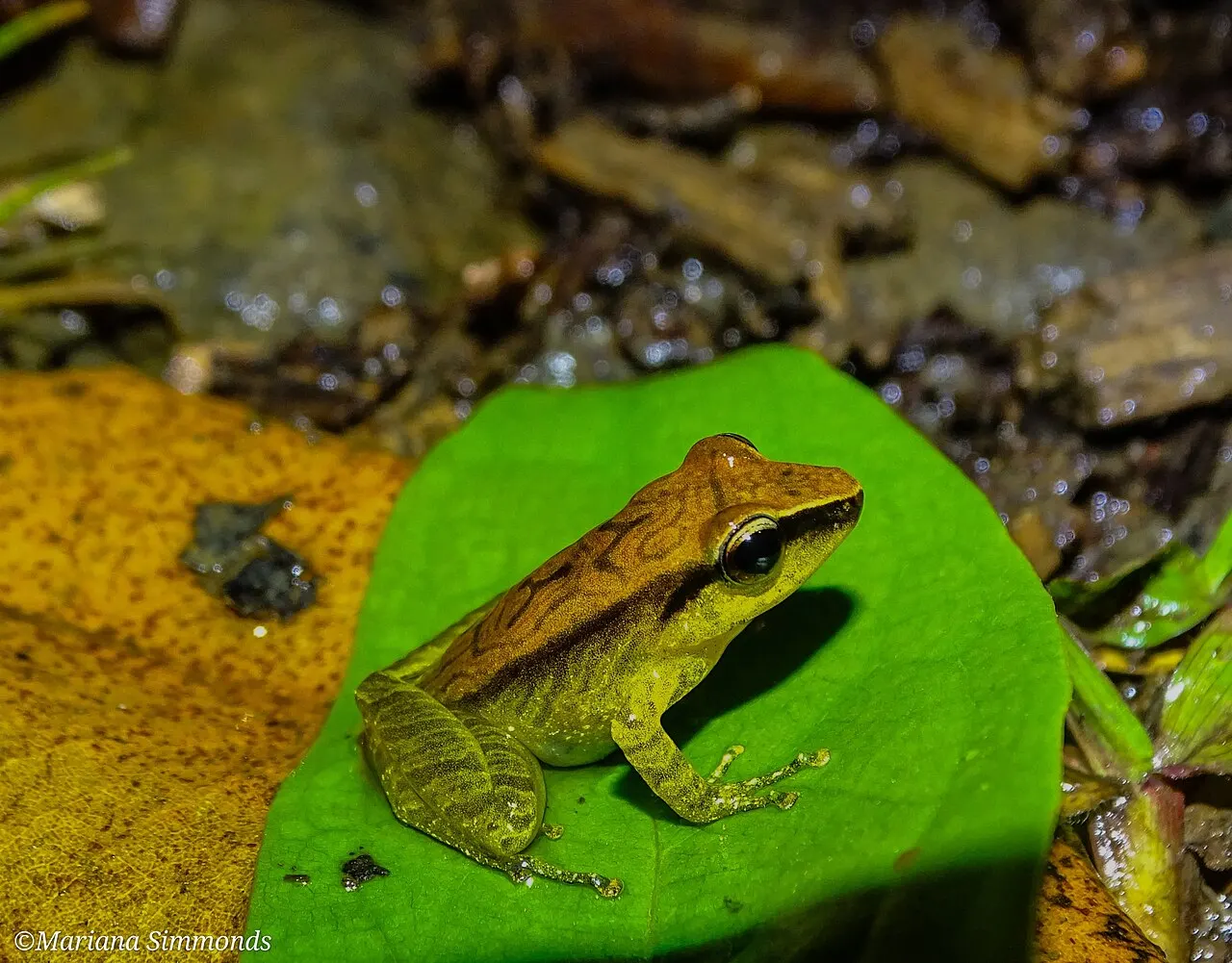
Critically Endangered
Pristimantis caprifer
Pristimantis caprifer
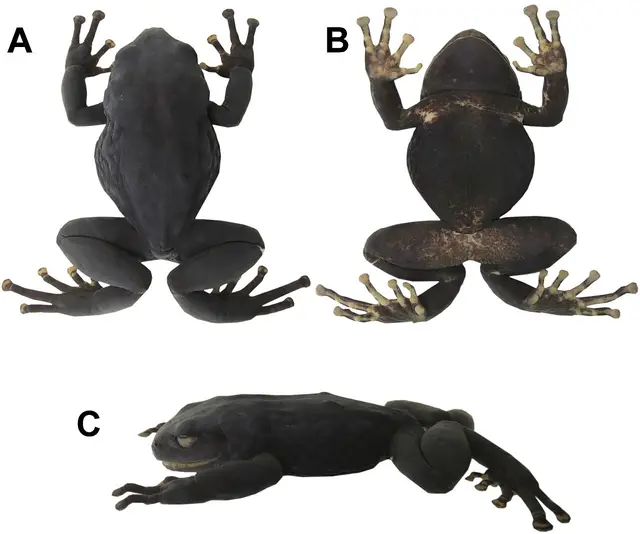
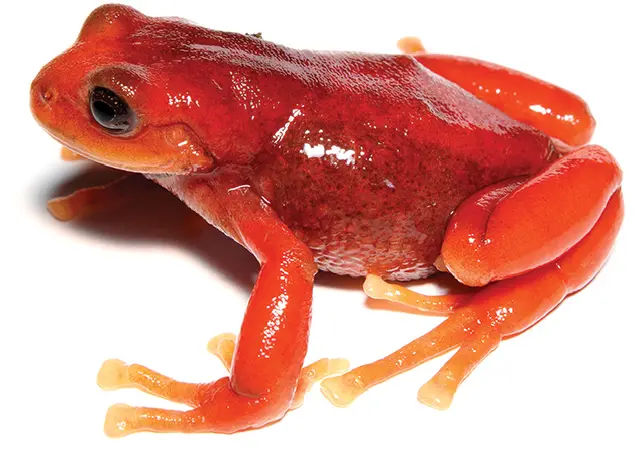
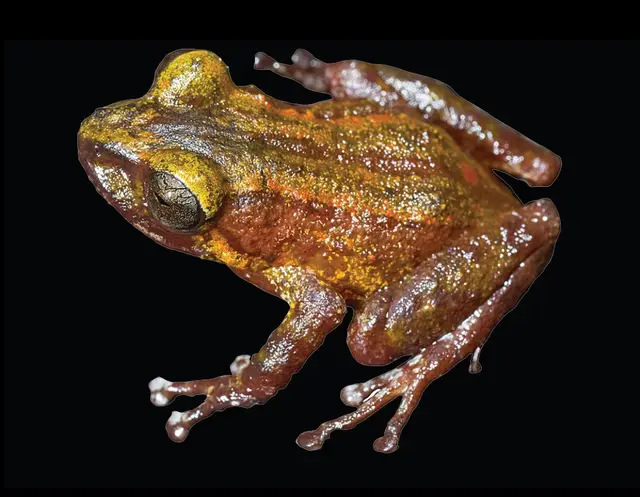
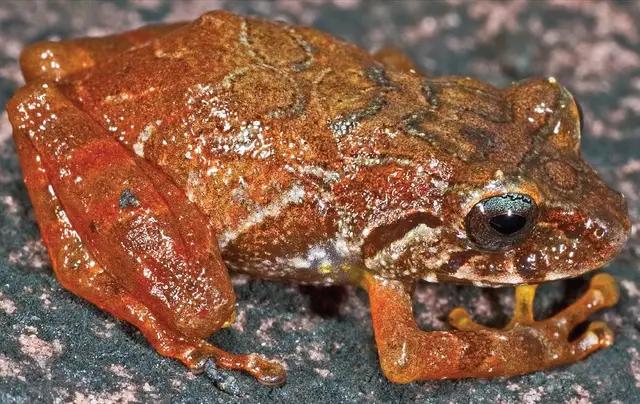
Pristimantis caprifer, the La Palma robber frog, is a small rainforest frog known from Colombia and Ecuador. The IUCN Red List rated it Critically Endangered in 2019, counting fewer than 250 mature individuals scattered through a few fragmented patches of remaining forest. Very little else has been published about its life.
Where it lives
This frog belongs to Pristimantis, a huge genus of rain frogs that holds more than 600 described species, more than any other vertebrate genus. John Douglas Lynch described P. caprifer in 1977, originally under the genus name Eleutherodactylus. Its English name is the La Palma robber frog.
The Red List records it as native to Colombia and Ecuador, at 20 to 1,230 m above sea level, with an extent of occurrence of roughly 9,200 square km. It does not migrate.
Pins are Wikidata “endemic to” fields. Orange dots, when present, are GBIF occurrence tiles — survey bias included.
What it needs
The Red List records three habitats: tropical and subtropical moist lowland forest, permanent rivers and streams, and heavily degraded former forest. The last is rated only marginally suitable, which suggests the frog can tolerate some disturbed ground but not rely on it. The assessment also records a continuing loss of habitat area.
Almost nothing else about its day-to-day life appears in the published sources, and no reliable measurements of body size turned up.
Why it is in trouble
The 2019 assessment gives a population size of 249, split into one to five subpopulations, with the largest holding about 50. The population is severely fragmented and still declining, and the number of locations is put at between 1 and 10. These figures fit the criterion cited, C2a(i), which applies to very small populations.
The assessment lists many land-use threats: small-holder and industrial farming, shifting agriculture, grazing and ranching, small-holder and large plantations, housing, mining and quarrying, and herbicides and pesticides. Most work by converting or degrading the forest the frog depends on. The chytrid fungus Batrachochytrium dendrobatidis is also listed as a threat.
What is being done
The frog occurs in at least one protected area, but only an estimated 1 to 10 percent of its population is covered. The assessment records no recovery plan, no systematic monitoring scheme and no regional management plan in place. Site protection, site management and captive breeding are listed as actions that would help, and research into population size, distribution, trends and threats is flagged as a priority.
Sources
Written for this catalog in our own words from the sources below, checked against them on 12 November 2026. Population figures are estimates and carry the year they were made. Status and assessment year: IUCN. 2026. The IUCN Red List of Threatened Species. Version 2026-1. iucnredlist.org.