Critically Endangered
Pristimantis jamescameroni
Pristimantis jamescameroni
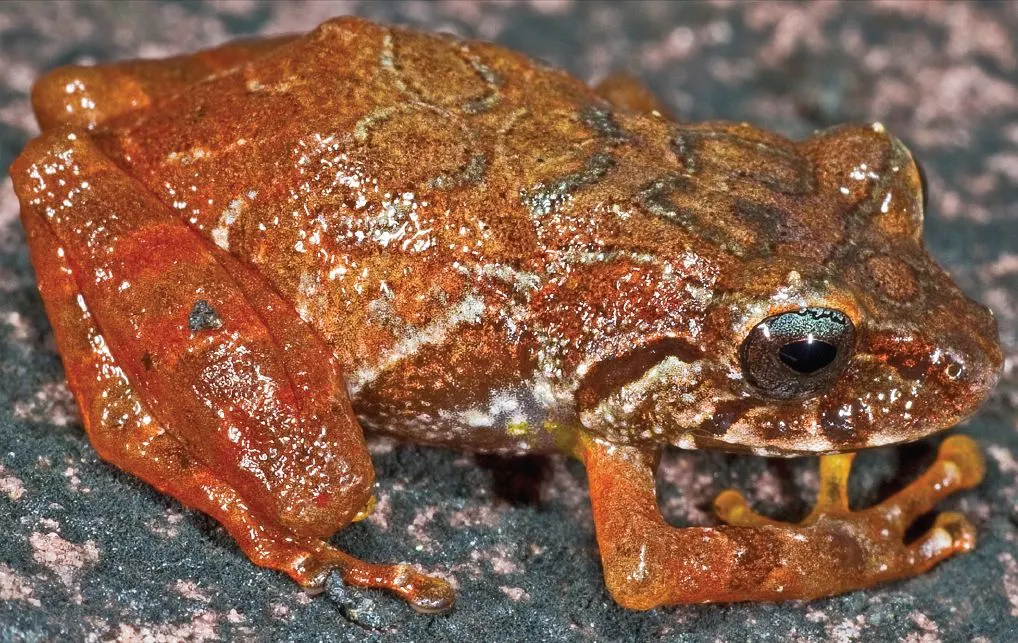
Pristimantis jamescameroni is a tiny orange-brown frog known from one place only, the flat summit of Aprada-tepui, a table-top mountain in Bolívar state, Venezuela. Collected in 2012 and named after the filmmaker James Cameron, it is listed as Critically Endangered on the IUCN Red List (assessed 2022).
How to recognise it
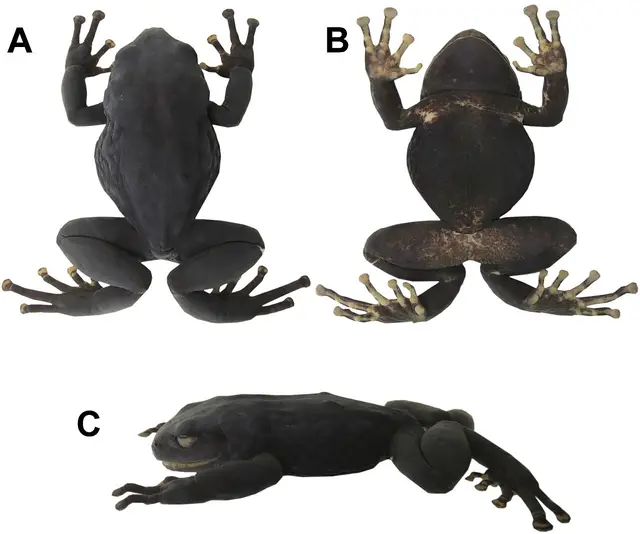
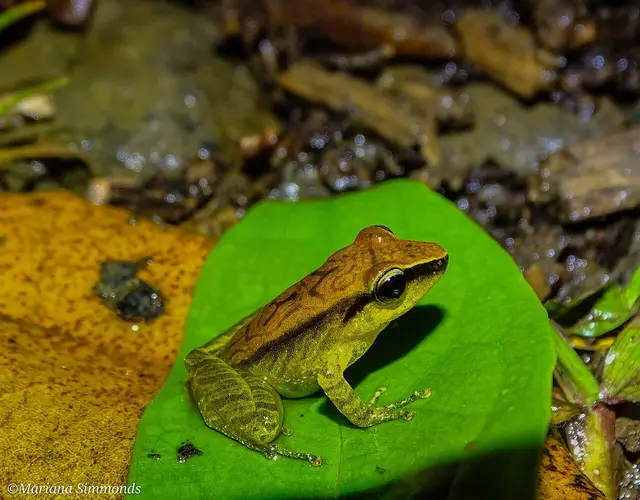
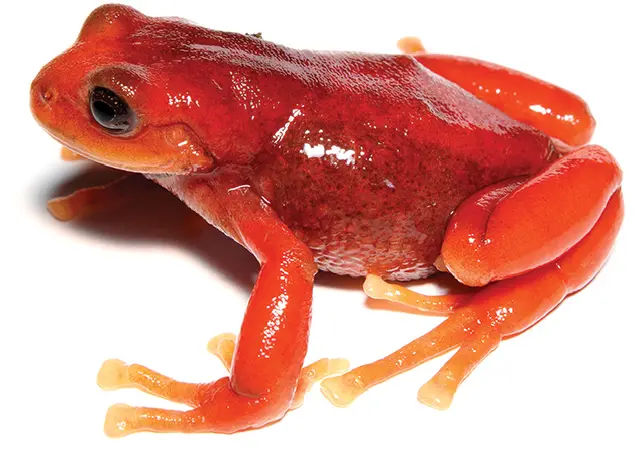
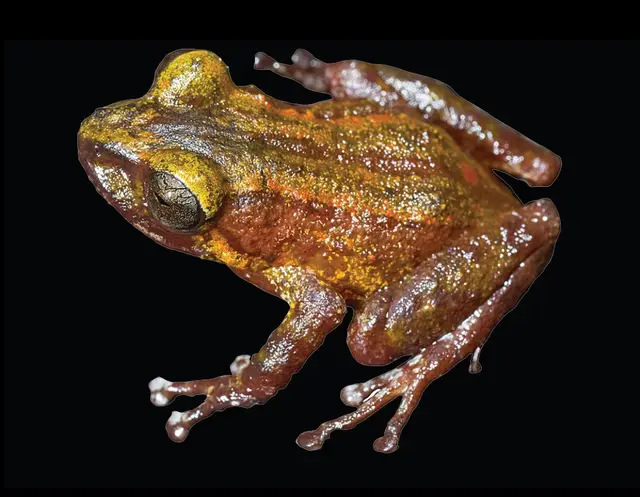
This is a small frog. Males measure about 2.3 cm from snout to vent and females are larger, around 2.6 to 2.7 cm. The back is mostly brown with orange tones and is sprinkled with white flecks, while the belly is paler and mostly orange. The toe tips are whitish.
A few details set it apart from some close relatives. It has no visible eardrum, no vocal slits and no vocal sac. Males carry two large nuptial pads on each thumb, a feature females lack.
Where it lives
The only known population sits on the summit of Aprada-tepui, at roughly 2,557 to 2,571 metres above sea level. The summit is a mix of open rocky ground, small patches of tepui forest, many small lakes and deep canyons.
The IUCN puts the area the frog occupies at about 8 square kilometres and counts it as a single location. It records no protected area covering the site.
Pins are Wikidata “endemic to” fields. Orange dots, when present, are GBIF occurrence tiles — survey bias included.
How it lives
Little has been written about its daily life. The frogs mainly live under shallow rocks. The male that became the type specimen was found on the morning of 15 June 2012, calling in daytime from a shallow rock crevice hidden by vegetation, and other males were heard calling only now and then during the day. Diet and breeding habits have not been described.
Discovery and name
Philippe Kok, a biologist at the Royal Belgian Institute of Natural Sciences, collected the first frogs on the summit and described the species in the European Journal of Taxonomy in 2013, alongside a second new Pristimantis from the region. The type series is one adult male and three females.
Kok named it for James Cameron, crediting the director's films and documentaries for raising public attention to environmental problems and noting that Cameron promotes a vegan diet to reduce human environmental impact. In the description Kok suggested the frog might qualify as Endangered because its range is so small.
Why it is in trouble
The IUCN lists the frog as Critically Endangered under criteria B1ab(iii)+2ab(iii), which cover a tiny range and a continuing decline in habitat quality. The population trend is decreasing. The threats named are more frequent and more intense fires, and shifts in habitat. Tepui ecosystems are also considered sensitive to global warming. For a species living on one summit, a single bad change could affect the whole population.
What is being done
The IUCN lists resource and habitat protection, site management and policy and regulation measures as actions needed. The species is not known to occur in a protected area.
Sources
Written for this catalog in our own words from the sources below, checked against them on 12 November 2026. Population figures are estimates and carry the year they were made. Status and assessment year: IUCN. 2026. The IUCN Red List of Threatened Species. Version 2026-1. iucnredlist.org.