Endangered
Eleutherodactylus minutus
Eleutherodactylus minutus
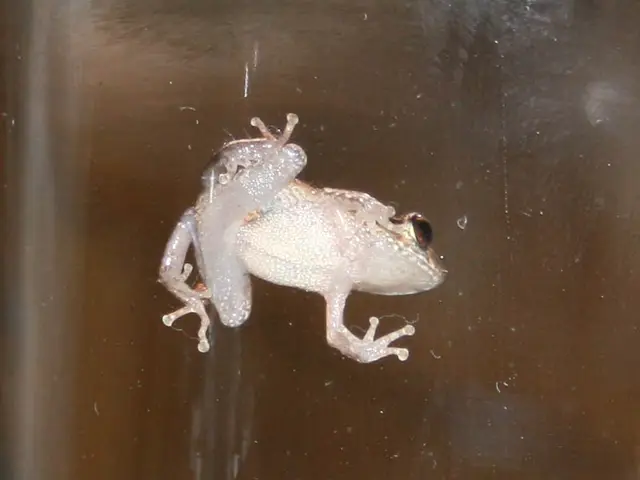
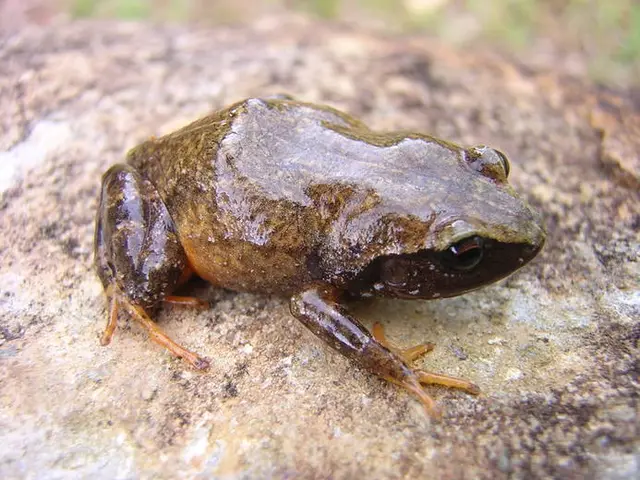
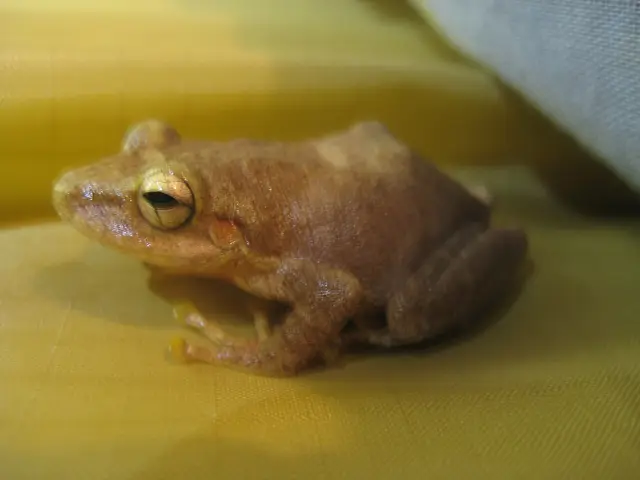
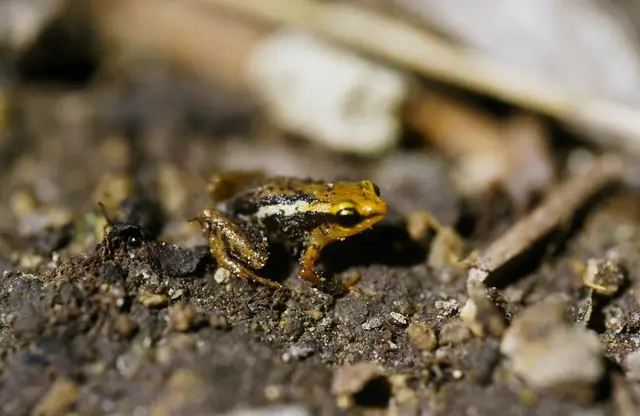
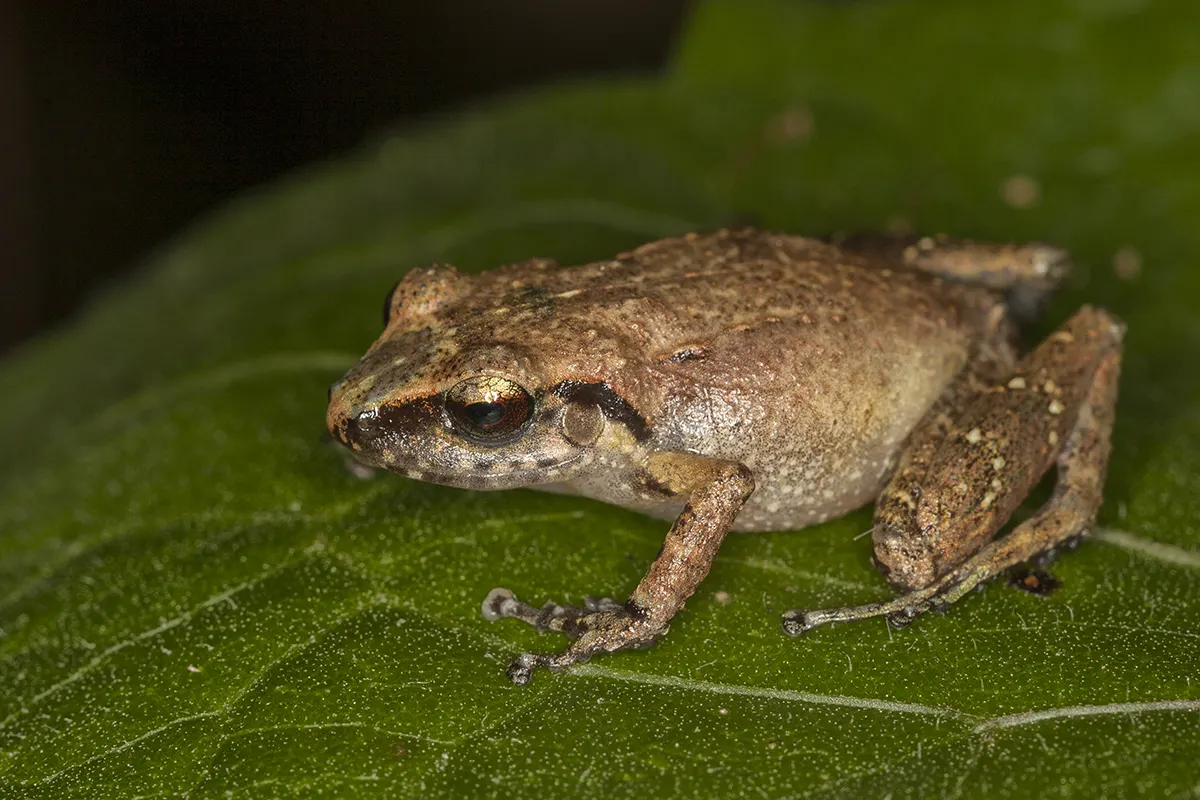
Eleutherodactylus minutus, the tiny robber frog (the Red List's main English name is Hispaniolan wheeping frog), is a small frog found only in the Cordillera Central of the Dominican Republic, on Hispaniola. The IUCN Red List rates it Endangered (2022 assessment) because its range is small and its upland habitat is being lost to farming, fire and drought.
What it is
This is a robber frog, a member of the family Eleutherodactylidae. Noble described it in 1923 from a dense palm thicket near Paso Bajito on the Jarabacoa to Constanza trail.
Its classification has shifted. A 1963 treatment placed it as a subspecies of Eleutherodactylus abbotti, and a 2006 classification listed it as Euhyas minuta. Current databases such as GBIF treat it as a full species, Eleutherodactylus minutus.
Where it lives
The frog is endemic to the Dominican Republic, which means it occurs nowhere else. The Red List puts it between roughly 880 and 2,400 m above sea level, in moist lowland and montane forest and in high-altitude grassland, and counts one to five locations. Some references give an elevation range of 879 to 2,300 m and describe it as moderately common in suitable habitat.
Museum specimens catalogued in a 2018 paper in Novitates Caribaea come from Valle Nuevo, in the Cordillera Central, and from Casabito in the Ébano Verde area, both in La Vega Province. The assessment estimates that about 80 per cent of the population lives inside protected areas.
Pins are Wikidata “endemic to” fields. Orange dots, when present, are GBIF occurrence tiles — survey bias included.
Why it is in trouble
Its Endangered rating rests on criteria B1ab(iii), which describe a limited range together with a continuing decline in the quality of habitat. The Red List records the population as decreasing but not severely fragmented. It was already rated Endangered in 2004.
The threats it lists are large-scale agriculture, small-holder farming and grazing, more frequent and intense fires, and drought. Each acts by converting or degrading the forest and grassland the frog depends on.
What is being done
Most of its population is already inside protected areas, which is its main safeguard. The assessment lists site management, habitat restoration and awareness work as the actions needed. No species-specific recovery programme or captive population has been reported.
Sources
Written for this catalog in our own words from the sources below, checked against them on 12 November 2026. Population figures are estimates and carry the year they were made. Status and assessment year: IUCN. 2026. The IUCN Red List of Threatened Species. Version 2026-1. iucnredlist.org.