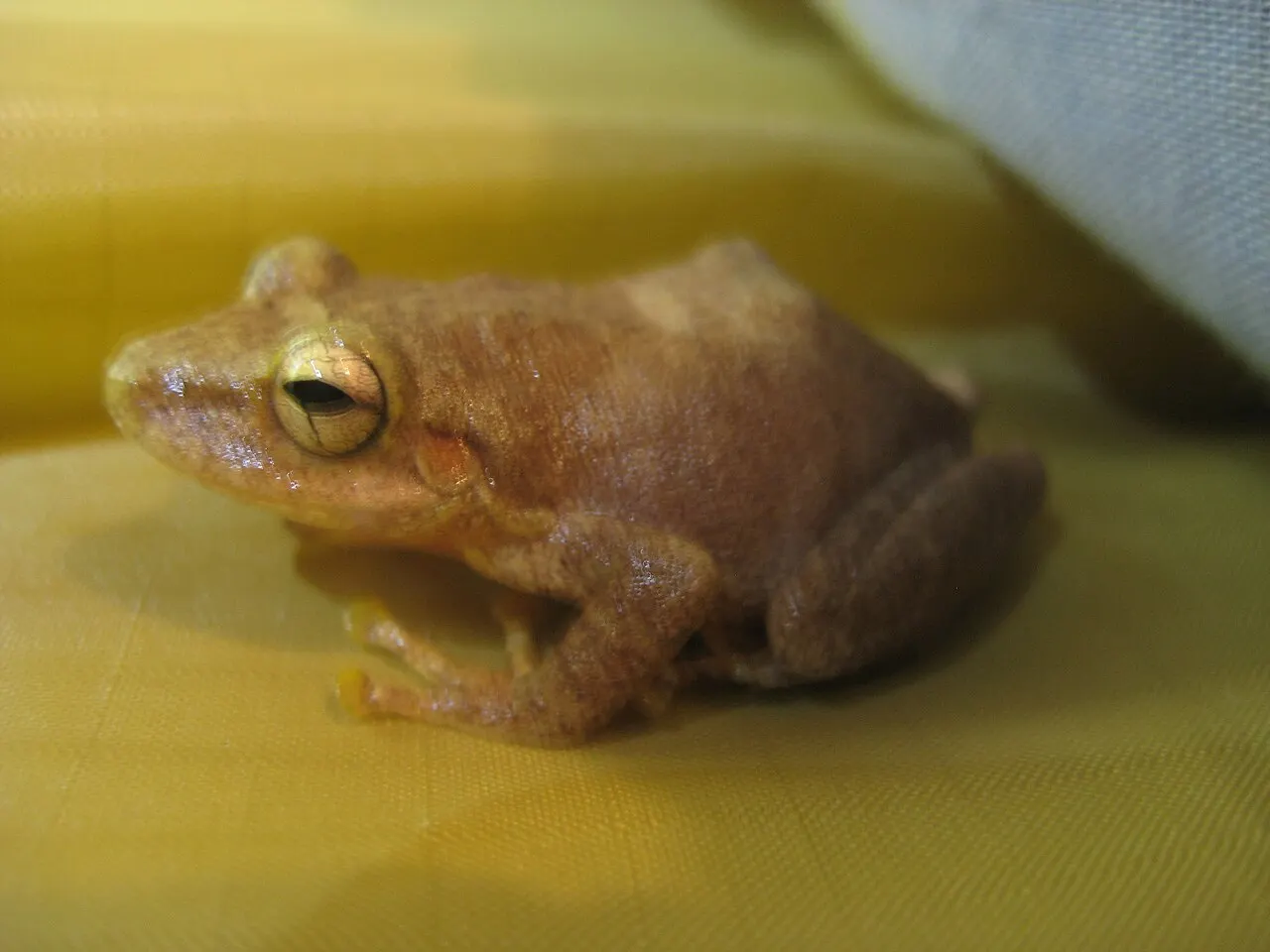
Critically Endangered
Eleutherodactylus diplasius
Eleutherodactylus diplasius
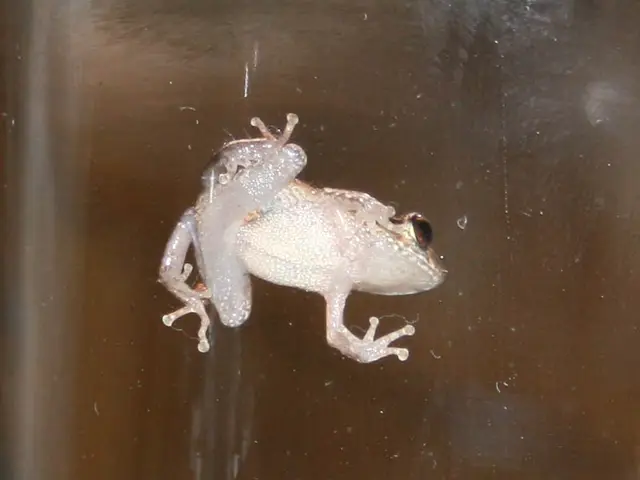
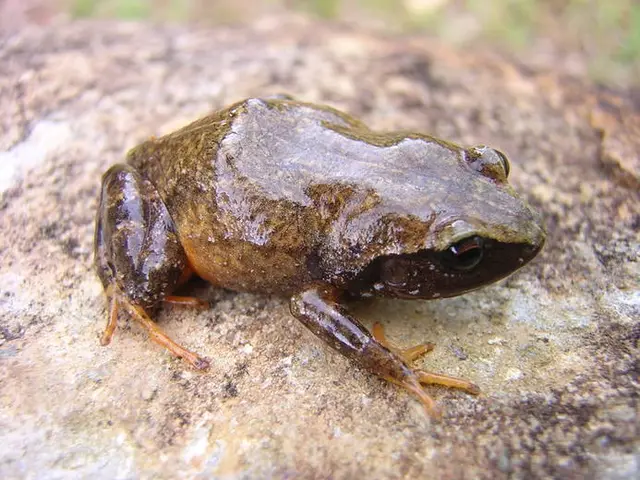
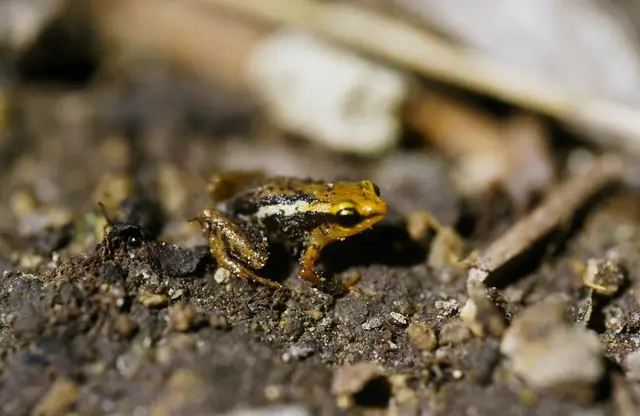
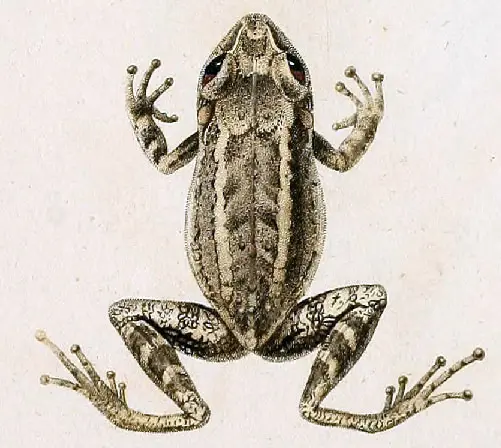
Eleutherodactylus diplasius, the patternless whistling frog, is a small frog endemic to Haiti, recorded from the Tiburon Peninsula west to the Massif de la Hotte. The IUCN Red List rated it Critically Endangered in 2022. Farming, fire and drought are listed threats, and its population trend is unknown.
Where it lives
The frog is known only from Haiti, from the Tiburon Peninsula in the north-west to the Massif de la Hotte in the south-west. A mapped range polygon covers roughly 814 square kilometres, and the IUCN gives an extent of occurrence of about 1,190 square kilometres. It has been recorded up to about 1,207 m above sea level. One record dates from July 2011, at Morne Deux Mamelles.
The IUCN describes the population as severely fragmented, with continuing decline in habitat area.
Pins are Wikidata “endemic to” fields. Orange dots, when present, are GBIF occurrence tiles — survey bias included.
What kind of habitat it uses
The Red List assessment lists moist montane forest, moist lowland forest and plantations. That suggests it can cope with some changed habitat, though the assessment still treats forest loss as the main concern.
The assessment also calls for research on its population size, distribution and trends, and on its life history and ecology.
A naming history
Albert Schwartz described the frog in 1973. Earlier it had reportedly been placed under the names Eleutherodactylus wetmorei williamsi (1968) and E. wetmorei diplasius, as a form of another species.
Why it is in trouble
The IUCN names shifting agriculture, small-scale harvesting that harms the frog by accident, more frequent fires and drought as threats. It lists ecosystem conversion, ecosystem degradation and reduced reproductive success among the effects, and estimates an ongoing population reduction of 80 to 100 percent based on direct observation and habitat decline.
The wider setting is bleak. A 2018 study in PNAS by Hedges and colleagues found that primary forest in Haiti fell from 4.4 percent of the country in 1988 to 0.32 percent in 2016, driven mainly by charcoal making and small-scale farming. Haiti is reported to have the highest share of threatened amphibians of any country.
What is being done
The frog occurs in at least one protected area. The assessment lists habitat protection, site protection and awareness raising as conservation actions.
Protection is hard to enforce. Pic Macaya National Park, in the Massif de la Hotte, is one of the last primary forest sites in Haiti, yet Pic Macaya and La Visite, the country's two original parks, lost 60 to 75 percent of their primary forest over about 35 years, according to Mongabay's report on the PNAS study.
Sources
Written for this catalog in our own words from the sources below, checked against them on 12 November 2026. Population figures are estimates and carry the year they were made. Status and assessment year: IUCN. 2026. The IUCN Red List of Threatened Species. Version 2026-1. iucnredlist.org.