Critically Endangered
Eleutherodactylus oxyrhyncus
Eleutherodactylus oxyrhyncus
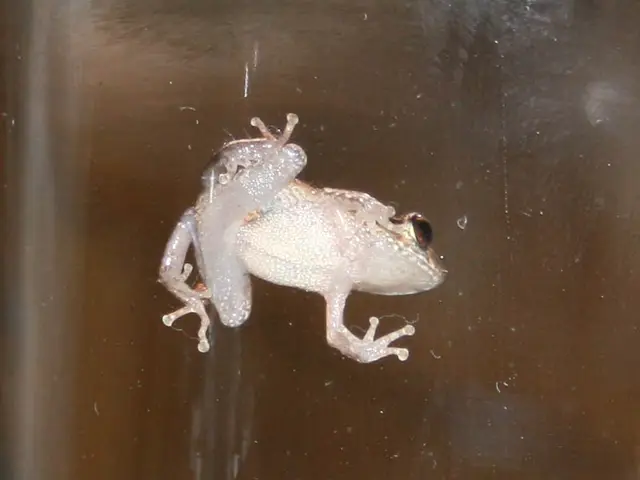
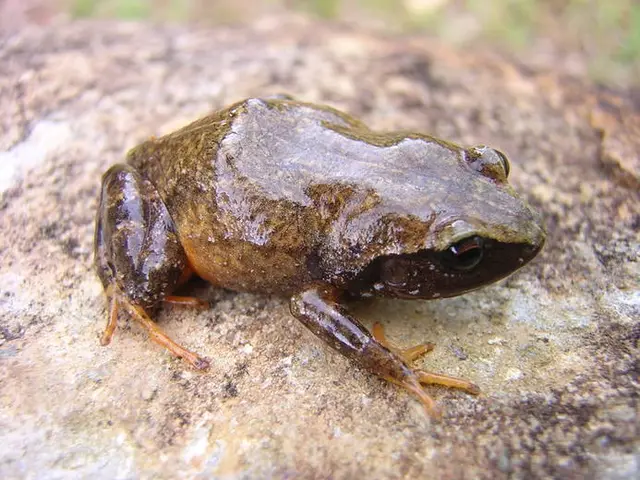
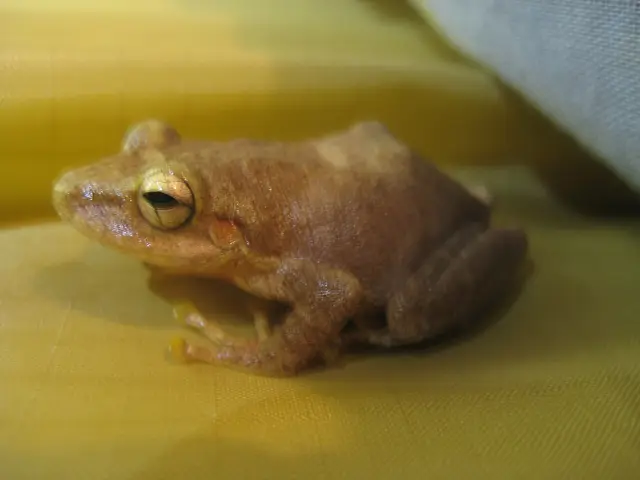
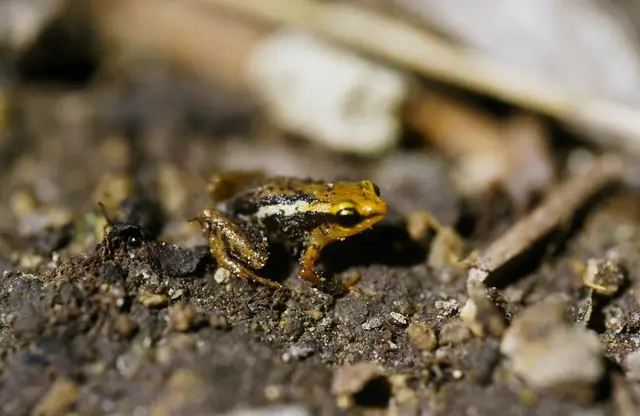
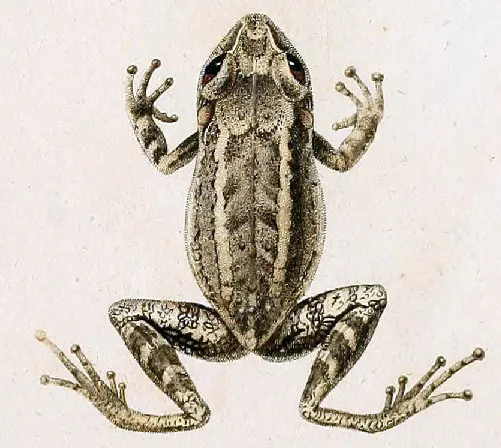
The rednose robber frog (Eleutherodactylus oxyrhyncus) is a small forest frog from the mountains of Hispaniola. The IUCN Red List rated it Critically Endangered in 2022, with a decreasing population and an estimate of only 249 individuals. It survives in a few highland forests, including two national parks.
What it is
This is a robber frog in the family Eleutherodactylidae. It was described in 1841 by the French zoologists Duméril and Bibron, who first named it in the genus Hylodes. A second name, Eleutherodactylus femur-levis, published by Cochran in 1935, is now treated as a synonym of the same animal.
Almost nothing about its size, colour or call appears in the sources available online, so those details are left out here rather than guessed.
Where it lives
The species is endemic to Hispaniola, the island shared by Haiti and the Dominican Republic. It is known from two mountain systems, the Massif de la Hotte on the southern peninsula of Haiti and the Massif de la Selle. It is reportedly present on both sides of the border, though the Red List assessment lists Haiti only. Records run from about 333 to 1,500 metres above sea level.
Its habitat is moist forest, both lowland and montane. It is reported from two Haitian national parks. Pic Macaya, in the Massif de la Hotte, has humid forest on karst limestone at middle elevations and a mix of open pine and broadleaf cloud forest higher up. La Visite, in the Massif de la Selle, has pine as its most widespread tree, with karst broadleaf and wet montane forest as well.
Pins are Wikidata “endemic to” fields. Orange dots, when present, are GBIF occurrence tiles — survey bias included.
Why it is in trouble
The 2022 assessment gives a population estimate of 249 and says numbers are still falling, which places the frog under criterion C1 (a very small, declining population). The generation length used is about 3 years.
The threats listed are small-holder farming, the unintended effects of small-scale harvesting, and more frequent or more intense fires. The assessment records ecosystem conversion and degradation as the stresses, and it notes a continuing decline in the area the frog occupies. Habitat degradation is also reported inside Pic Macaya and La Visite, so a park boundary is no guarantee. At Pic Macaya, charcoal production is among the park's biggest threats, and frequent fire favours pine over young broadleaf trees.
What is being done
The frog occurs in at least one protected area. The conservation needs listed are site and area management, resource and habitat protection, habitat restoration, and awareness work. Pic Macaya was enlarged from about 2,000 to more than 8,000 hectares in March 2013 under the Macaya Project, whose goals include reforesting degraded land and enforcing protection of wildlife.
Sources
Written for this catalog in our own words from the sources below, checked against them on 12 November 2026. Population figures are estimates and carry the year they were made. Status and assessment year: IUCN. 2026. The IUCN Red List of Threatened Species. Version 2026-1. iucnredlist.org.