Endangered
Pristimantis dorado
Pristimantis dorado
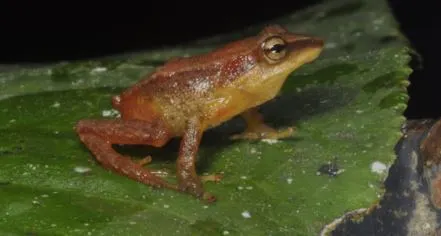
Pristimantis dorado is a tiny golden rain frog from a high Andean cloud forest in Colombia, known only from the edge of Chingaza National Park. Described in 2016, it is listed as Endangered (2019) with a range of about 140 km2 and a decreasing population. Males call without a vocal sac.
How to recognise it
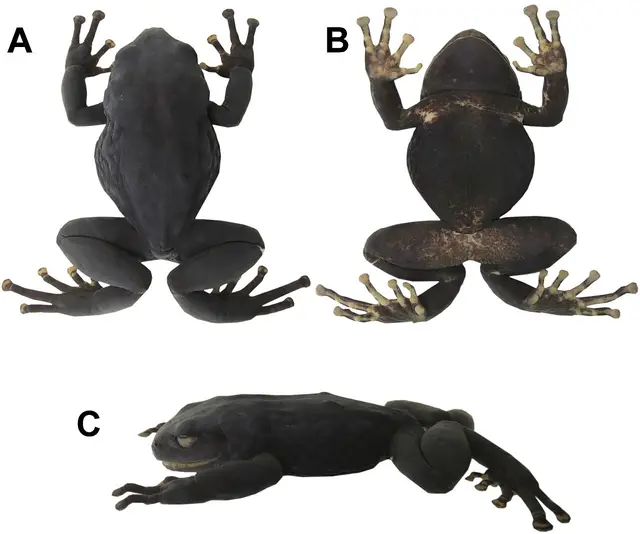
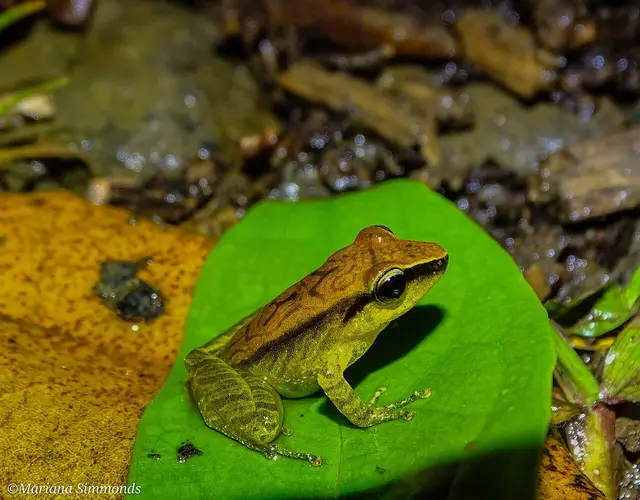
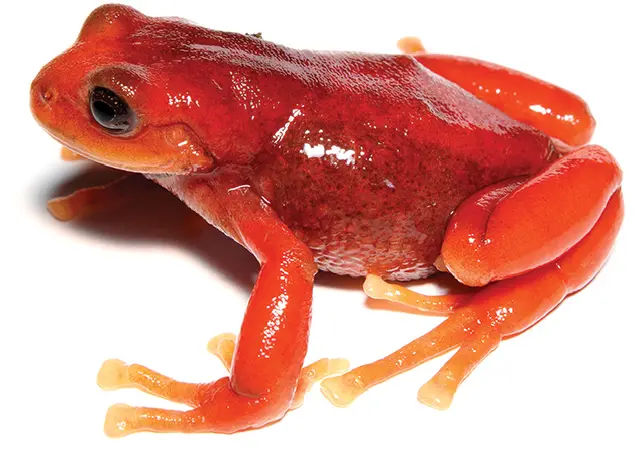
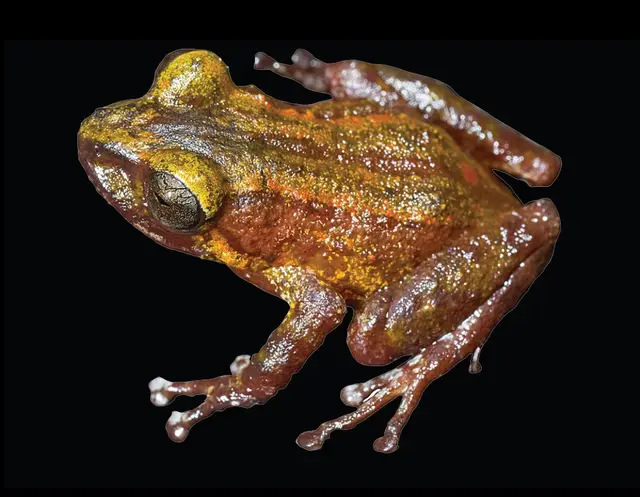
It's a very small frog, under 2 cm long. A female paratype measured 19.2 mm from snout to vent, and press reports of the 2016 description put the species at about 0.7 inch. The back is pale gold, and the iris is metallic gold with a horizontal brown streak.
Its closest lookalike is Pristimantis acutirostris, which it may be related to. The new frog differs in lacking a tympanic annulus, vocal slits, a vocal sac and reticulated patterning on concealed surfaces. The name is Spanish for golden and nods to El Dorado, the legendary city of gold.
Where it lives
The frog was described from a single spot, an Andean cloud forest at about 2,650 m in the Cordillera Oriental, in the buffer zone of Chingaza National Park and Farallones de Gachalá (Medina municipality, Cundinamarca). Roadside shrubs there grow among plants such as Miconia and Weinmannia species, near wax palms. It shares the site with another rain frog, Pristimantis frater.
The Red List gives an extent of occurrence of about 140 km2, an elevation range of 2,430 to 2,720 m, and one to three locations. Its habitat is moist montane forest, and it occurs in at least one protected area.
Pins are Wikidata “endemic to” fields. Orange dots, when present, are GBIF occurrence tiles — survey bias included.
How it lives
Males call at night, observed between 19:00 and 22:30 in light drizzle, from vegetation 50 to 150 cm above the ground. They give an irregularly pulsed series of clicks even though they have no vocal sac or vocal slits. When two or more males called from the same plant, they raised their call rate and shortened the gaps between calls, a response that may be aggressive. No physical contact was seen.
Rain frogs of this genus generally lay eggs that hatch straight into tiny frogs with no tadpole stage, and this species is likely to do the same, so it probably doesn't need open water. Its eggs and young haven't been described.
Why it is in trouble
The Red List names small-holder farming, and small-holder grazing and ranching, as ongoing threats, with ecosystem conversion and degradation as the effects. The area it occupies is still shrinking and the population trend is decreasing.
What is being done
Listed actions are resource and habitat protection and site or area protection. The type locality lies in the buffer zone of Chingaza National Park.
Sources
Written for this catalog in our own words from the sources below, checked against them on 12 November 2026. Population figures are estimates and carry the year they were made. Status and assessment year: IUCN. 2026. The IUCN Red List of Threatened Species. Version 2026-1. iucnredlist.org.