Endangered
Green mantella
Mantella viridis
The green mantella is a tiny, brightly coloured frog from the extreme north of Madagascar. The IUCN Red List classes it as Endangered (assessed 2017, population decreasing). It lives in dry forest and along streams, and it is threatened by habitat loss and by collection for the pet trade.
How to recognise it
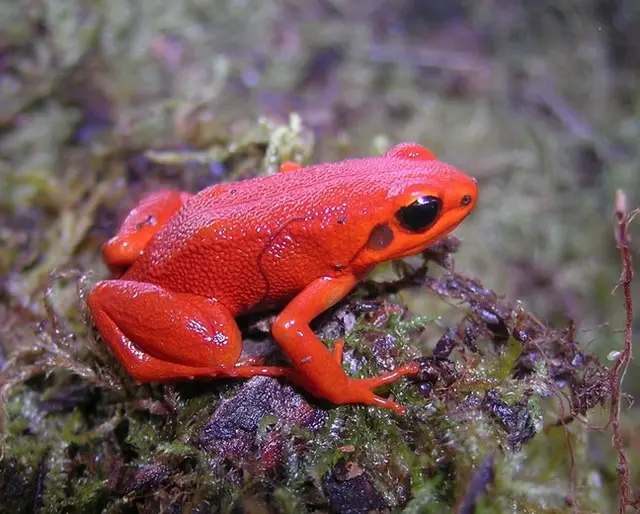
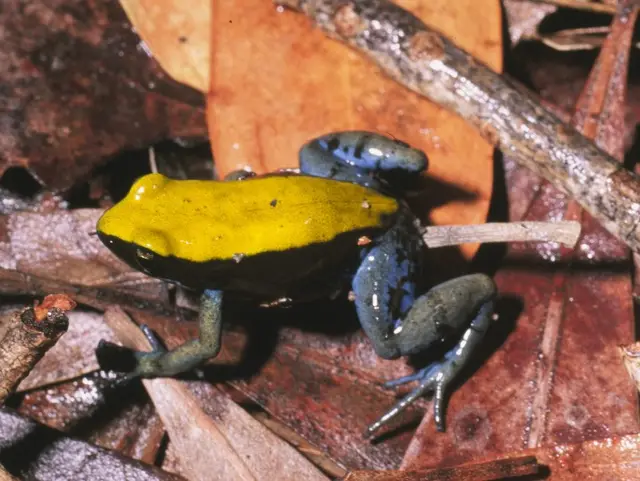
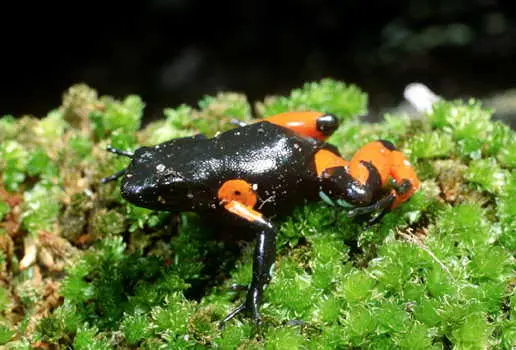
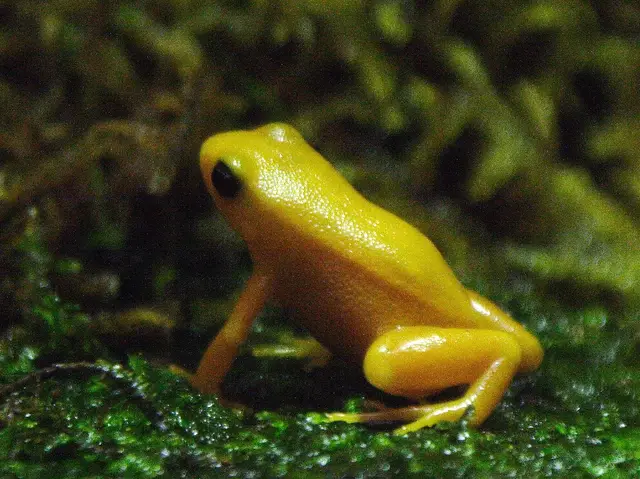
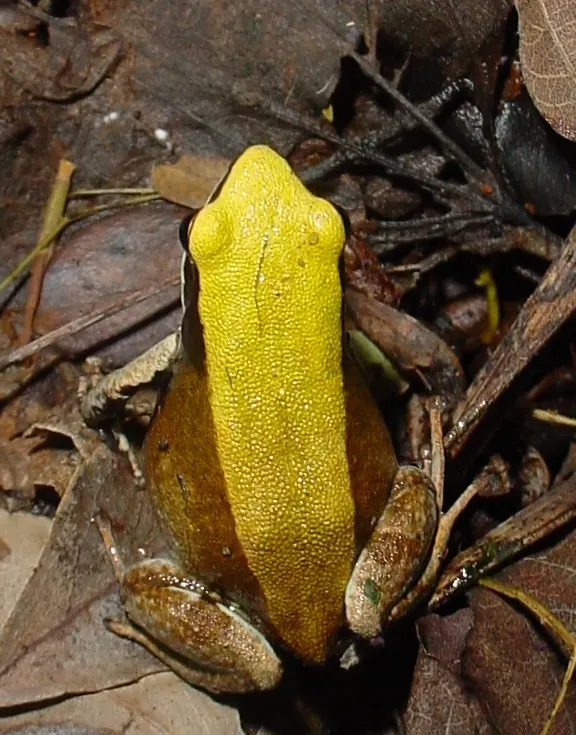
Mantella viridis is a small frog. Males measure about 22 to 25 mm and females 25 to 30 mm, so females are slightly larger and have a blunter snout. The back is a bright lime or yellow-green. The face is dark with a pale band along the upper lip, and the underside is black with bluish speckles. Some frogs look more yellow. It is active by day, and the bright colours are reported to warn predators that it is poisonous.
Where it lives
The species is found only in far northern Madagascar. Known populations include the protected area of Montagne des Français near Antsiranana and the small island of Nosy Hara to the northwest, where a separate population lives in dry forest.
Elevation is given as about 5 to 959 m in the Red List assessment and 50 to 300 m in a reference article. Habitats are dry tropical forest, permanent and seasonal streams, and heavily degraded former forest.
Pins are Wikidata “endemic to” fields. Orange dots, when present, are GBIF occurrence tiles — survey bias included.
How it lives
Breeding starts with the rains, and males call to attract females. One hobbyist account reports clutches of about 115 eggs laid among rocks and in dead tree trunks, where heavy rain later washes them into water. Hobbyist accounts describe a diet of small insects and other invertebrates. Wild life history is thinly studied.
Why it is in trouble
The Red List says the population is decreasing and severely fragmented, with continuing loss of habitat. Threats named are housing and urban growth, small-holder farming and grazing, and collection of the frogs themselves.
Fire, logging and grazing livestock are also reported, including zebu on the slopes of Montagne des Français. The frog has long been popular with hobbyists, and over-collection was a serious problem. Captive breeding is reported to have eased the pressure.
What is being done
The assessment lists site protection, habitat protection and trade management, and records that the species occurs in at least one protected area and is subject to international trade controls. Frogs are bred in captivity, including outside Madagascar, and hobbyist sources advise buying captive-bred animals. For what keeping exotic animals involves, see the overview at /exotic-pet-laws-by-state/.
Sources
Written for this catalog in our own words from the sources below, checked against them on 12 November 2026. Population figures are estimates and carry the year they were made. Status and assessment year: IUCN. 2026. The IUCN Red List of Threatened Species. Version 2026-1. iucnredlist.org.