Endangered
Blue-legged mantella
Mantella expectata
The blue-legged mantella (Mantella expectata) is a tiny, brightly coloured frog from the rocky sandstone country of Isalo in southwestern Madagascar. The IUCN Red List rated it Endangered in 2017. Its habitat is being lost to grazing and some mining, and it is sought for the international pet trade.
How to recognise it
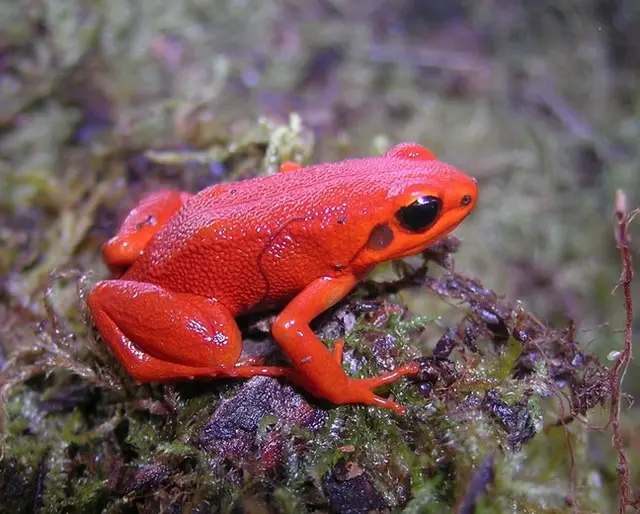
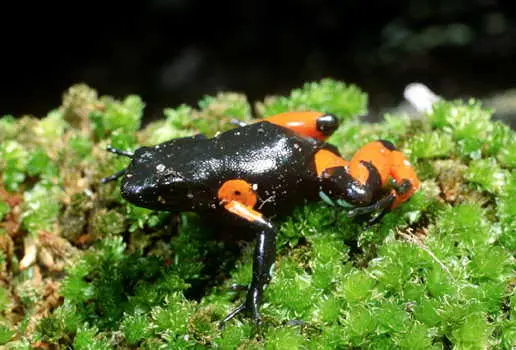
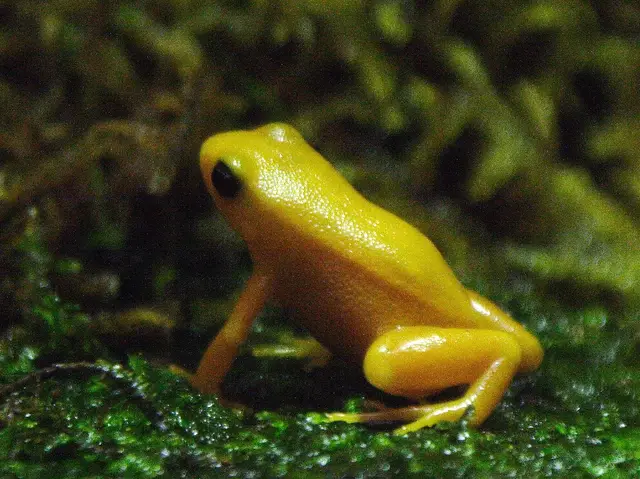
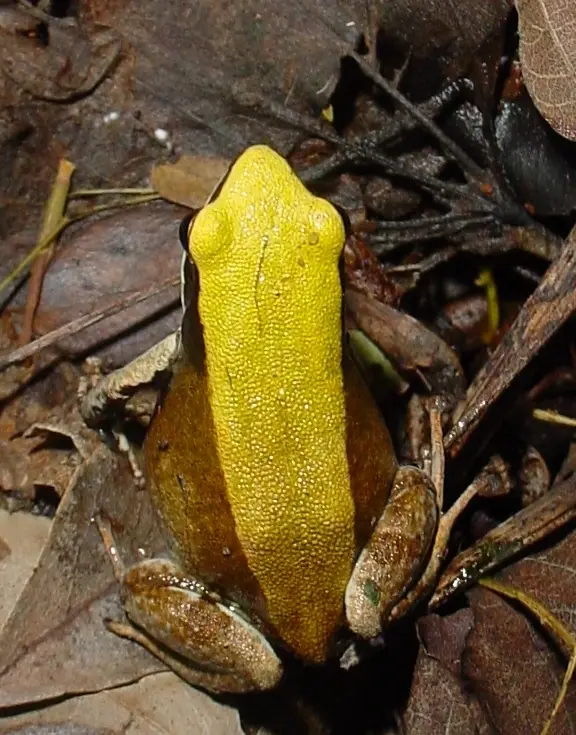
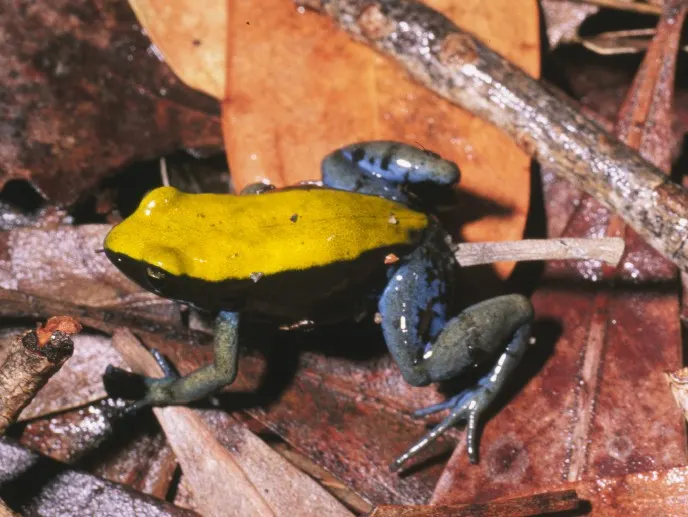
Adults are only 2 to 3 cm from snout to vent. The back and top of the head are yellow, the legs are blue, and the flanks and sides of the head are black. The underside is black with blue spots. Females are noticeably larger than males.
Colour varies a little across its range. Some frogs have darker or greyish legs, some in the far north have a reddish lower back, and some in the south have brown on the legs. The bold colours are a warning, since the skin carries alkaloid toxins.
Where it lives
The species is endemic to a small region of southwestern Madagascar. The IUCN says it is known from many sites in the Isalo massif, both inside and outside Isalo National Park, at about 700 to 1,000 m. A thin band of records continues south from there. The IUCN counts two to five locations and puts its extent of occurrence at about 2,073 square km.
Older records from near Toliara and from the arid west, including Tsingy de Bemaraha, probably refer to other frogs, and the IUCN treats only the Isalo and southern band populations as this species. It was described in 1992 by Busse and Böhme.
Its habitat is mostly seasonal streams and wet canyons, sometimes with narrow gallery forest, plus permanent streams, dry forest and marshy patches. It shares the Isalo area with the Malagasy rainbow frog (Scaphiophryne gottlebei), another threatened frog. Isalo is a sandstone massif of about 815 square km, cut by canyons up to 200 m deep.
Pins are Wikidata “endemic to” fields. Orange dots, when present, are GBIF occurrence tiles — survey bias included.
How it lives
It is active by day and belongs to the Mantella betsileo group. Breeding runs from about September to December. Eggs are hung on canyon walls or placed under rocks and later flooded, so the tadpoles develop in temporary pools. Only males call.
The IUCN notes that the frogs seem to stay close to the temporary streams where they breed. The species is reportedly short-lived, with a typical maximum age of about three years.
Why it is in trouble
The IUCN lists the population as decreasing, with continuing decline in its habitat area. It names habitat loss from grazing as the main threat, along with sapphire mining in some places that could spread toward protected areas. Fires are also common around Isalo.
The frog is actively sought for the pet trade, and up to several thousand can be collected in the rainy season. The IUCN says this collecting might pose a major threat, but that this has not yet been shown. Trade in the species is regulated under Appendix II of CITES.
What is being done
The species occurs in Isalo National Park, which Madagascar National Parks has administered since 1997, although the IUCN notes that most of its genetic diversity lies outside the park. It is listed on CITES Appendix II, and the IUCN says trade needs to be carefully regulated. It also calls for close monitoring of the population.
Sources
Written for this catalog in our own words from the sources below, checked against them on 12 November 2026. Population figures are estimates and carry the year they were made. Status and assessment year: IUCN. 2026. The IUCN Red List of Threatened Species. Version 2026-1. iucnredlist.org.