Critically Endangered
Black-eared mantella
Mantella milotympanum
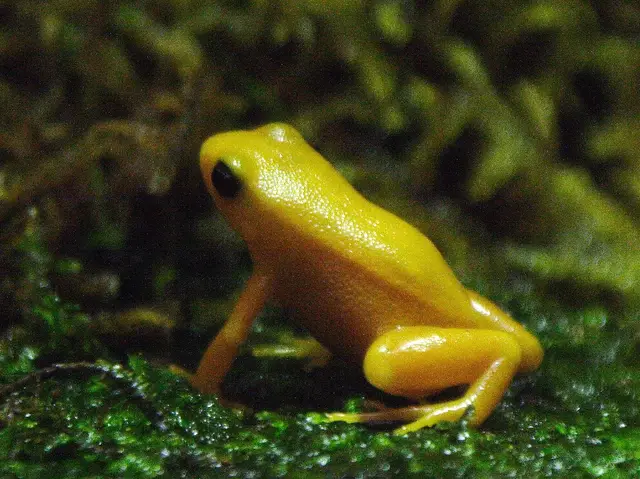
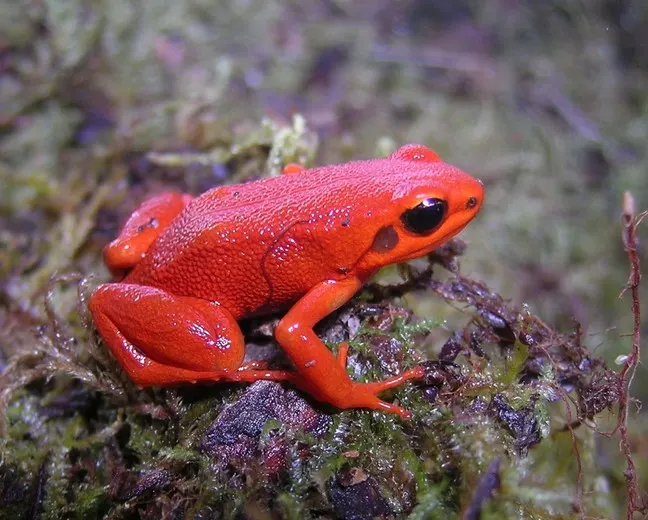
The black-eared mantella (Mantella milotympanum) is a tiny golden-orange frog found only in eastern Madagascar. The IUCN's 2017 assessment lists it as Critically Endangered, with a decreasing population confined to a single location. Farming, fire and collection for the pet trade all weigh on it.
How to recognise it
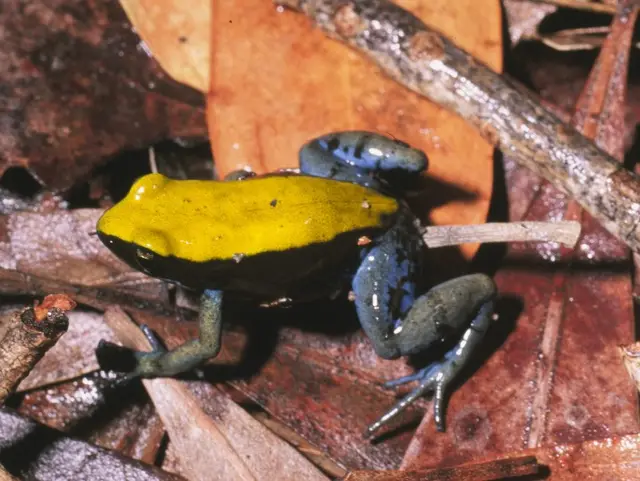
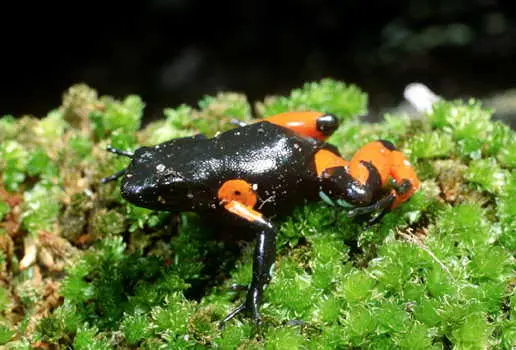
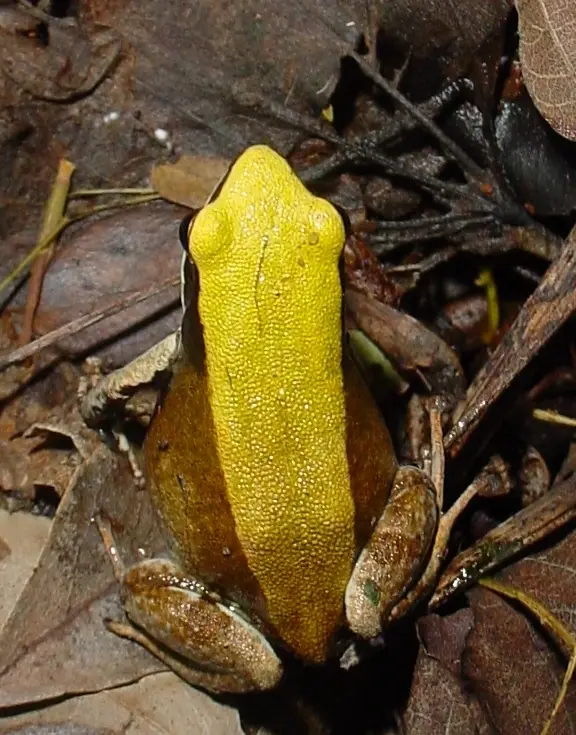
This is one of the smallest mantellas, only a couple of centimetres long. One amphibian profile gives 19 to 23 mm, but descriptions differ, so treat the size as approximate. Most individuals are golden orange to reddish, and a few are green.
It belongs to the family Mantellidae, the Madagascan frogs. Staniszewski first described it in 1996 as a form of the golden mantella (Mantella aurantiaca), and it is now treated as a species in its own right.
Where it lives
The frog is endemic to Madagascar. The IUCN counts a single location for it, between about 889 and 1,000 m above sea level, with an area of occupancy of roughly 9 km2 inside an extent of about 78 km2. It records the population as not severely fragmented and not migratory.
Its habitats are lowland moist forest, swamp forest and inland marsh or bog, with moist montane forest only marginally suitable. It is a creature of swampy forest edges rather than open country.
Pins are Wikidata “endemic to” fields. Orange dots, when present, are GBIF occurrence tiles — survey bias included.
How it lives
Life history is poorly documented. One account says the female lays her eggs on land after mating and that heavy rain then washes them into the swamp, where the tadpoles develop. That comes from a single popular source, so the details may vary.
Why it is in trouble
The assessment applies criteria B1ab(iii)+2ab(iii), which reflect a small range, very few locations and continuing loss of habitat quality. The population trend is decreasing, and the area it occupies is still shrinking.
The IUCN names shifting agriculture, small-holder farming and grazing, housing, and more frequent or intense fires as ongoing pressures on its habitat. It also lists deliberate collection of the frog itself, and records its use as a pet or display animal.
The pet trade is reported to be possibly a major threat, and large numbers were collected in the past.
What is being done
The IUCN lists site and habitat protection, trade management and captive breeding as conservation actions. It records that the frog occurs in at least one protected area and is subject to international trade controls.
Reports differ on how much of its habitat is covered. One 2017 summary says none of it was protected at that time, so the true level of protection is unclear.
Sources
Written for this catalog in our own words from the sources below, checked against them on 12 November 2026. Population figures are estimates and carry the year they were made. Status and assessment year: IUCN. 2026. The IUCN Red List of Threatened Species. Version 2026-1. iucnredlist.org.