Critically Endangered
Strabomantis anomalus
Strabomantis anomalus
Strabomantis anomalus is a large, stream-side rain frog of the Choco rainforests of western Colombia and northwestern Ecuador. The IUCN now lists it as Critically Endangered (assessed 2021, published 2023, population decreasing). It was once rated Least Concern, and it is possibly extinct in Ecuador.
How to recognise it
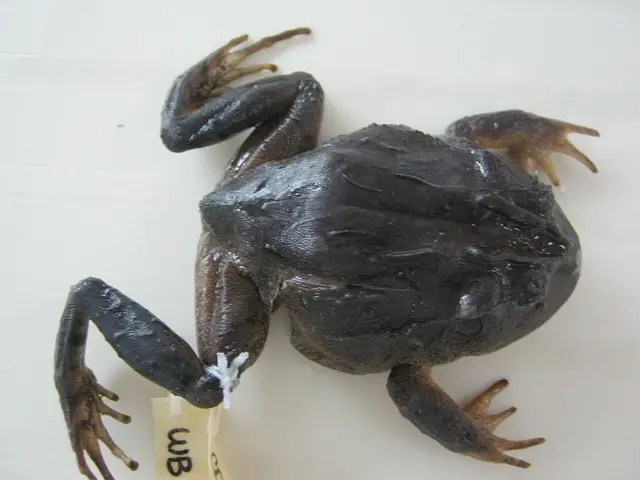
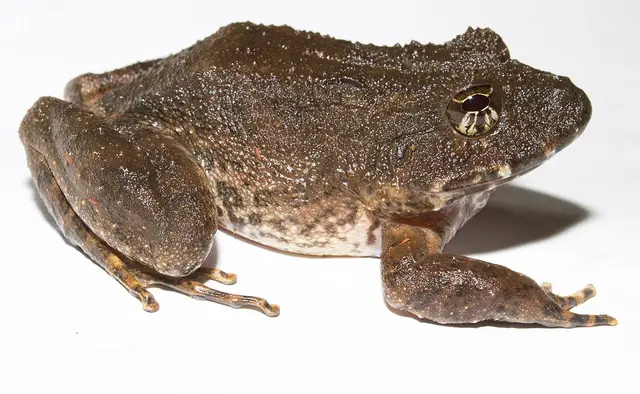
Females are much bigger than males. Males measure about 32 to 61 millimetres from snout to vent, females 77 to 92 millimetres. The skin on the back is coarse and bumpy, with many short ridges and folds, and it is dull grey, yellowish or brown with faint darker blotches.
The groin is mottled brown or black over a pale yellow, tan or pink ground, and the thighs are dark with yellow or tan marks. The throat is brown or grey with white spots, and the belly runs from white to pale yellow. Boulenger described the species in 1898.
Where it lives
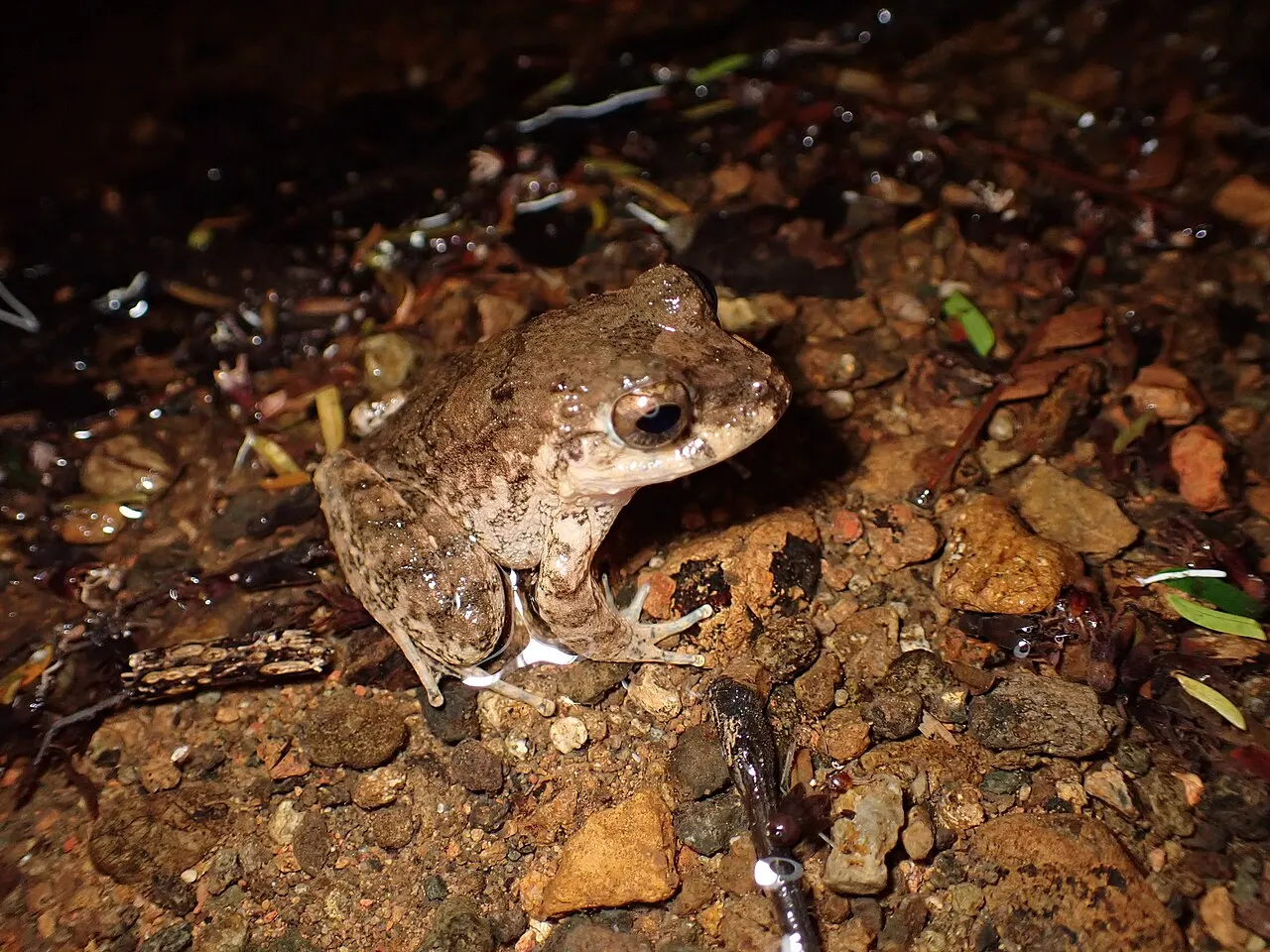
It lives in the Choco rainforest from near sea level up to about 1,180 metres. The IUCN counts it as present in Colombia and as possibly extinct in Ecuador. Its habitats are lowland and montane forest and permanent streams.
Most records are along clear, gravelly streams running through swampy forest, and the frog is active at night.
Pins are Wikidata “endemic to” fields. Orange dots, when present, are GBIF occurrence tiles — survey bias included.
How it lives
One observation described a female crouched over a clutch of 69 eggs in a shallow hollow on a riverbank. The nest looked likely to flood in the next heavy rain, which is odd for a frog presumed to develop directly from egg to froglet, with no free-living tadpole stage. It is a single record.
Why it is in trouble
The IUCN gives a population size of 249, with about 50 individuals in the largest subpopulation, and records continuing decline in the population and in its range. The criterion, C2a(i), applies to very small populations in which no subpopulation holds more than 250 mature individuals. The listed threats include small-scale and industrial farming, grazing and ranching, and housing, along with unintended effects of harvesting. Spraying of illegal crops has reportedly been a significant source of pollution.
The change in status is stark. A 2004 assessment rated the frog Least Concern and described it as locally moderately common, though believed to be declining.
What is being done
The species is recorded in at least one protected area. The IUCN calls for site and habitat protection and site management, and research on population size, distribution and trends. No species-specific programme is listed.
Sources
Written for this catalog in our own words from the sources below, checked against them on 12 November 2026. Population figures are estimates and carry the year they were made. Status and assessment year: IUCN. 2026. The IUCN Red List of Threatened Species. Version 2026-1. iucnredlist.org.