Endangered
Rusty robber frog
Strabomantis bufoniformis
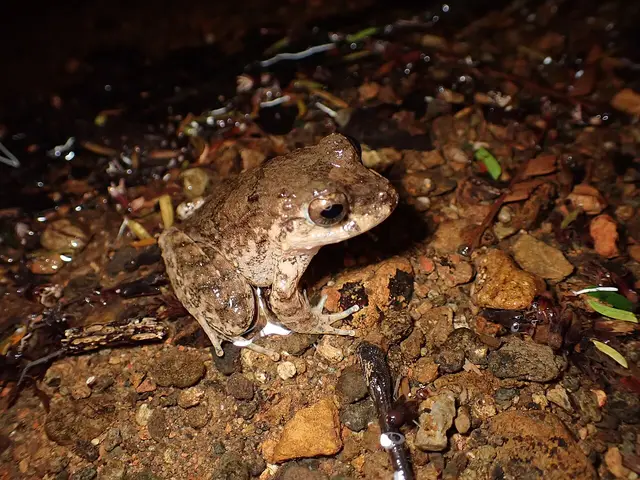
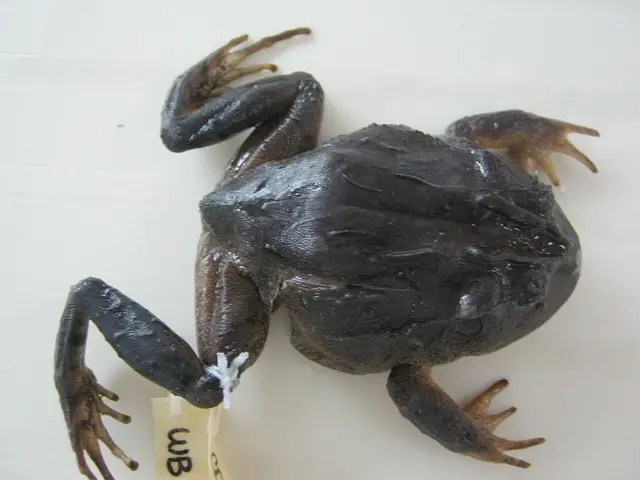
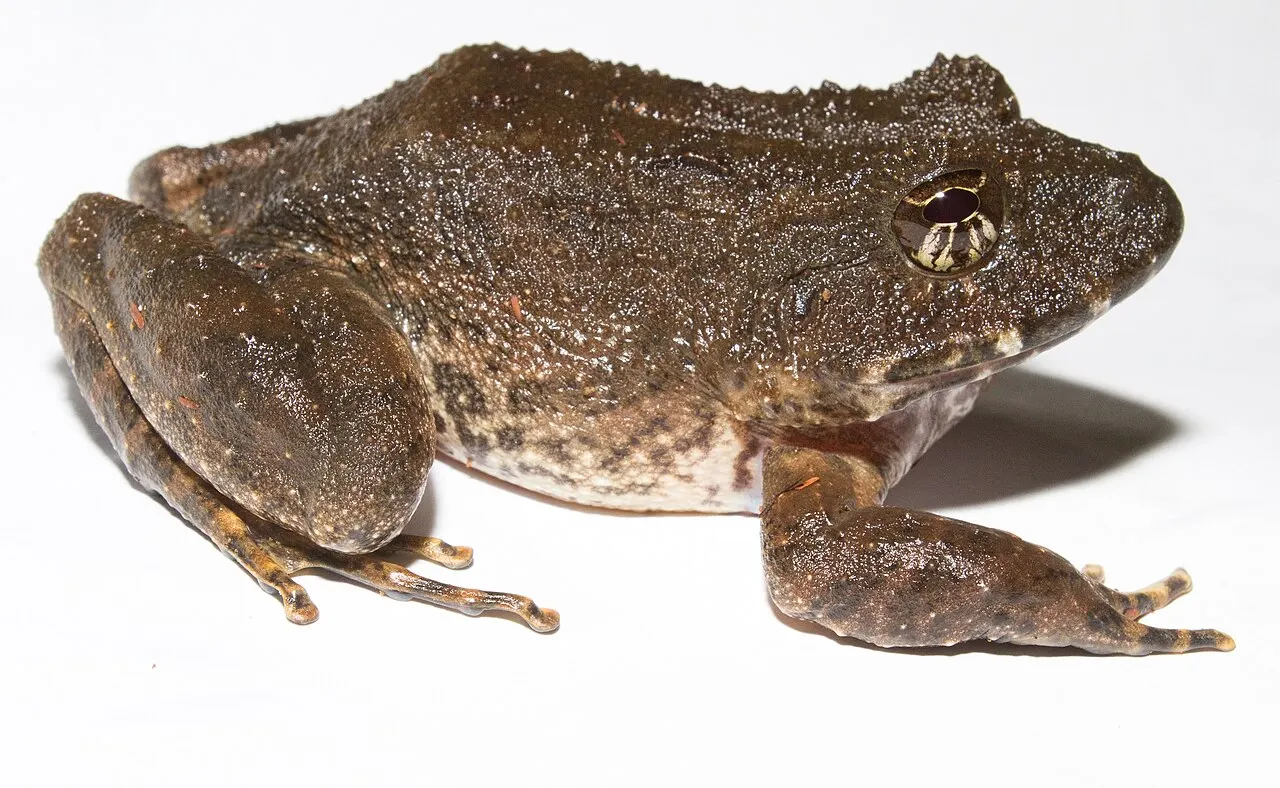
The rusty robber frog (Strabomantis bufoniformis) is a big, warty brown frog of lowland rainforest streams in Colombia and Panama, and possibly once Costa Rica. The IUCN Red List rated it Endangered in 2020, after assessing it as Least Concern in 2004 and 2008. Disease is the main reason for the fall.
How to recognise it
This is one of the larger forest frogs in its region. It is brown above, with a back covered in small tubercles, and white underneath. Females can grow to 94 mm from snout to vent, while males stay smaller, at around 50 mm. It is active at night.
Where it lives
Boulenger described it in 1896. It occurs in western Colombia, including Gorgona Island, and in Panama. It has reportedly not been seen in south-eastern Costa Rica since 1978, and the IUCN lists it there as possibly extinct.
The frog lives at low elevations, from about 15 to 350 m, along permanent streams in moist lowland forest. It has only been found in mature forest, not in disturbed habitat. It is uncommon almost everywhere, with Gorgona Island the exception, where it is reported to be quite common.
Pins are Wikidata “endemic to” fields. Orange dots, when present, are GBIF occurrence tiles — survey bias included.
How it lives
Females lay eggs in damp sand, and the young develop directly inside the eggs, so there is no free-swimming tadpole stage. The IUCN gives a generation length of about 5 years. Beyond this, wild breeding behaviour is poorly documented.
Why it is in trouble
The main threat is chytridiomycosis, a skin disease caused by the fungus Batrachochytrium dendrobatidis. The IUCN scores it as a high impact threat affecting more than half of the range, causing very rapid declines, and records an ongoing population reduction of about 50 percent judged from direct observation, habitat loss and the effects of introduced pathogens. The species is thought to be highly susceptible to the disease.
Mining and quarrying, accidental harm from small-scale harvesting and farming-related habitat change add smaller pressures. Because the frog needs undisturbed forest streams, clearing is hard for it to tolerate.
What is being done
In Panama the species is ranked as a high priority in the national amphibian conservation action plan, and the Panama Amphibian Rescue and Conservation Project has tried to hold it in captivity. That effort has struggled. Two pairs have bred, but not reliably, and the project's 2022 report records that staff had been unsuccessful at breeding it. Researchers have worked out hormone treatments for males, hoping to use assisted reproduction. The project says it will stop trying to maintain a captive population.
The IUCN records a recovery plan and ex situ conservation as in place, and the frog occurs in at least one protected area. The assessment lists a genetic resource bank, site management and habitat protection among the actions needed.
Sources
Written for this catalog in our own words from the sources below, checked against them on 12 November 2026. Population figures are estimates and carry the year they were made. Status and assessment year: IUCN. 2026. The IUCN Red List of Threatened Species. Version 2026-1. iucnredlist.org.