Endangered
Eleutherodactylus ruizi
Strabomantis ruizi
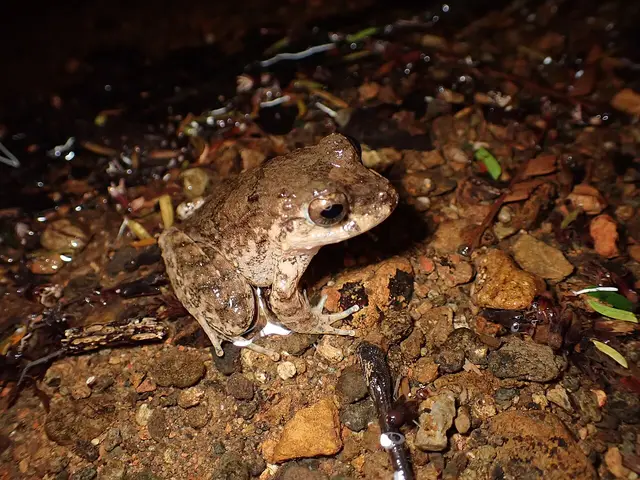
Ruiz's robber frog (Strabomantis ruizi, originally Eleutherodactylus ruizi) is a large, warty frog of the cloud forests on the western Andes of Colombia, known from a handful of sites in Valle del Cauca. The IUCN Red List lists it as Endangered (2017 assessment), with a decreasing population hit by farming, grazing and mining.
How to recognise it
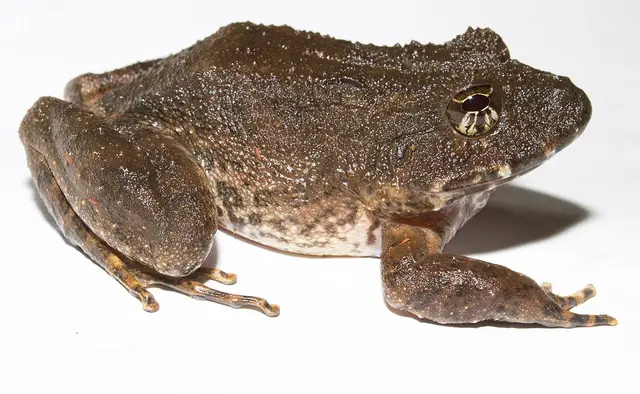
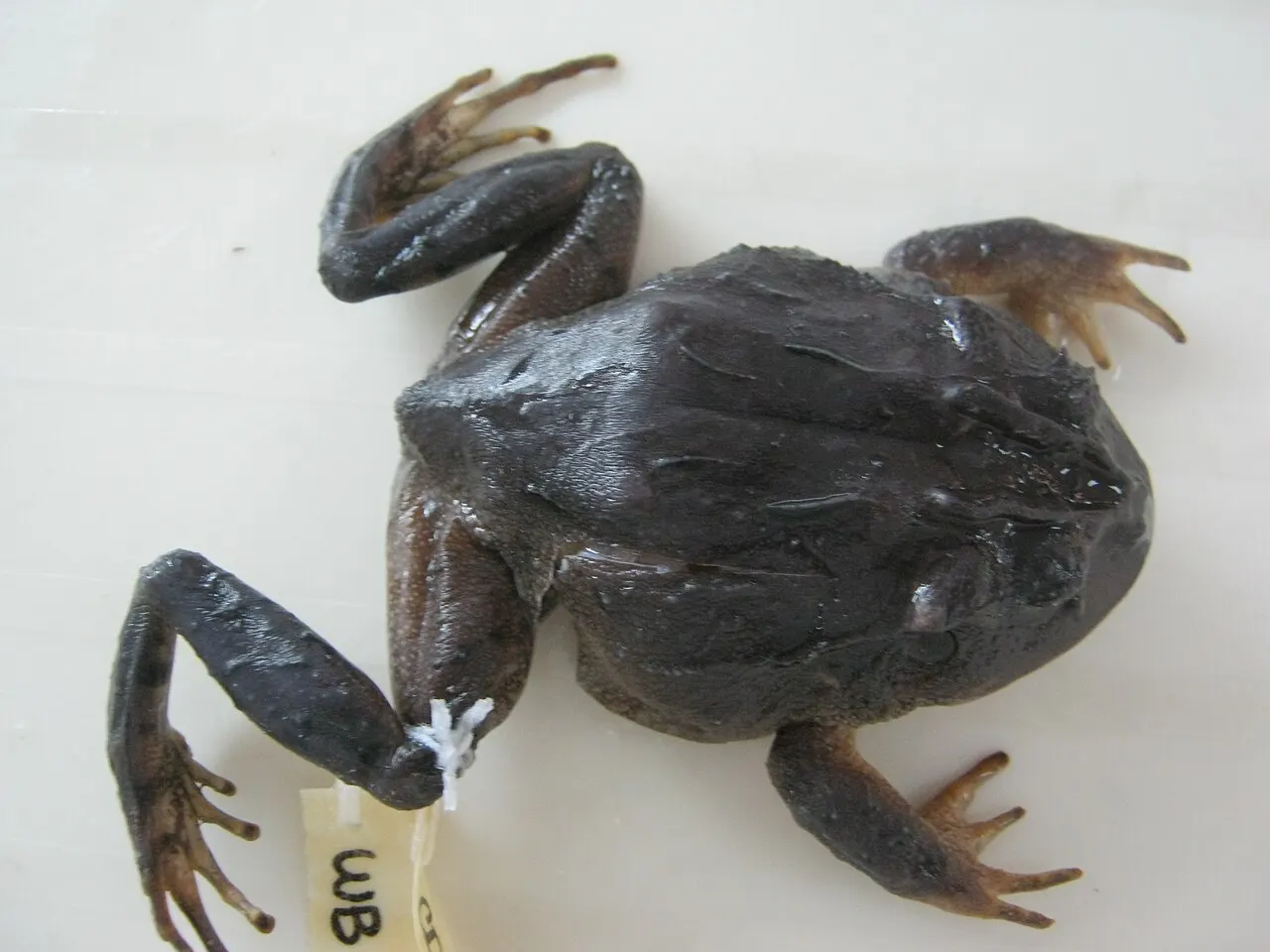
Among robber frogs this is a big one. Adult males measure roughly 30 to 45 mm from snout to vent, and females are much larger, about 60 to 70 mm. It has a wide head and skin on the back that is rough and shagreened, studded with small conical warts. A pair of folds runs back from the upper eyelids, and the limbs are tuberculate.
Other useful marks are the lack of discs on the fingers, small discs on the toes, fringes along the toes and a fold on the tarsus (the ankle region). It looks similar to Strabomantis necopinus, but that frog has finger discs and a different range. The species was first named as Eleutherodactylus ruizi by J. D. Lynch in 1981 and has since been moved to Strabomantis.
Where it lives
It is found only on the Cordillera Occidental, the western range of the Colombian Andes, in the department of Valle del Cauca. The original description rested on a single juvenile female from the Yotoco forest reserve. Records from the municipalities of Dagua, La Cumbre, Restrepo and Yotoco were later joined by two more, one near Trujillo (October 2009) and one in the Meléndez river basin near Cali (January 2010), about 31 km north and 21 km south of the older sites.
Elevations run from about 1,500 to 2,000 m. The IUCN counts four or five locations and puts its extent of occurrence at around 1,046 square km. The Trujillo frog was in disturbed forest beside a river and the Meléndez frog in advanced secondary forest, so it tolerates some change, though the IUCN names moist montane forest as its habitat.
Pins are Wikidata “endemic to” fields. Orange dots, when present, are GBIF occurrence tiles — survey bias included.
How it lives
Little has been written about its day-to-day life. The 2010 Meléndez record was made around 7:30 in the evening, and the frog shared its forest with several Pristimantis rain frogs and a glass frog. It's described as uncommon wherever it turns up.
Why it is in trouble
The Red List names small-holder farming, grazing and mining as ongoing pressures, and records a continuing decline in the area the frog occupies. A 2011 paper in Check List argued that its large size and small populations make it especially sensitive to human disturbance, mainly farming and new settlements.
Disease is a second concern. The IUCN lists the chytrid fungus Batrachochytrium dendrobatidis as a threat, with its timing and scale unknown, and the Check List paper noted that the species had tested positive for it at the type locality, in a 2008 study.
What is being done
The IUCN says the frog occurs in at least one protected area. As of 2010, only the type locality population was reported to be actually protected. The 2009 and 2010 sites both lie in buffer zones, one beside the Páramo del Duende regional natural park and the other beside Farallones de Cali National Park. The IUCN lists site protection and habitat protection as conservation needs, and research into its ecology, numbers, trends and threats as priorities.
Sources
Written for this catalog in our own words from the sources below, checked against them on 12 November 2026. Population figures are estimates and carry the year they were made. Status and assessment year: IUCN. 2026. The IUCN Red List of Threatened Species. Version 2026-1. iucnredlist.org.