Critically Endangered
Melanophryniscus admirabilis
Melanophryniscus admirabilis
Melanophryniscus admirabilis, the red-bellied toad, is a thumb-sized toad known from a single stretch of river in southern Brazil. Scientists described it in 2006. The IUCN Red List rated it Critically Endangered in 2023, with its trend unknown and just over a thousand individuals estimated in 2025.
How to recognise it
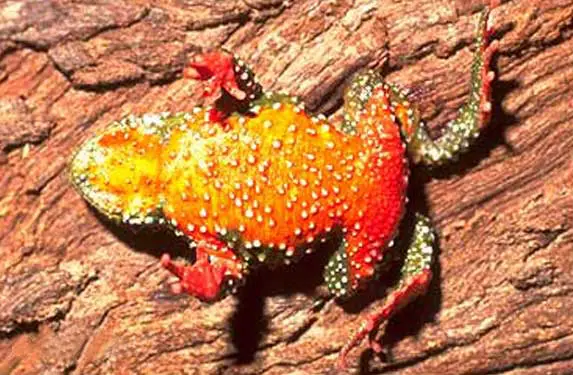
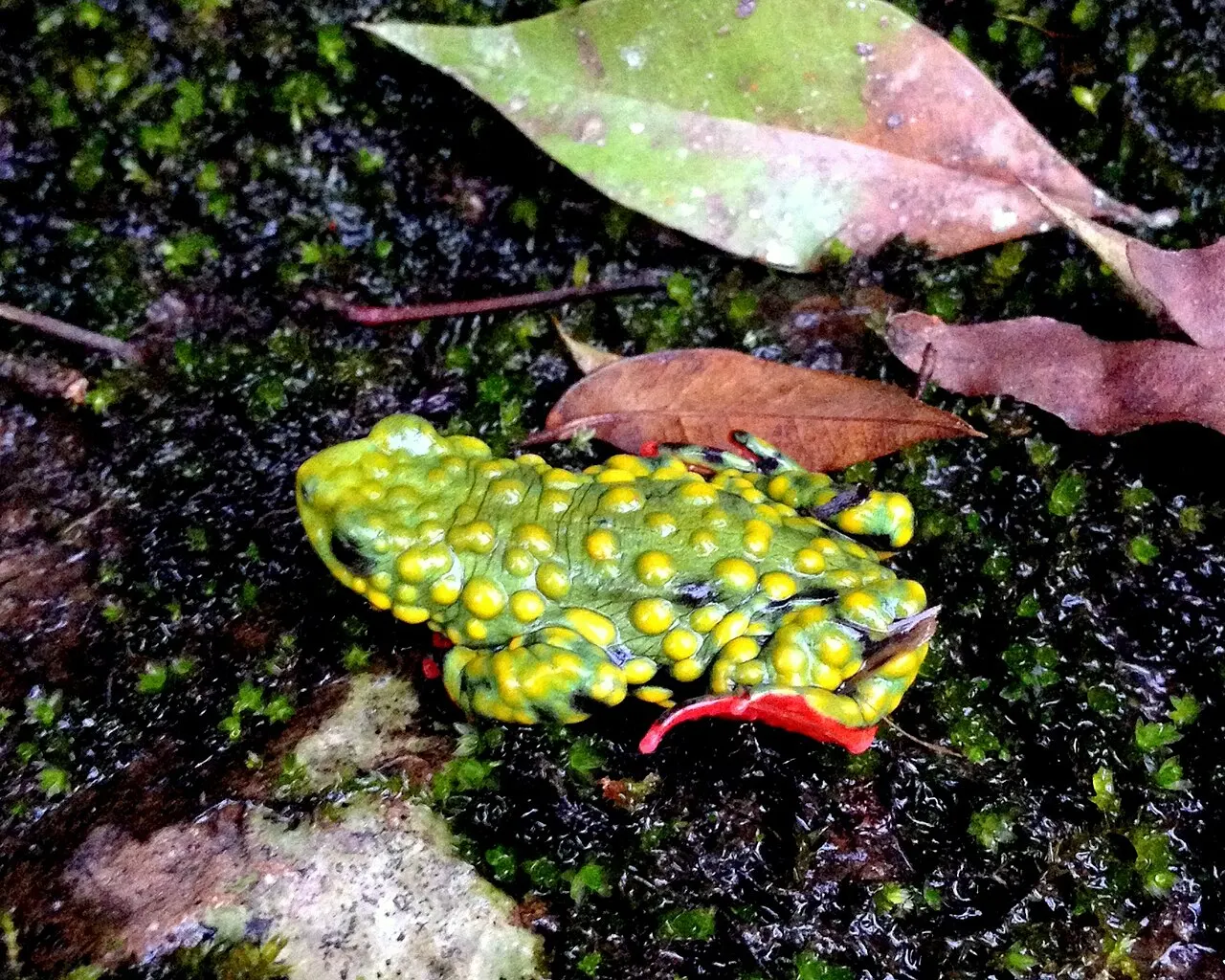
It is roughly the size of a thumb, with a green back and colourful legs and belly. The bright colours are a warning, since the toad's skin glands release toxins as a defence. Light green spots on the belly differ from one animal to the next, and researchers use them like fingerprints to tell individuals apart in a photo database kept since 2010.
Where it lives
The whole species lives along roughly 700 m of the Forqueta River at a site called Perau de Janeiro, in Arvorezinha, Rio Grande do Sul. This is the far south of the Atlantic Forest, in a forested valley with a rocky outcrop beside the river. The IUCN gives its extent of occurrence as 1.6 to 4 km², at 400 to 616 m above sea level, and lists it in rivers and streams, seasonal pools and lowland moist forest. It treats the species as a single location.
The site is one of the last remaining forest fragments in the region.
Pins are Wikidata “endemic to” fields. Orange dots, when present, are GBIF occurrence tiles — survey bias included.
How it lives
Breeding is explosive. Most breeding follows heavy rain and then sun, which warms temporary puddles near the river. Males come down from the hill to the rocky outcrop by the river and call to attract females. The best time to find toads mating is from late August to early December.
Why it is in trouble
With one tiny site, almost anything can be a disaster. A small hydroelectric plant on the Forqueta River was licensed in 2010, less than 300 m from the habitat. Brazil's Federal Prosecution Service halted construction in 2014. Mongabay reports it as the first documented case in Brazil, and possibly the world, of an amphibian stopping a project of that scale. The IUCN still lists dams, small and large, as an ongoing threat to the whole range.
In 2024 the river rose at least 20 m in the southern Brazil floods, reshaping the habitat. An October 2025 survey by a team from the Federal University of Rio Grande do Sul found 111 toads over two days. They were breeding, though one previously favoured study quadrat was no longer used.
The IUCN also lists pesticides and herbicides, small-scale grazing and farming, and plantations. Tobacco, eucalyptus and cattle have cleared forest across the region. The IUCN lists collection of the species as a pet or display animal as an ongoing threat. A 2025 Mongabay article says the toad has not yet been documented in the pet trade, though collectors seek out striking amphibians.
What is being done
The toad is covered by Brazil's National Action Plan for threatened herpetofauna, and the site was recognised as a Key Biodiversity Area and Alliance for Zero Extinction site in 2018. A research team has worked with the species for about 15 years and is running a three-year post-flood monitoring project. Local schools and outreach projects raise awareness, and a Rio Grande do Sul state bill (119/2024) proposes recognising the toad as the state's genetic heritage.
The IUCN records no protected area covering the population. The habitat is on private land used as a local tourist attraction, and no formal conservation unit exists. No captive breeding programme is mentioned in the sources.
Sources
Written for this catalog in our own words from the sources below, checked against them on 12 November 2026. Population figures are estimates and carry the year they were made. Status and assessment year: IUCN. 2026. The IUCN Red List of Threatened Species. Version 2026-1. iucnredlist.org.