Endangered
Yellow-peppered Salamander
Ambystoma flavipiperatum
The yellow-peppered salamander (Ambystoma flavipiperatum) is a wide-bodied mole salamander from the mountains of Jalisco, western Mexico. It's known from just two localities, one probably lost, and is listed as Endangered (2016 assessment). At Sierra de Quila, adults stay in water and keep their gills, a trait called neoteny.
How to recognise it
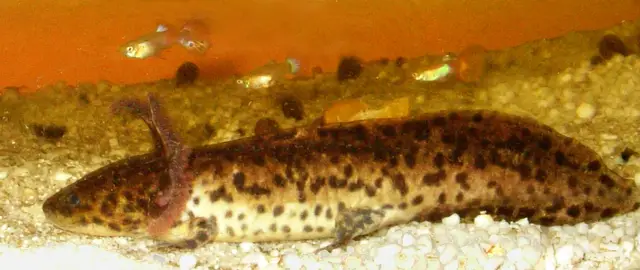
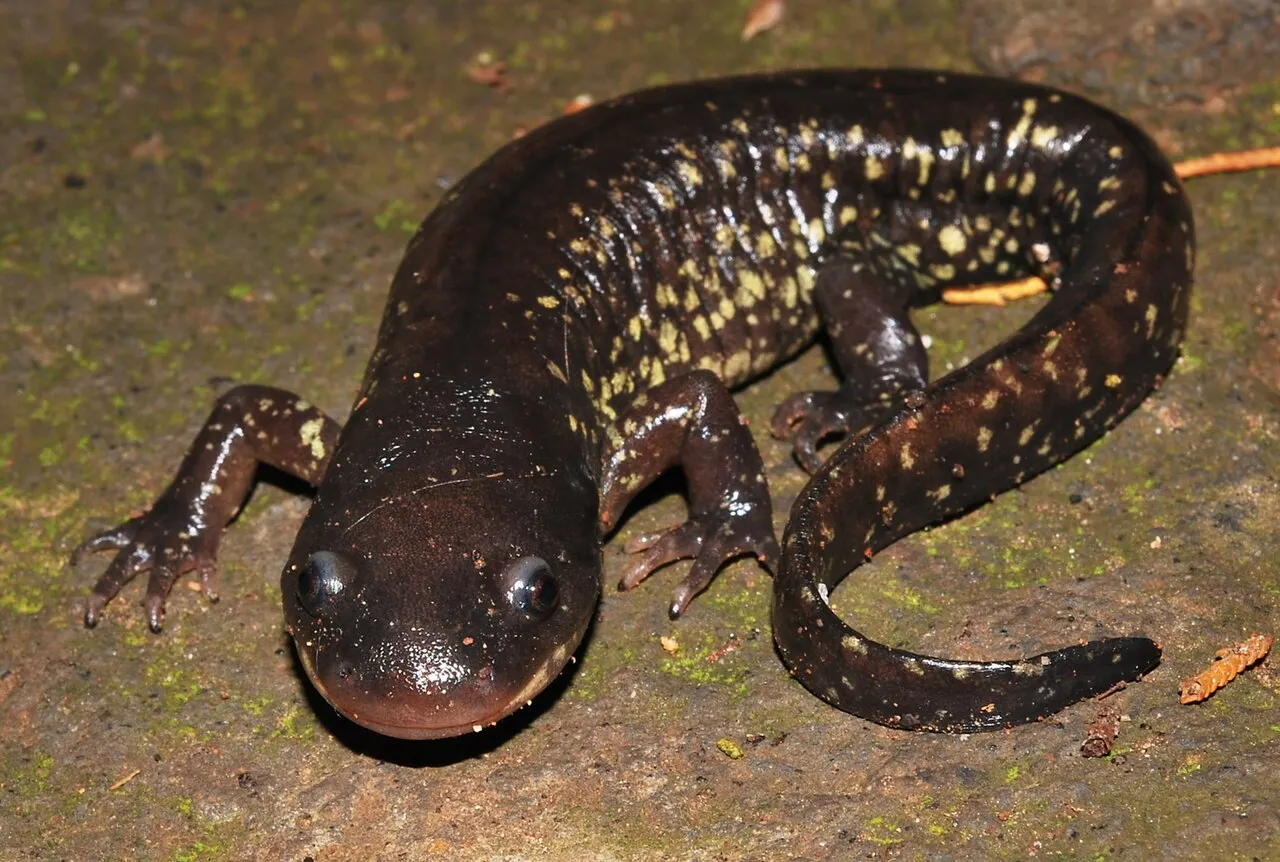
It's a large salamander named for its colour: yellow to cream speckling over a dark body, with some large dark spots on the back, head or limbs. James Dixon's original 1963 description was based on four metamorphosed specimens, and the holotype male measured 99.5 mm from snout to vent.
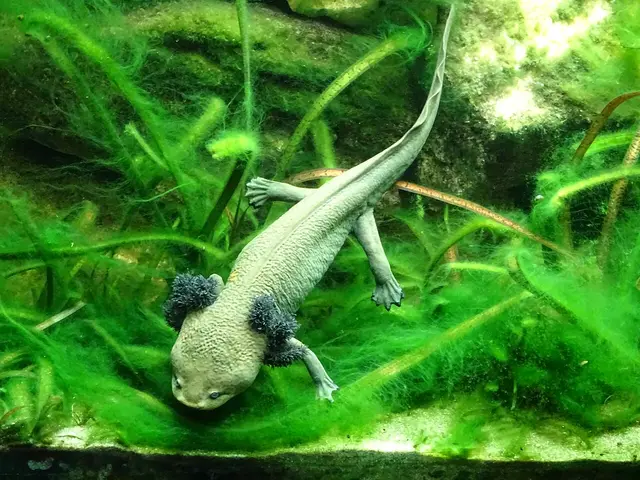
Animals seen in 2018 at Sierra de Quila were smaller, 67 to 89 mm snout to vent, with a black back dotted in cream to yellowish spots and two pale marks along the underside. Their larvae were greyish above and pale below, with long reddish gills, and measured 17 to 62 mm in total length.
Where it lives
The species is endemic to Jalisco. It's known from the type locality at Santa Cruz, about 48 km south of the Guadalajara metropolitan area, and from the Sierra de Quila, a protected area about 100 km south of the city. The IUCN gives an elevation range of about 1,494 to 2,400 m, an extent of occurrence of roughly 454 square kilometres and an occupied area of about 134 square kilometres.
Around Quila it lives in a slow-moving stream through riparian vegetation, surrounded by pine and oak forest. The IUCN also lists seasonal and permanent marshes and pools, dry forest and shrubland, and farm ponds as habitat. The Santa Cruz type locality was a different setting, thorn forest with rocky soil.
Pins are Wikidata “endemic to” fields. Orange dots, when present, are GBIF occurrence tiles — survey bias included.
How it lives
A 2019 paper in The Herpetological Bulletin by Axel Hernandez and colleagues reported the first larvae ever recorded for the species. On 1 August 2018 they found a neotenic male and female, one clutch of 120 to 140 eggs lying separately on the stream bottom near a large female, and eleven larvae. That suggests breeding continues into early August.
Dixon's original specimens were four metamorphosed adults, but the Quila animals were all neotenic. The team concluded the species is facultatively neotenic, and noted that land-living adults may shelter in the burrows of Buller's pocket gopher near streams.
Why it is in trouble
Few places hold it, and those are shrinking. The IUCN names small-farm clearing, roads and housing as pressures. The 2019 paper adds water pollution and introduced predatory fish. At Santa Cruz the only wetland reportedly went under a shopping mall, and the animals there have probably disappeared.
Sierra de Quila is protected, but the Hernandez team says pollution from visitors and changing rainfall have still cut suitable habitat. The IUCN assessment records a decreasing trend and a continuing decline in habitat area.
What is being done
The species occurs in a protected area and has been the subject of education and awareness work, according to the IUCN. A local committee in Sierra de Quila uses it as an umbrella species to help protect clean water. The Hernandez team calls the Quila population very important for conservation and says it needs further surveys, including genetic work. They also say the species is believed to breed well in captivity.
Sources
Written for this catalog in our own words from the sources below, checked against them on 12 November 2026. Population figures are estimates and carry the year they were made. Status and assessment year: IUCN. 2026. The IUCN Red List of Threatened Species. Version 2026-1. iucnredlist.org.