Endangered
Mountain toad
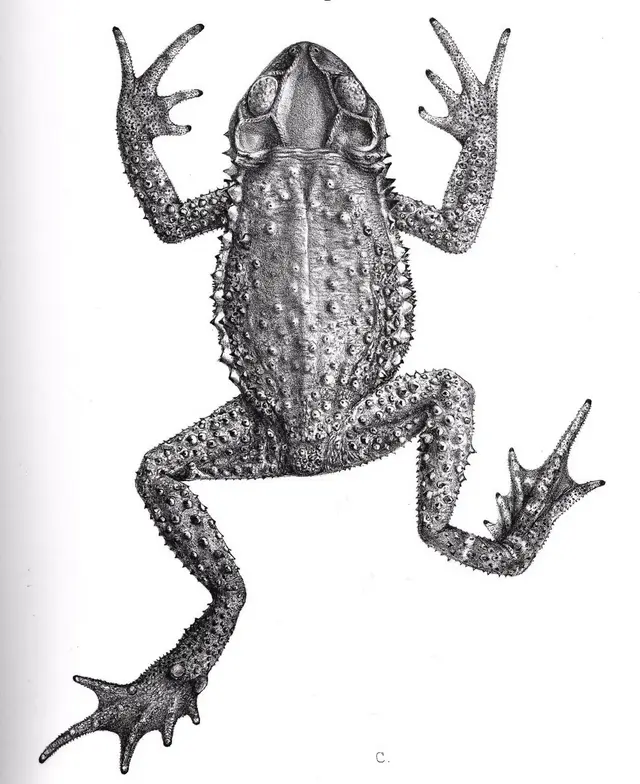
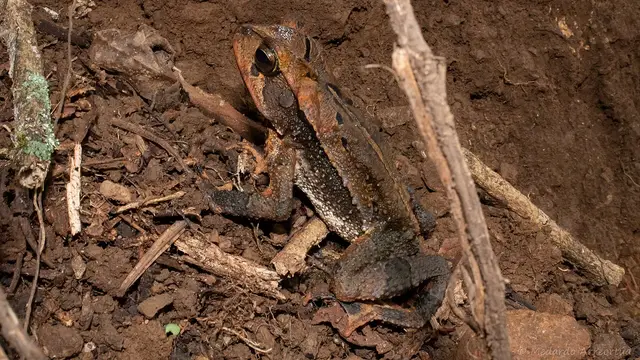
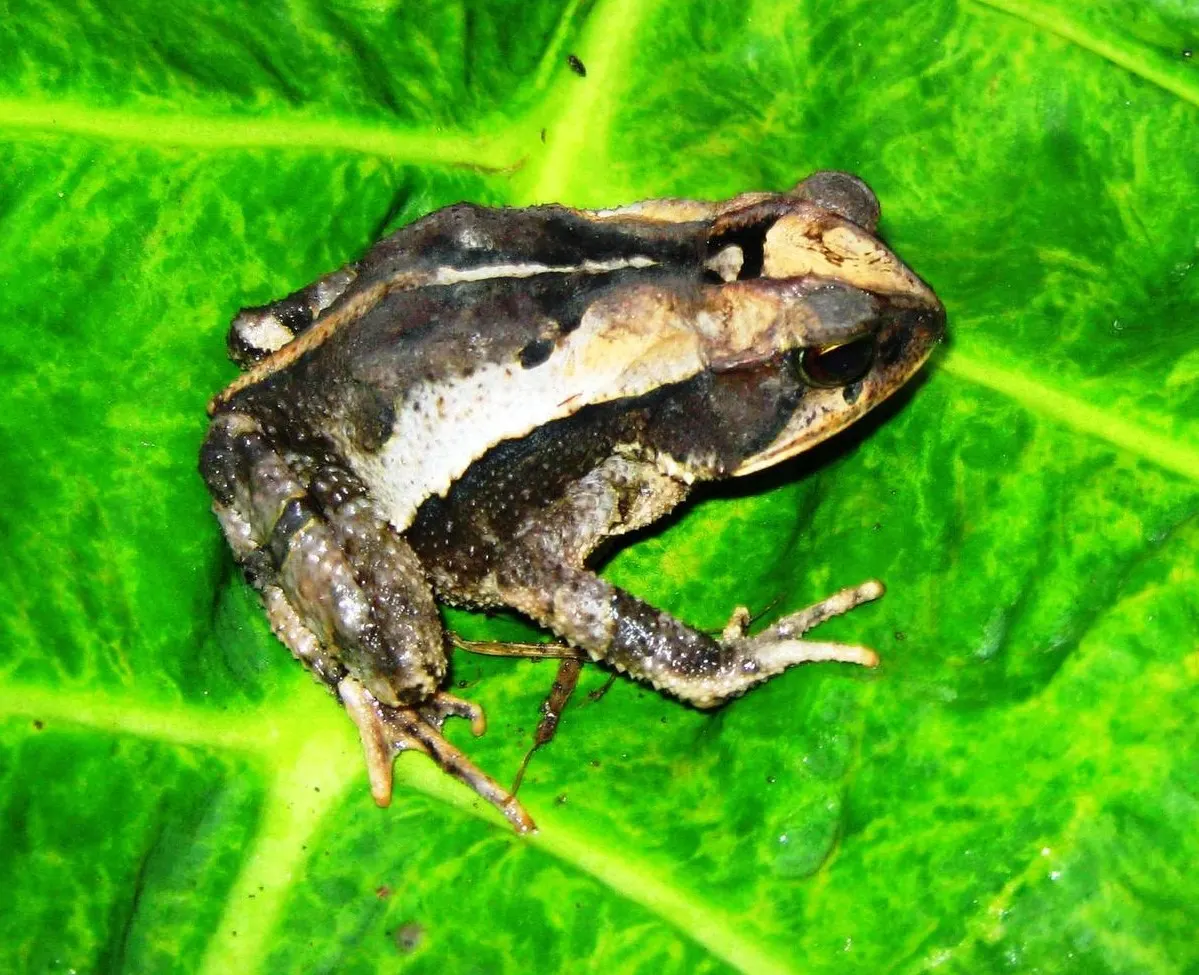
Incilius cavifrons
The mountain toad (Incilius cavifrons) is a small-range toad found only in the Sierra de los Tuxtlas, a volcanic highland in southern Veracruz, Mexico. It breeds in streams in the forest. The IUCN Red List rated it Endangered in 2016, with a decreasing population and a single known location.
Where it lives
The mountain toad is endemic to the Sierra de los Tuxtlas in southern Veracruz. The IUCN assessment gives an elevation range of 200 to 1,600 m and an extent of occurrence of about 1,972 square kilometres, treated as one location. Nearly all records in the Global Biodiversity Information Facility are from Mexico (about 650 of 673 in 2026). Most are preserved museum specimens, and only about 70 are human observations.
Its habitats are tropical pine-oak forest, along with moist montane and lowland forest and permanent streams. It is not a migrant, and the population is not considered severely fragmented.
Pins are Wikidata “endemic to” fields. Orange dots, when present, are GBIF occurrence tiles — survey bias included.
How it lives
It is a member of the true toad family, Bufonidae, first described as Bufo cavifrons by Firschein in 1950 and later moved to the genus Incilius. It breeds in streams and is reportedly naturally rare. Its size, diet and breeding season are poorly documented.
Why it is in trouble
Its small range is the core problem, because a toad confined to one mountain range has little room to lose habitat. The IUCN lists small-holder farming, nomadic grazing and housing as threats, and records that the area it occupies is still shrinking. Habitat loss is reportedly driven by agriculture, wood extraction and infrastructure.
The Sierra de los Tuxtlas lies within the Los Tuxtlas Biosphere Reserve, created in 1998 and covering about 1,551 square kilometres. The assessment confirms the toad occurs in at least one protected area, and the only conservation action it lists is site management. No population estimate has been published.
What is being done
The IUCN assessment records that the toad lives in at least one protected area and lists site and area management as the conservation action in place. It does not list a recovery plan, captive breeding or a monitoring programme.
Sources
Written for this catalog in our own words from the sources below, checked against them on 12 November 2026. Population figures are estimates and carry the year they were made. Status and assessment year: IUCN. 2026. The IUCN Red List of Threatened Species. Version 2026-1. iucnredlist.org.