Critically Endangered
Atelopus patazensis
Atelopus patazensis
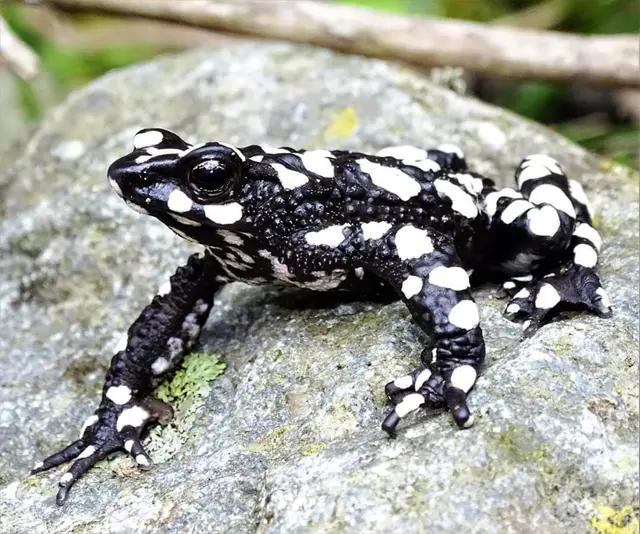
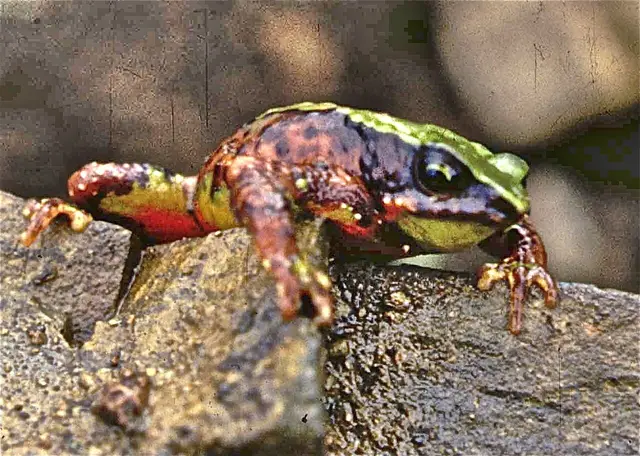
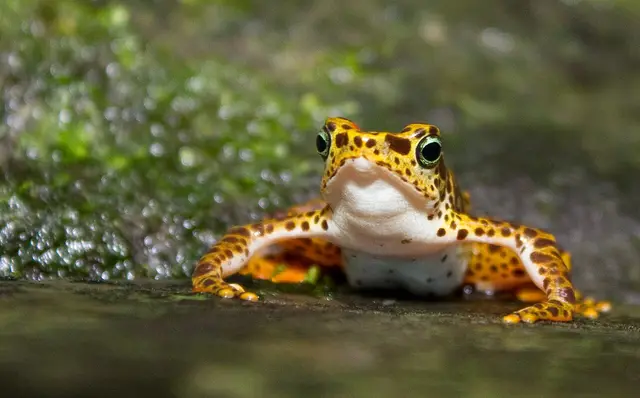
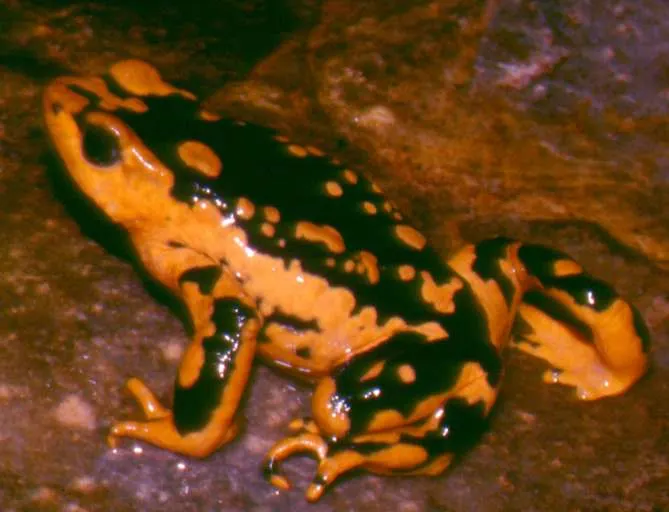
The Pataz harlequin toad is a bright orange and black toad known only from a single locality near Pataz in northern Peru. It is rated Critically Endangered on the IUCN Red List (assessed 2013), with a decreasing population estimated at fewer than 50 mature adults.
How to recognise it
This is a relatively large harlequin toad. Adult males measure 35 to 40 millimetres from snout to vent, and females 43 to 49 millimetres. The back is orange with large, irregular black marks that continue onto the limbs, or black with orange marks. The belly, palms and soles are plain orange.
It has a sturdy body and short limbs, no visible eardrum, unwebbed fingers and partly webbed toes.
Where it lives
The species was described in 2008 from Quebrada Los Alisos, near Pataz in the La Libertad region of Peru, at about 2,620 metres. It is known from nowhere else. A report from Llacuabamba, about 40 kilometres to the south, has never been verified. The IUCN counts one location, at 2,500 to 3,000 metres above sea level.
The habitat is high Andean shrubland and bunchgrass, cut by permanent and seasonal streams.
Pins are Wikidata “endemic to” fields. Orange dots, when present, are GBIF occurrence tiles — survey bias included.
How it lives
Like other harlequin toads, it breeds in streams. Little else has been published about its day-to-day behaviour.
Why it is in trouble
Adults and tadpoles were regularly seen at the type locality until 1999. That year the chytrid fungus, which causes the amphibian disease chytridiomycosis, was detected there, along with dead animals. Later surveys turned up very few adults or tadpoles.
Mining is a second threat. The IUCN lists seepage from mining and runoff, and domestic waste has also been reported as a source of pollution. The IUCN puts the population at 0 to 49 mature individuals.
What is being done
The IUCN assessment lists captive breeding, site protection and habitat protection as conservation actions, and records no programme in place. A later correction to the assessment removed earlier statements about past population reduction and added the small-population criterion D.
Sources
Written for this catalog in our own words from the sources below, checked against them on 12 November 2026. Population figures are estimates and carry the year they were made. Status and assessment year: IUCN. 2026. The IUCN Red List of Threatened Species. Version 2026-1. iucnredlist.org.