Peru
19 catalog pins
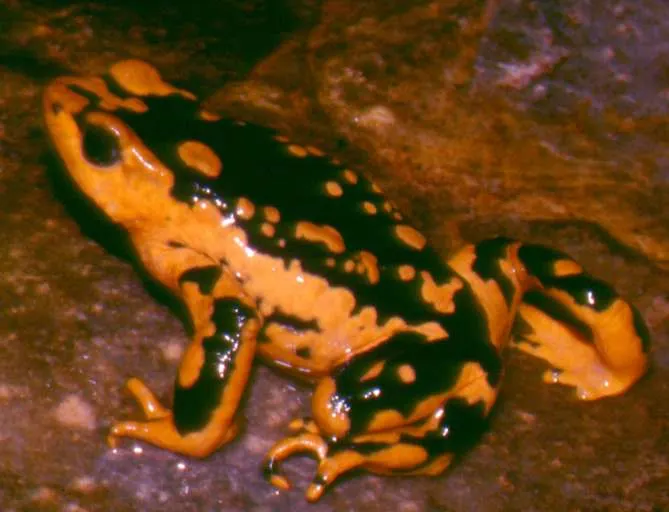
19 animals in this catalog carry a structured country pin for Peru. That is a filing fact, not a claim that the crisis is only here.
The photograph is one of those animals: Atelopus patazensis. Open a dossier for the text, the status, and the map. Use the world map to jump to another country. Confirm official distributions on the Red List.
Peru stretches from a dry Pacific coast, through the high Andes, to the Amazon lowlands. The coast is mostly barren, but hilly lomas such as Lachay hold many endemic species. Above the tree line the Andes turn to open puna grassland, and the Amazon basin lies to the east.
Peru's draft profile for the Convention on Biological Diversity counts about 20,585 wild plant species and about 5,585 wild animal species, and says lowland tropical forest makes up over 94 percent of its forested territory. A Wikipedia summary of Peruvian wildlife reports over 1,800 bird species (about 120 endemic), over 500 mammals (about 70 endemic) and about 380 frogs (undated).
Where the pressure comes from
The CBD profile names land-use change, climate change, deforestation and extractive industry as pressures on mountain and forest ecosystems, with selective logging, hunting and road building driving forest loss. In inland waters it lists pollution, damming and overfishing, and blames poor-quality wastewater from illegal mining for the main impact on Lake Titicaca.
The Titicaca water frog shows how these pressures stack up for a Peruvian amphibian. It lives only in the Titicaca basin, shared with Bolivia. Frogs are harvested for a drink and folk medicine, mining, farm and household waste pollute the water, and rainbow trout were introduced in 1941 and 1942. In 2017 a survey of 38 locations found 45 frogs at only 6 of them.
Disease adds to it. The eastern slopes of the Andes in Peru and Bolivia are among the areas where the chytrid fungus is predicted to thrive, and the Peru stubfoot toad is listed as critically endangered and possibly extinct.
What is being done
Peru's protected-area system, SINANPE, was set up in 1999 and is run by SERNANP. A current summary of the agency's list gives 265 protected natural areas, 77 of them managed nationally, covering 22.15 percent of land and 7.9 percent of marine territory. The older CBD profile gave 17 percent of national territory. Manu National Park (1973) and Huascaran (1975) are World Heritage sites, and Yaguas is the newest national park (2018).
The Titicaca water frog received full legal protection in 2014, and the species was first bred at the Huachipa Zoo in Lima in 2010.
Reading the catalog for Peru
The catalog's list for Peru has 19 animals, and amphibians (12) are the largest group in it, ahead of birds (4), lizards and snakes (2) and one mammal. The leading families are Craugastoridae (5) and Telmatobiidae (4), the family that includes the Titicaca water frog.
Sources for this section
- CBD country profile, Peru: species counts, ecosystems, threats, strategy
- Wikipedia, Wildlife of Peru: regions, species and endemic counts, SINANPE 1999
- Wikipedia, SERNANP and protected areas: 265 areas, coverage, Manu, Huascaran, Yaguas
- Wikipedia, Titicaca water frog: threats, survey figures, 2014 protection, Lima programme
- Wikipedia, Atelopus: Peru stubfoot toad status
- Wikipedia, Chytridiomycosis: Andean high-risk areas
What the catalog records for Peru
The catalog has 19 animals with a country pin for Peru: 5 Critically Endangered and 14 Endangered. By GBIF class the largest groups are Amphibia (12), Aves (4), Squamata (2), Mammalia (1). The families with the most records are Craugastoridae (5), Telmatobiidae (4), Dendrobatidae (2). A pin means a structured source (Wikidata or a GBIF match) places the animal in Peru; it does not say the animal lives only there.
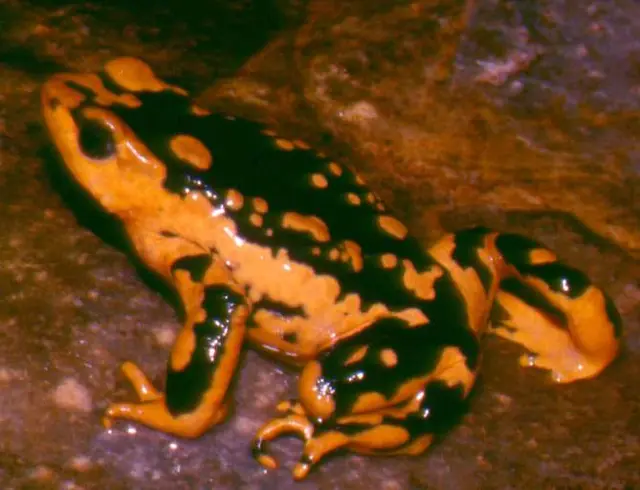 CR
Atelopus patazensis
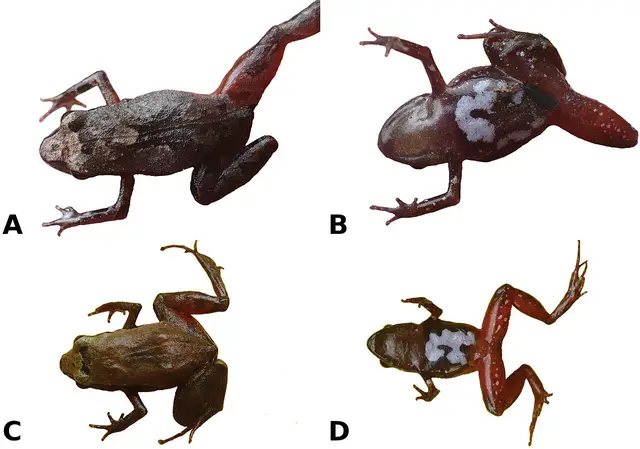 CR
Noblella madreselva
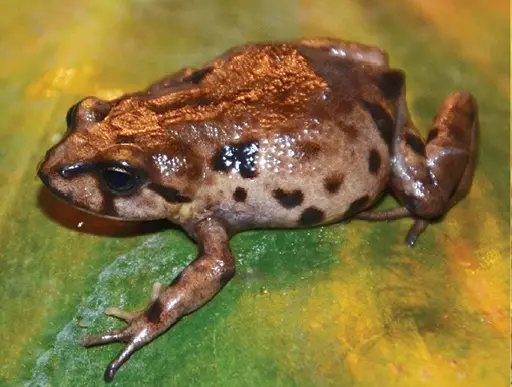 CR
Phrynopus juninensis
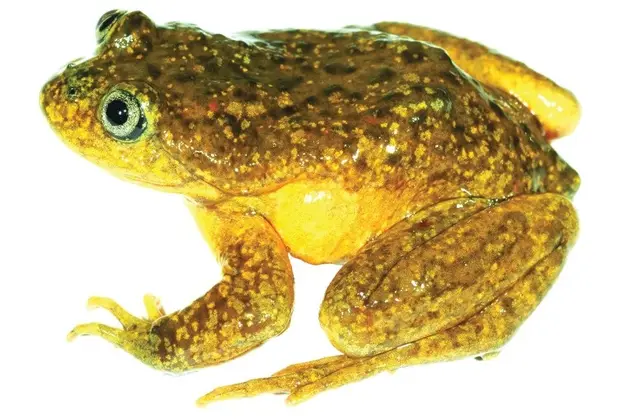 CR
Telmatobius ventriflavum
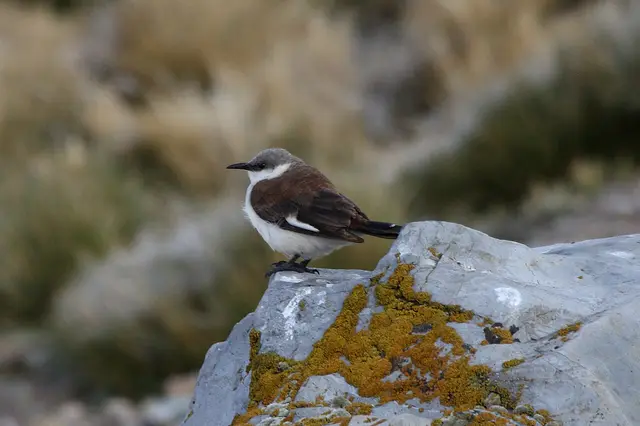 CR
White-bellied Cinclodes
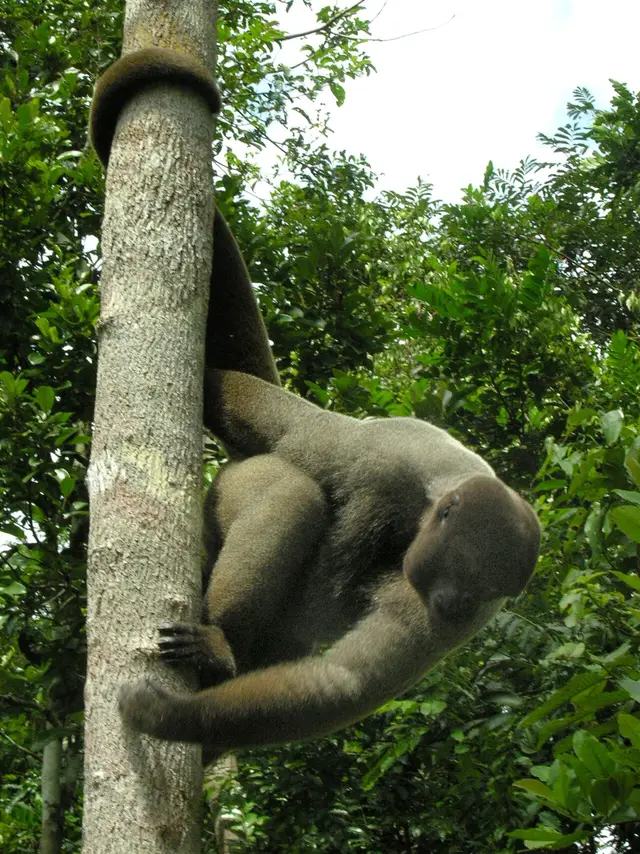 EN
Peruvian Woolly Monkey
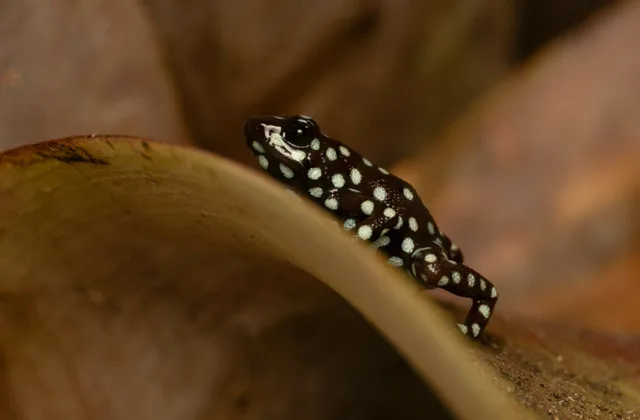 EN
Marañón poison frog
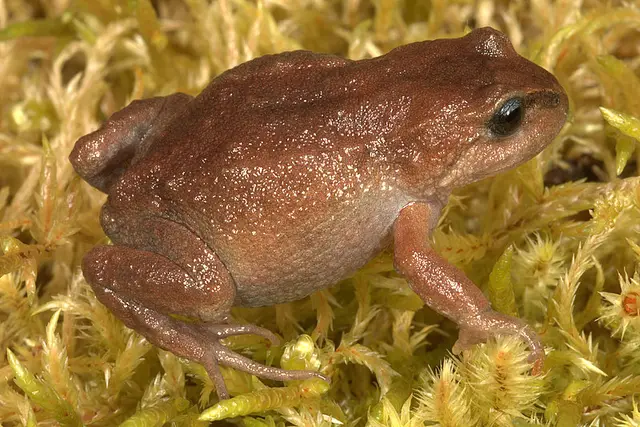 EN
Phrynopus cophites
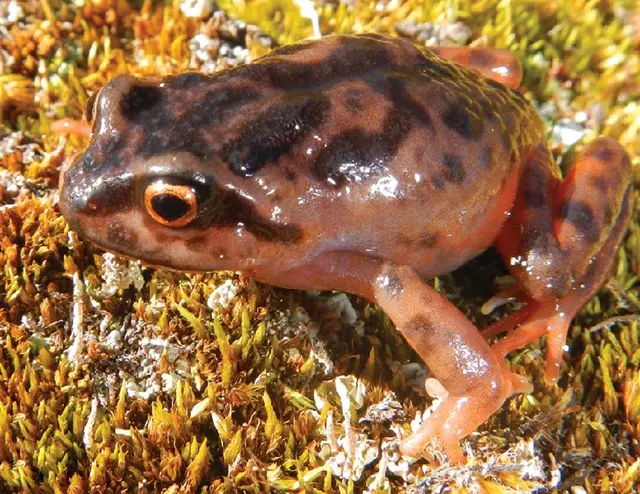 EN
Inti Andes Frog
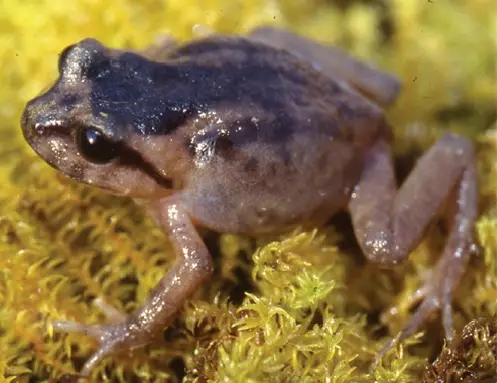 EN
Phrynopus kauneorum
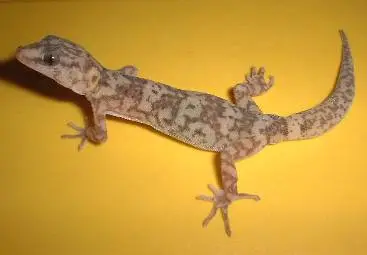 EN
Narrow leaf-toed gecko
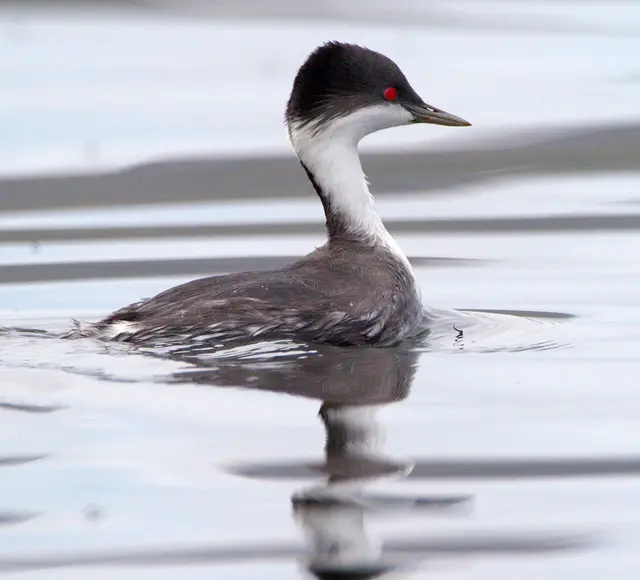 EN
Junin grebe
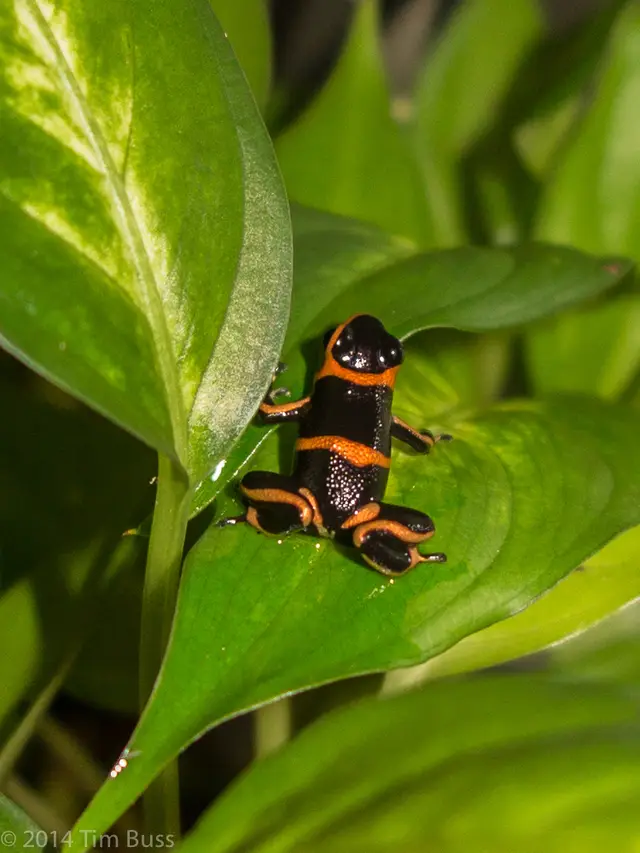 EN
Ranitomeya summersi
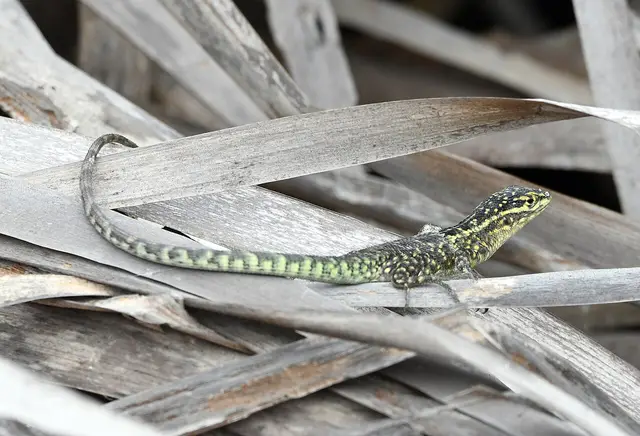 EN
Modest whorltail iguana
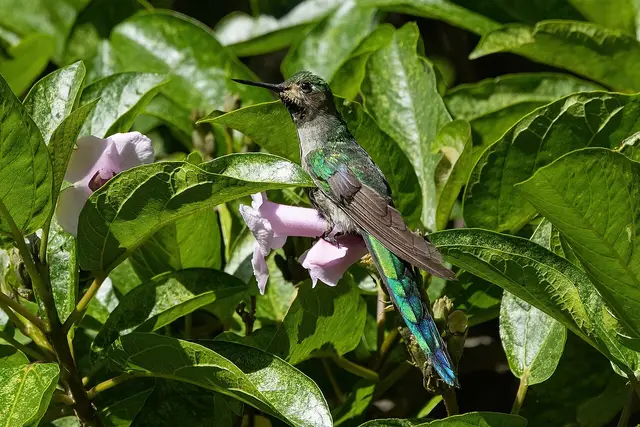 EN
Grey-bellied comet
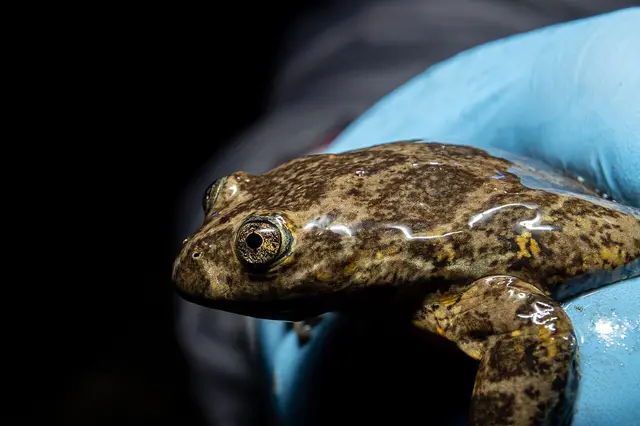 EN
Telmatobius brachydactylus
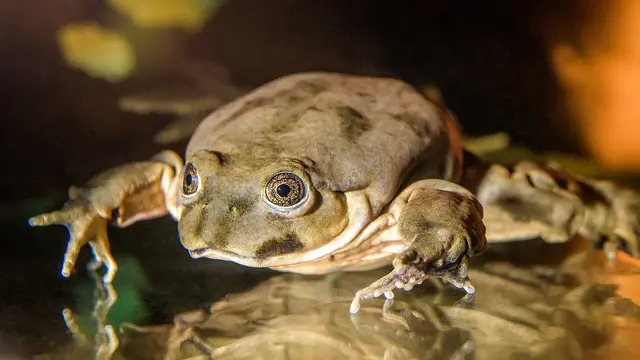 EN
Telmatobius culeus
 EN
Telmatobius intermedius
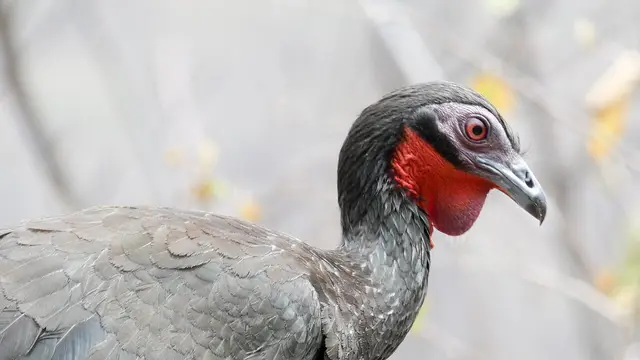 EN
White-winged Guan
Total pins: 21.
Quick answers
- Do all these animals live only in Peru?
- No. A pin means a Wikidata place field resolved here. Official ranges can be wider.
- Is this a government list?
- No. It is a slice of this catalog.