Endangered
Modest whorltail iguana
Stenocercus modestus
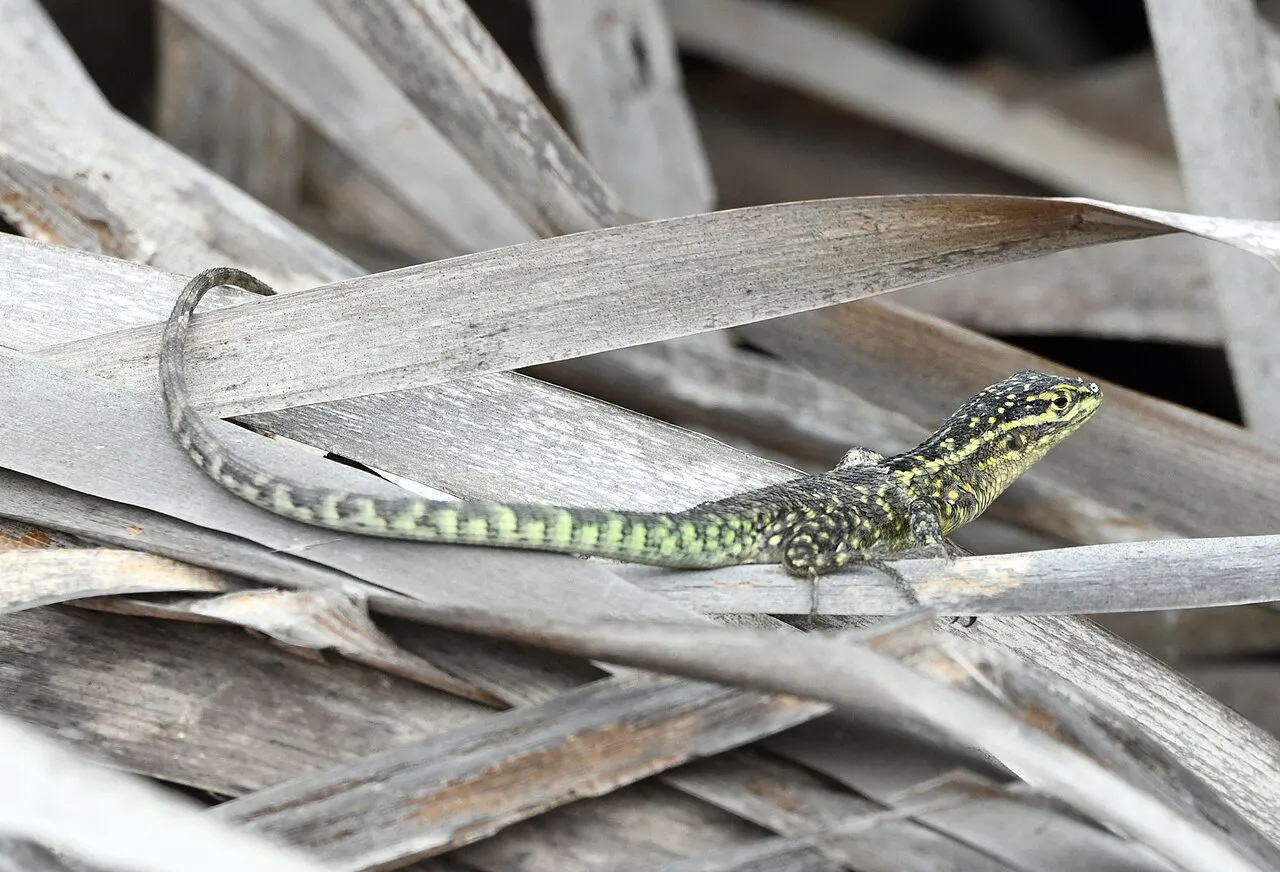
The modest whorltail iguana, Stenocercus modestus, is a small day-active lizard of the Peruvian coastal desert, recorded in the Rimac River valley around Lima. Described in 1845, it was rated Endangered by the IUCN in 2016 because its habitat is shrinking and broken into pieces as the city grows.
How to recognise it
This is a small lizard in the family Tropiduridae. In a 2012 study of 17 adults on the La Molina campus in Lima, males averaged about 69 millimetres from snout to vent and females about 54 millimetres, so males are clearly the larger sex.
Where it lives
The lizard lives only in west-central Peru. Peruvian researchers describe its range as the Rimac valley in the department of Lima, from sea level to about 900 metres, and call it endemic to the coastal desert there. The IUCN gives an upper limit of 762 metres. Until a new species of the genus was reported from the Ica river basin in 2021, it was the only Stenocercus known from coastal desert.
Detailed distribution data are missing. The 2012 researchers noted that records are restricted to a few localities in the city of Lima and the lower Rimac valley, and that nothing detailed had been published about its ecology.
Pins are Wikidata “endemic to” fields. Orange dots, when present, are GBIF occurrence tiles — survey bias included.
How it lives
It is active in daylight. The 2012 study, in Revista Peruana de Biologia, examined the stomach contents of 17 adults caught between November 2008 and October 2009 on a campus with trees, shrubs, leaf litter and orchard waste. Insects dominated. Beetles were the commonest prey by number (about 32 percent of items) and turned up in more than three quarters of the lizards. Spiders and hymenopterans (the group that includes wasps and ants) were also important, and grasshoppers and their relatives made up the largest share by volume.
The researchers judged it a generalist that eats whatever is common. Slow-moving insect larvae in the diet suggest it searches actively for food at least some of the time.
Why it is in trouble
The Red List assessment (criteria B1ab(iii)) records a decreasing population that is severely fragmented, with continuing decline in its habitat. The listed threat is housing and urban development, which converts and degrades its ecosystem. The 2012 researchers wrote that the destruction and fragmentation of its natural habitat by the growth of Lima was evident.
What is being done
The IUCN assessment lists no conservation actions in place, and whether the lizard occurs in a protected area is recorded as unknown. The 2012 study called for more basic natural history work on the species.
Sources
Written for this catalog in our own words from the sources below, checked against them on 12 November 2026. Population figures are estimates and carry the year they were made. Status and assessment year: IUCN. 2026. The IUCN Red List of Threatened Species. Version 2026-1. iucnredlist.org.




