Endangered
Narrow leaf-toed gecko
Phyllodactylus angustidigitus
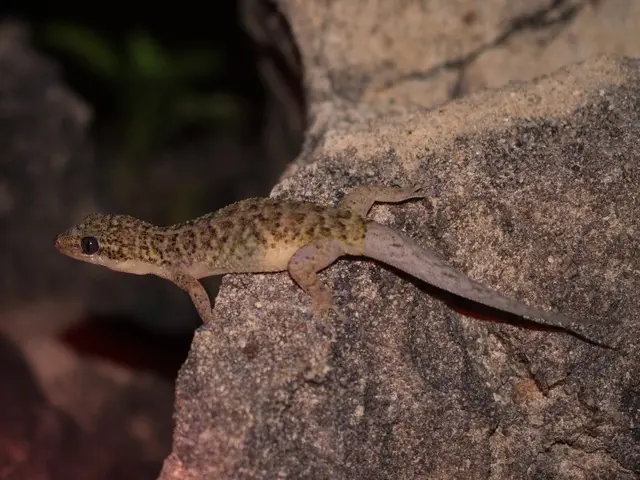
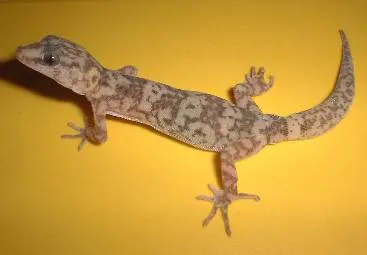
The Paracas gecko, also called the narrow leaf-toed gecko (Phyllodactylus angustidigitus), is a small night-active lizard found only on the hyper-arid coast of Ica, in southern Peru. The Red List lists it as Endangered (2016 assessment). It lives at sea level, in and around Paracas National Reserve.
How to recognise it
A small gecko, it measures roughly 37 to 57 mm from snout to vent. It is most easily confused with Phyllodactylus gerrhopygus, another coastal gecko of southern Peru. The two are told apart by the toe pads: this species has smaller and more numerous lamellae on the tip of the fourth toe.
The species name means narrow finger, from the Latin angustus and digitus. James Dixon and Raymond Huey described it in 1970. The type specimen, an adult male, was collected in Pisco, Ica, on 11 November 1968.
Its classification is not settled. The Reptile Database notes that P. angustidigitus and P. gerrhopygus are paraphyletic relative to other Phyllodactylus and to related genera, and a 2026 study did not resolve this. The species is still treated as valid, as it is by the IUCN.
Where it lives
It is endemic to Peru and known from the Paracas Peninsula and nearby islands, including La Vieja and Sangayan. The Red List estimates the extent of occurrence at about 960 square kilometres, from one to five locations, all at roughly sea level, and records at least one protected area within the range.
The habitat is coastal desert: sand dunes, rocky outcrops and low hills. The gecko is usually commoner near the shore, and is reportedly more at home on shelly, gravelly beaches than on bare sand. A 2011 ecology study in Revista Peruana de Biologia found it at most of the sites surveyed in the reserve, in both desert and hill habitat. Its relative P. gerrhopygus turned up only on the peninsula and at Santa Cruz.
Pins are Wikidata “endemic to” fields. Orange dots, when present, are GBIF occurrence tiles — survey bias included.
How it lives
It is nocturnal and feeds on insects. The 2011 study found a generalist, opportunistic diet that tracked what was available and was very similar to that of P. gerrhopygus, which raised the possibility of competition where the two meet. Crustaceans and spiders are also reported as prey, and females reportedly lay a single egg per clutch.
A 2026 field study in Salamandra by Carlos Vilca-Alzamora and Jose Perez tracked 21 geckos (12 females, 9 males) at Laguna Grande, in Paracas National Reserve, using fluorescent powder and ultraviolet torches. Over one night each gecko covered between 31 and about 1,700 square metres, and some stayed active until almost dawn. The animals moved between the shoreline and inland salt-crusted ground. Most ended the night in the salt crust, while four sheltered under rocks.
Why it is in trouble
The range is small and the habitat is shrinking. The Red List records a continuing decline in habitat area and lists tourism and recreation areas and housing and urban growth, each across the whole range, as ongoing threats. Industrial aquaculture and persecution are also listed, with their scale unknown.
The assessment names the related P. gerrhopygus as a problem species and lists competition among the stresses on the gecko. No population count is available.
What is being done
Part of its range lies inside Paracas National Reserve. The conservation actions the Red List calls for are awareness raising and formal education. No recovery plan is recorded.
The 2011 ecology study concluded that the gecko needs its own conservation strategy, and the 2026 tracking study argues that planning should cover both shoreline and inland refuge zones, since the animals use both.
Sources
Written for this catalog in our own words from the sources below, checked against them on 12 November 2026. Population figures are estimates and carry the year they were made. Status and assessment year: IUCN. 2026. The IUCN Red List of Threatened Species. Version 2026-1. iucnredlist.org.