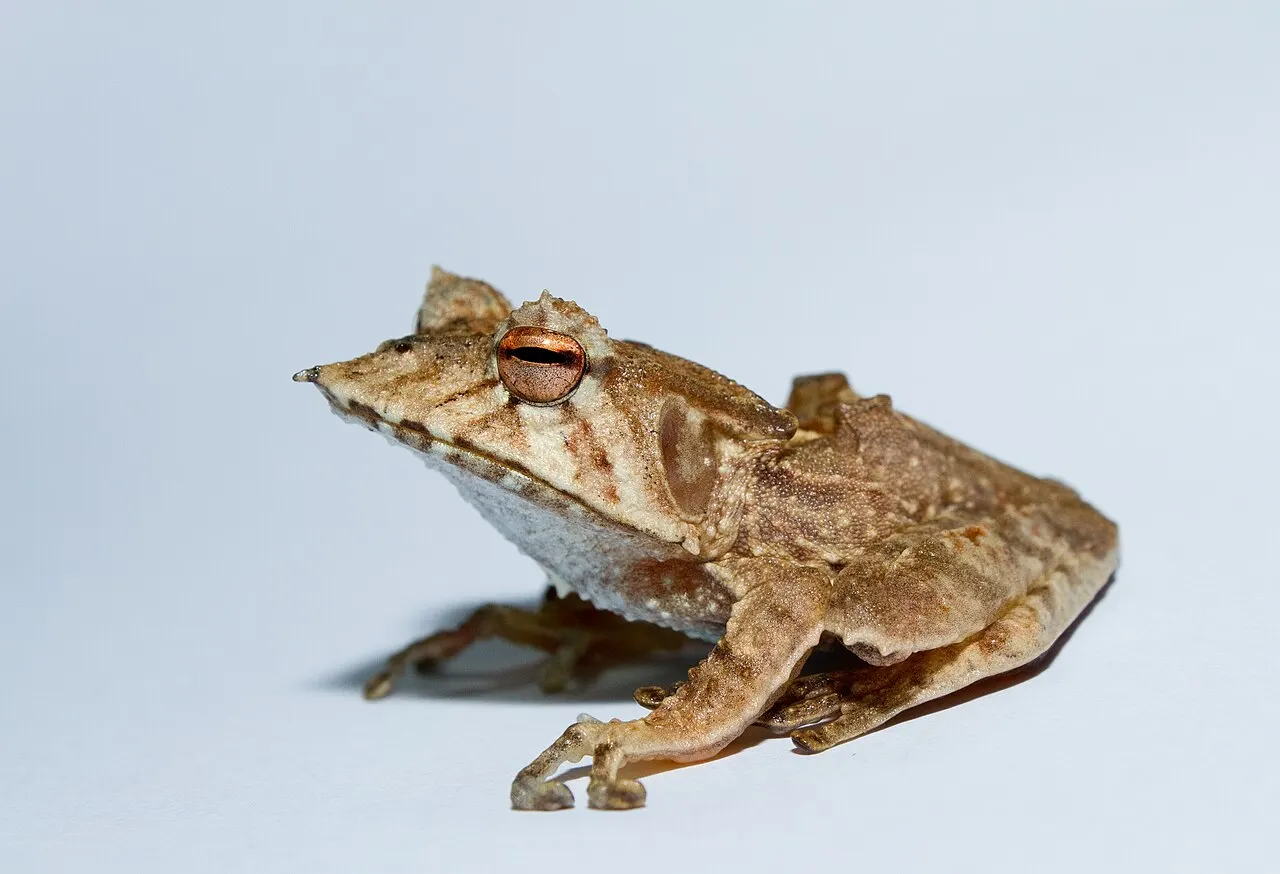
Critically Endangered
Hemiphractus panamensis
Hemiphractus panamensis
Hemiphractus panamensis is a horned tree frog from the forests of central Panama, treated for decades as part of a South American species before scientists separated it again in 2018. The IUCN Red List rated it Critically Endangered in 2022, mainly because of chytrid fungus.
How to recognise it
Detailed measurements for this species are scarce, so this description is for the genus as a whole. Horned tree frogs (Hemiphractus) are stocky, brownish frogs with a fleshy proboscis on the snout, a heavily casqued skull and fang-like teeth. Females are larger than males.
In Panama, skull features and published DNA data set the three upland populations apart. Few specimens have ever been collected, and most are juveniles.
Where it lives
The species is found only in Panama, in the Chagres Highlands and the Cordillera de San Blas of central Panama. It has been reported from Chagres National Park, Portobelo National Park and the Narganá wildlife area. It lives in moist forest, with records at about 750 m above sea level, and is not thought to tolerate habitat disturbance.
The IUCN estimates its extent of occurrence at about 898 square km and counts 1 to 5 locations.
Pins are Wikidata “endemic to” fields. Orange dots, when present, are GBIF occurrence tiles — survey bias included.
How it lives
Little has been written about this species itself. Its genus is nocturnal and thought to specialise in eating other frogs, though members also take lizards, large insects and snails. For H. panamensis, the female carries her eggs on her back and there is no free-swimming tadpole stage.
Why it is in trouble
The main threat is chytridiomycosis, the disease caused by the fungus Batrachochytrium dendrobatidis. The Red List rates its impact as high across the whole species, with a past population reduction of about 80 percent. Small-scale farming, grazing and unintended harvest are listed as lower-level pressures.
The generation length is 3 to 4 years, and the decline in both population and habitat area is continuing.
What is being done
The species occurs in at least one protected area. The Red List names site management and captive breeding as actions needed, and no program for this species is recorded. A close relative, H. elioti, is bred at the El Valle Amphibian Conservation Center in Panama, which shows the techniques exist.
Sources
Written for this catalog in our own words from the sources below, checked against them on 12 November 2026. Population figures are estimates and carry the year they were made. Status and assessment year: IUCN. 2026. The IUCN Red List of Threatened Species. Version 2026-1. iucnredlist.org.




