Critically Endangered
Spencer's River Tree Frog
Litoria spenceri
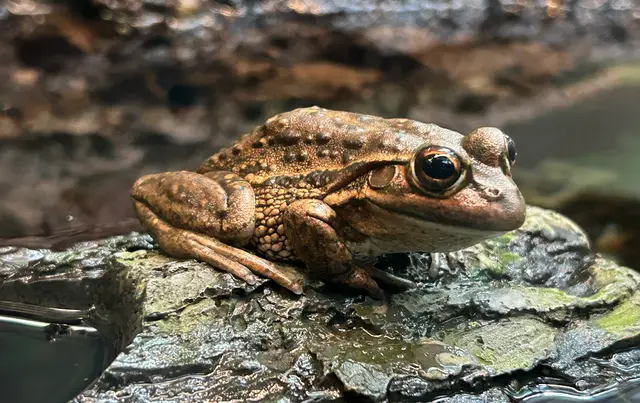
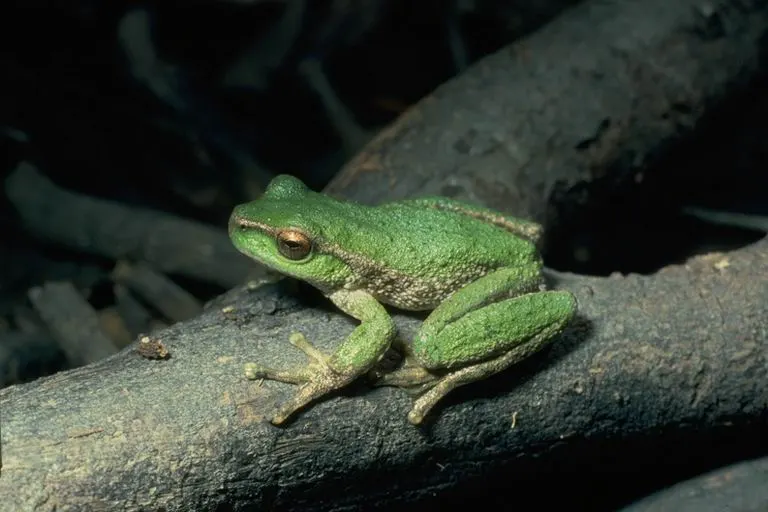
Spencer's river tree frog, also called the spotted tree frog (Litoria spenceri), lives in rocky mountain streams in north-eastern Victoria and southern New South Wales, Australia. The IUCN Red List assessed it as Critically Endangered in 2023, with an estimated 1,499 mature individuals and a decreasing trend.
Where it lives
The spotted tree frog is found in freshwater streams in north-eastern Victoria and southern New South Wales. The IUCN records it from about 300 to 1,100 m above sea level, in permanent streams running through moist lowland and mountain forest. A NESP Threatened Species Recovery Hub factsheet reports that it has disappeared from half of its known former sites and is rare at the sites that remain.
Pins are Wikidata “endemic to” fields. Orange dots, when present, are GBIF occurrence tiles — survey bias included.
How it lives
It is a small frog, often vivid green with bumpy skin. Zoos Victoria notes that individuals can live up to 10 years, which is old for a frog. Spotted tree frogs breed only in mountain streams, and use streamside vegetation as shelter. The IUCN gives a generation length of 5.7 years and classes the species as not migratory.
Why it is in trouble
Two threats stand out, according to the NESP factsheet: non-native fish and chytrid fungus. Brown trout, rainbow trout, European carp and redfin perch eat the tadpoles, while chytrid causes a disease that kills adult frogs and earlier life stages. The IUCN adds mining, dams, roads, water extraction, grazing, recreation, drought and more frequent fires.
The 2019 to 2020 bushfires made things worse. About half of the sites used by the species burned, and flooding afterward washed ash and sediment into streams, causing blackwater events, where oxygen in the water drops and eggs and tadpoles can die. Chytrid was found in a high share of frogs surveyed after the fires, and some severely burnt sites had critically few frogs. The IUCN calls the population severely fragmented and still declining.
What is being done
Researchers collected frogs, mostly juveniles, from fire-hit and neighbouring populations to start an insurance colony at Zoos Victoria. Zoos Victoria says more than 800 have now been bred, with a second generation under way. In February 2024, 70 juveniles were released on the slopes of Mt Beauty. Research aims to find chytrid-resistant genes to guide selective breeding. A Zoos Victoria spokesperson told ABC News in 2021 that the program could take years or decades.
Sources
Written for this catalog in our own words from the sources below, checked against them on 12 November 2026. Population figures are estimates and carry the year they were made. Status and assessment year: IUCN. 2026. The IUCN Red List of Threatened Species. Version 2026-1. iucnredlist.org.