Endangered
La Loma treefrog
Hyloscirtus colymba
The La Loma treefrog (Hyloscirtus colymba) is a small stream-breeding frog of Costa Rica and Panama, living in wet forest from the lowlands up to about 1,100 metres. The Red List lists it as Endangered (2020 assessment). Chytrid fungus has removed adults from many stream sites in western Panama, and a captive colony now backs up the wild frogs.
How to recognise it
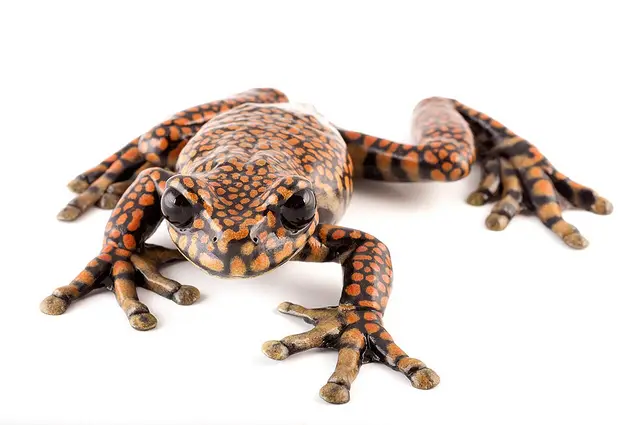
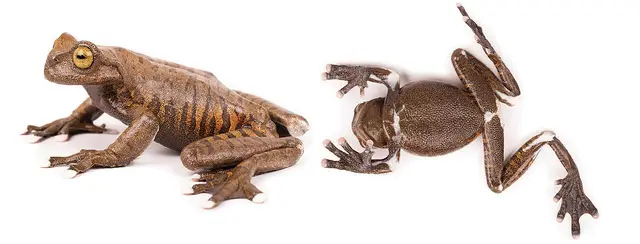
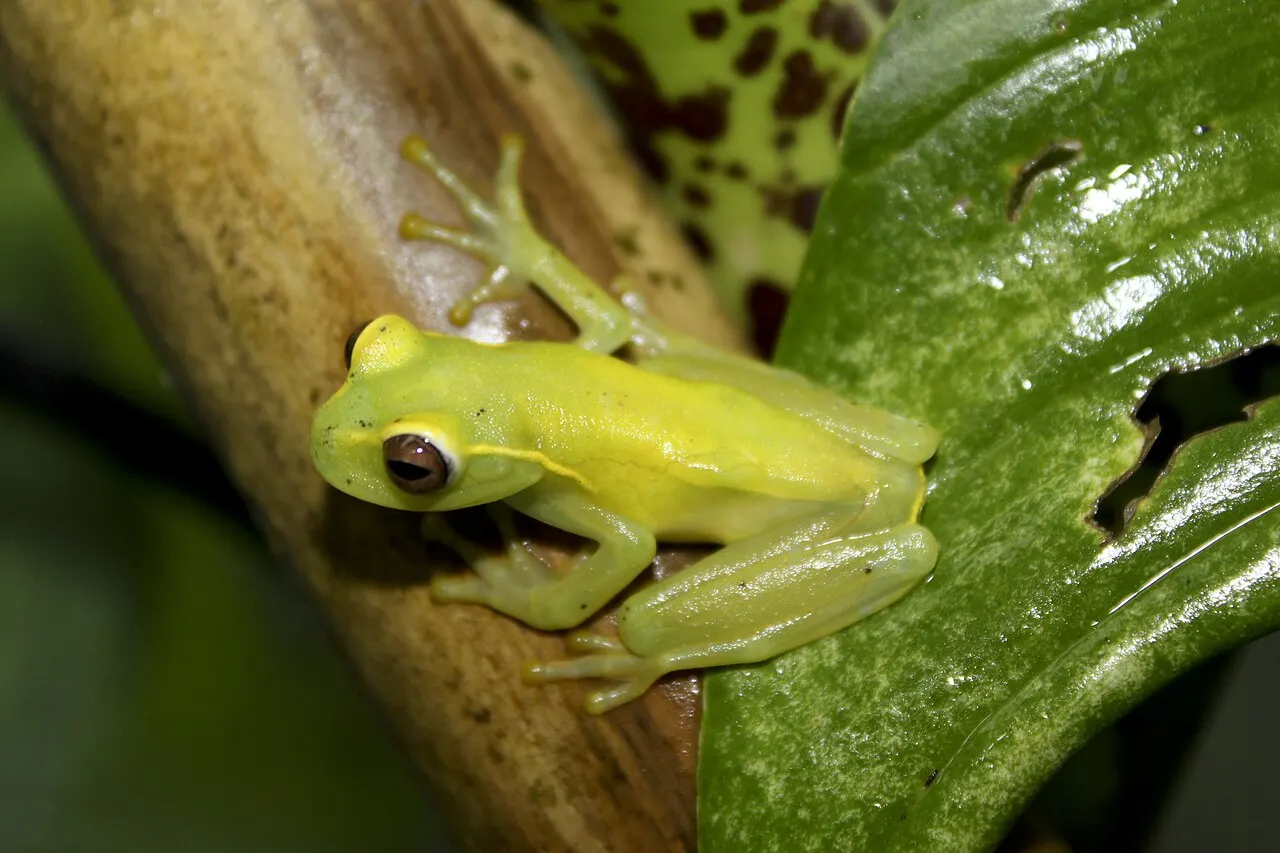
It is a small green or brown frog with webbed fingers and toes and a faint orange or creamy stripe through the eye, sometimes with dark flecks. Adult males measure 31 to 37 mm, and females can reach 39 mm.
Males have a creamy gland on the chin, a pale bluish-green throat and a single vocal sac, and they lack nuptial pads. The tadpoles are large, up to 37 mm, bronze with irregular gold flecks, and graze at night with a beak and rows of tiny denticles on the mouth.
Where it lives
The frog occurs in Costa Rica and Panama, and the Red List also includes Colombia, where its presence has not been confirmed. Its name comes from La Loma, the type locality on a trail between Chiriquí Lagoon and Boquete in Bocas del Toro Province, Panama. Dunn described it in 1931, as Hyla colymba.
The Red List gives its elevation as sea level to 1,116 metres, in both lowland and montane moist forest, with breeding in permanent streams.
Pins are Wikidata “endemic to” fields. Orange dots, when present, are GBIF occurrence tiles — survey bias included.
How it lives
Males call with high, cricket-like chirps from under rocks and plants beside fast streams, and they fall silent at the slightest disturbance. The tadpoles live in fast-flowing water among piles of rock and are nocturnal. Metamorphs measure 17 to 19 mm.
Adults are secretive, so the species may be more common than it seems.
Why it is in trouble
The main cause is chytridiomycosis, the skin disease caused by an amphibian fungus. Adults have disappeared from many stream sites in western Panama, and infected tadpoles lose the hardened parts of their mouths. Habitat loss adds to the pressure, as the Red List names housing development, small-holder farming and grazing among the causes.
The species' Red List rating has moved around. It was Critically Endangered in 2004 and 2008, Near Threatened in 2014, and Endangered in 2020 under criterion A2ace, which is based on population decline. The Red List lists the trend as decreasing, with no population estimate.
What is being done
The Red List notes that part of its range lies inside protected areas, and it lists captive breeding and site protection among the actions in place or needed.
In 2010 the Panama Amphibian Rescue and Conservation Project, in which the Smithsonian's National Zoo is a partner, reported breeding the species in captivity, and called it notoriously hard to keep. At that point the project held 28 adults and four tadpoles at Summit Municipal Park, outside Panama City. The project maintains an insurance colony of the species in Panama.
Sources
Written for this catalog in our own words from the sources below, checked against them on 12 November 2026. Population figures are estimates and carry the year they were made. Status and assessment year: IUCN. 2026. The IUCN Red List of Threatened Species. Version 2026-1. iucnredlist.org.