Critically Endangered
Callulina meteora
Callulina meteora
The Nguru warty frog, Callulina meteora, is a large forest frog found only in the Nguru Mountains of Tanzania. The IUCN Red List classed it as Critically Endangered in 2025 because it is known from a single location and its habitat is still declining. It is notable for silvery limb glands and a metallic sheen.
How to recognise it
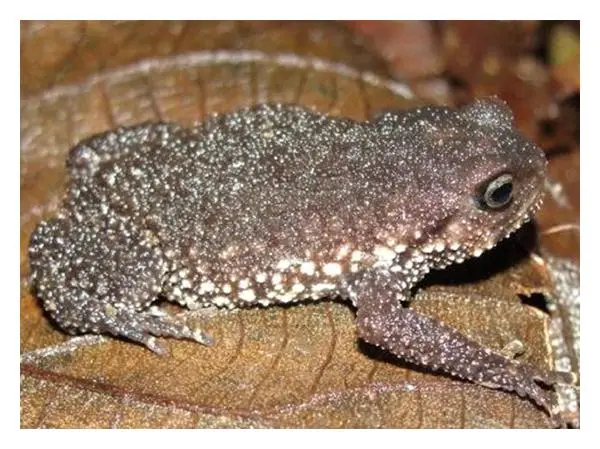
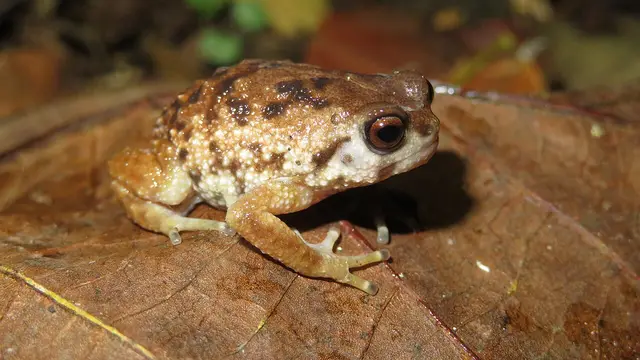
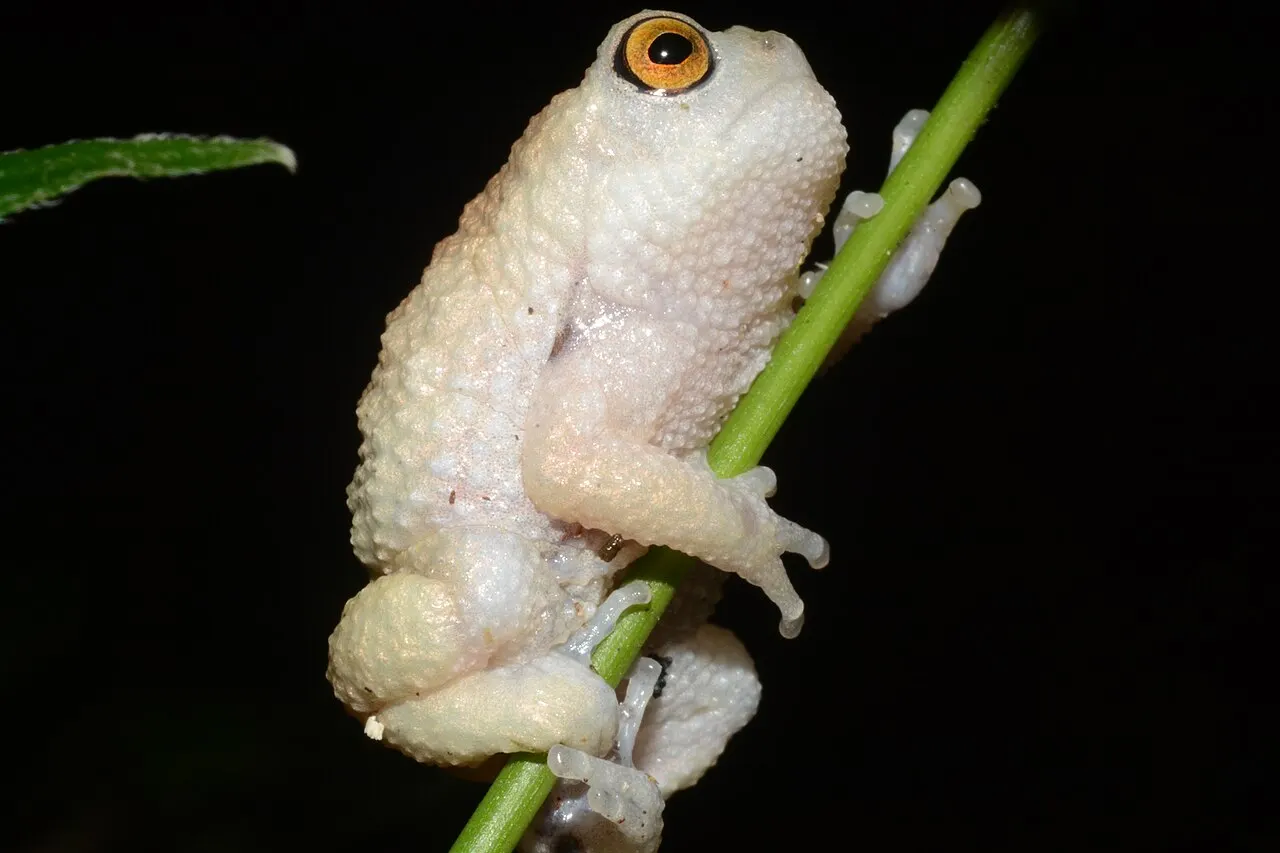
Females are the larger sex, at about 35 to 41 mm from snout to vent. Males run roughly 26 to 35 mm. The back is pale grey or brown with darker markings, though colour varies a lot, from nearly white to coppery brown and, in some individuals, almost black. The skin has a metallic sheen, and the eyes are bright yellow to orange in life.
The standout feature is the glands. The forearms carry large, continuous glands, and the lower legs and feet are covered in enlarged glandular masses, paler than the surrounding skin. The frog was formally described in 2011 from 22 specimens, and its glands, call and DNA all separate it from relatives.
Where it lives
It is endemic to Tanzania and known from one forest reserve, Nguru South. It lives in montane and upper montane forest. The 2011 description reports specimens collected at about 1,950 to 2,100 m and calls heard as high as 2,200 m, and the Red List gives an elevation range of 1,800 to 2,200 m.
The area it occupies is tiny. The original description estimated an extent of occurrence of no more than 42 square km and an area of occupancy of no more than 26 square km. The Red List counts a single location. It overlaps in part with another Nguru frog, Callulina hanseni, which lacks the colour contrast between limb glands and skin.
Pins are Wikidata “endemic to” fields. Orange dots, when present, are GBIF occurrence tiles — survey bias included.
How it lives
Much of its life is hidden. Researchers found frogs by digging in soft soil and leaf litter at the bases of large trees, which suggests it spends time underground. Males called from the bases of trees. The call, recorded from two males in 2004, is a short train of about six pulses, often preceded by a run of introductory notes.
Breeding has not been seen. Large eggs inside one dissected female led the describers to presume that the frog lays big eggs that develop directly into froglets, without a tadpole stage.
Why it is in trouble
The frog's whole known range is one patch of mountain forest. The Red List records a continuing decline in habitat area, extent or quality. The threat categories it lists are crop farming, fire, invasive species and climate-driven habitat shifting.
The 2011 description pointed to land-use change in the region and possible climate effects on high-montane forest, and proposed a Critically Endangered listing. The population trend is unknown, and no population size has been estimated. The describers called the restriction to a single reserve a high conservation concern.
What is being done
The Red List records that the species occurs in at least one protected area, the Nguru South Forest Reserve. The 2011 authors recommended that its status be reviewed if frogs are found below 1,980 m, which would extend the known range.
No recovery programme aimed only at this species is described.
Sources
Written for this catalog in our own words from the sources below, checked against them on 12 November 2026. Population figures are estimates and carry the year they were made. Status and assessment year: IUCN. 2026. The IUCN Red List of Threatened Species. Version 2026-1. iucnredlist.org.