Endangered
Mazumbai warty frog
Callulina kisiwamsitu
The Mazumbai warty frog (Callulina kisiwamsitu) is a small, bumpy frog known only from remnant patches of mountain forest in the West Usambara Mountains of Tanzania. The IUCN Red List classed it as Endangered in 2014 because its range is tiny, it survives at a single location and its forest is still shrinking.
How to recognise it
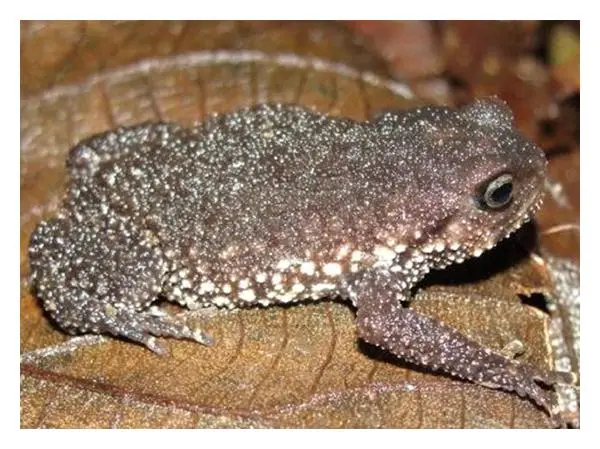
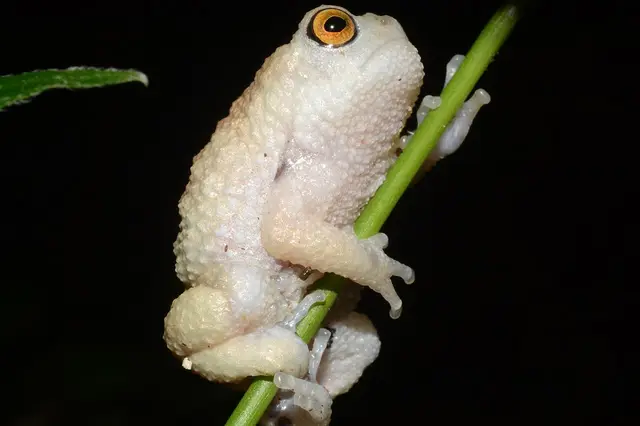
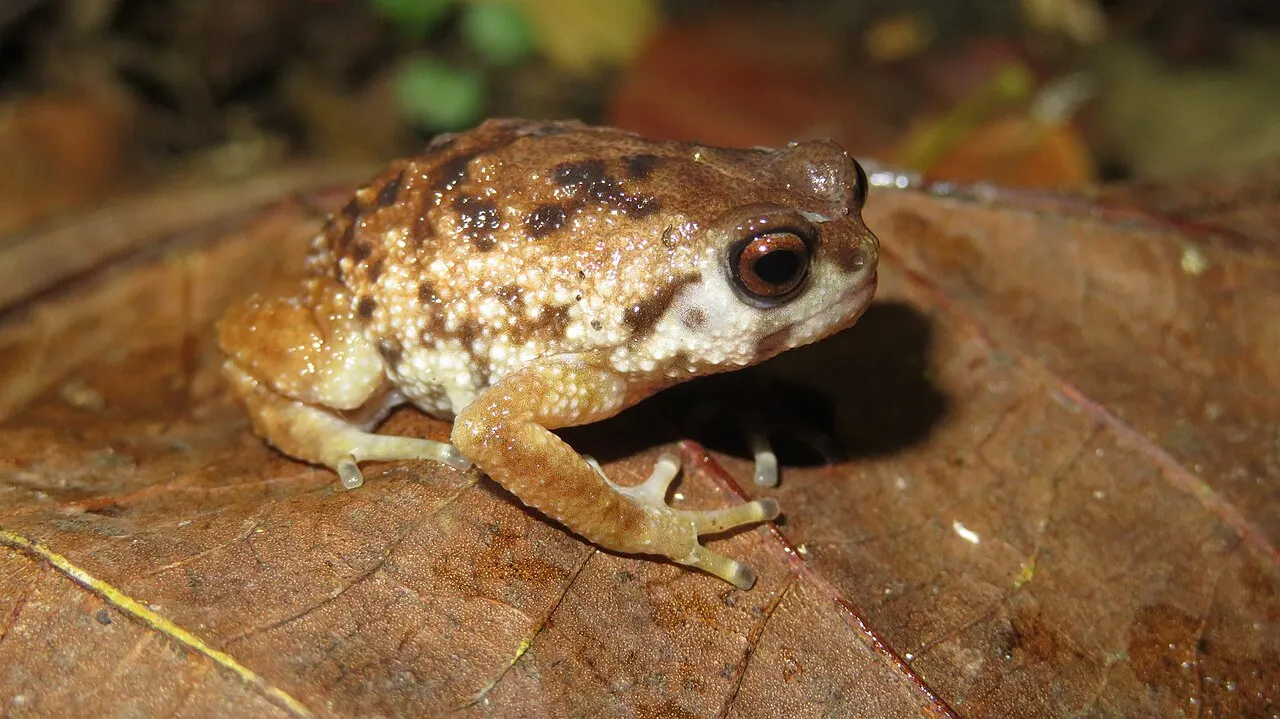
Adults measure about 30 to 40 mm. The body is stout and rounded, the limbs are short and slender, and the skin is covered in small warts, which makes the frog look very bumpy. The toes end in sticky discs that help it grip while climbing. It is reportedly mottled brown and black, with females larger than males.
The frog was described as a species in 2004 by Rafael de Sá, Simon Loader and Alan Channing. DNA evidence and small differences in call frequency separated it from Callulina kreffti, the warty frog of the East Usambara Mountains, with which it had previously been grouped.
Where it lives
The species is known only from the West Usambara Mountains. Records come from remnant forest in the Mazumbai, Ambangulu and Shume-Mugambo Forest Reserves and at Lushoto. The IUCN gives its elevation as 1,500 to 1,700 m and estimates its extent of occurrence at 217 km2.
The IUCN treats the forest patches as a single location, because logging and wood extraction threaten all of them in much the same way. The frog may occur more widely wherever forest remains. It lives in damp montane forest with dense undergrowth and has also been recorded at forest margins.
Pins are Wikidata “endemic to” fields. Orange dots, when present, are GBIF occurrence tiles — survey bias included.
How it lives
It climbs into low vegetation but also lives on the ground. Males call from bushes and other plants between 0.5 and 2 m above the ground during the rainy season. Stomach contents show it eats bugs, crickets and some roundworms. During mating the male clings tightly to the female.
Eggs are often laid in dark, damp chambers underground. Breeding is presumed to involve direct development, so the young would hatch as tiny froglets with no free-swimming tadpole stage.
Why it is in trouble
Smallholder farming is a likely threat to forest outside the reserves. Logging and the collection of firewood can degrade habitat even inside protected areas, and the IUCN records the area of forest habitat as still declining.
Only 22 specimens were known from scientific collections when the species was assessed in 2014, so there is no information on its population size, and the trend is unknown.
What is being done
The frog occurs in several forest reserves in the West Usambaras. The IUCN notes that these reserves are relatively well protected compared with others in the region, but that they still need stronger protection and better management. Site management and protection of the forest are the actions it lists, and it calls for more information on the frog's distribution, numbers and natural history.
Sources
Written for this catalog in our own words from the sources below, checked against them on 12 November 2026. Population figures are estimates and carry the year they were made. Status and assessment year: IUCN. 2026. The IUCN Red List of Threatened Species. Version 2026-1. iucnredlist.org.