Endangered
Eleutherodactylus zeus
Eleutherodactylus zeus
Zeus' robber frog, Eleutherodactylus zeus, also called the Cuban giant frog, is a big cave-dwelling frog found only in the limestone hills of western Cuba. Its home range is small and fragmented. The IUCN reassessed it as Endangered in 2023, with tourism and farming among the pressures.
How to recognise it
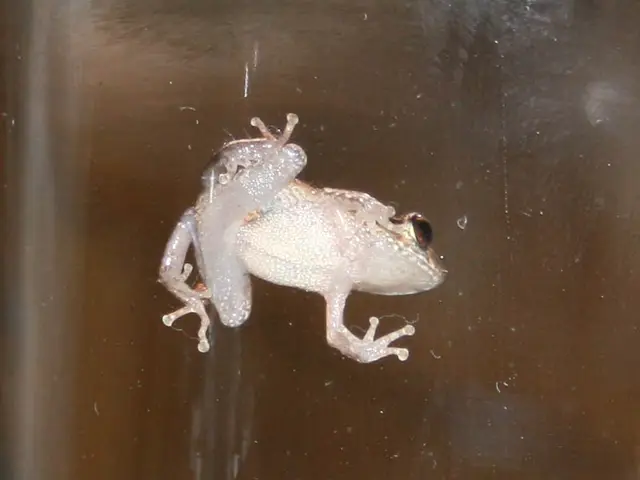
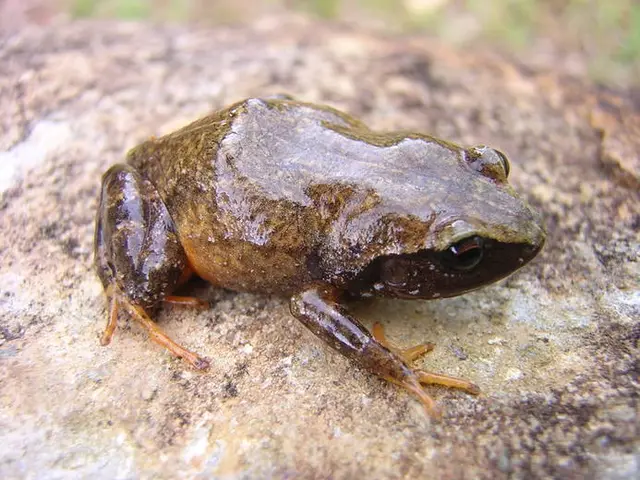
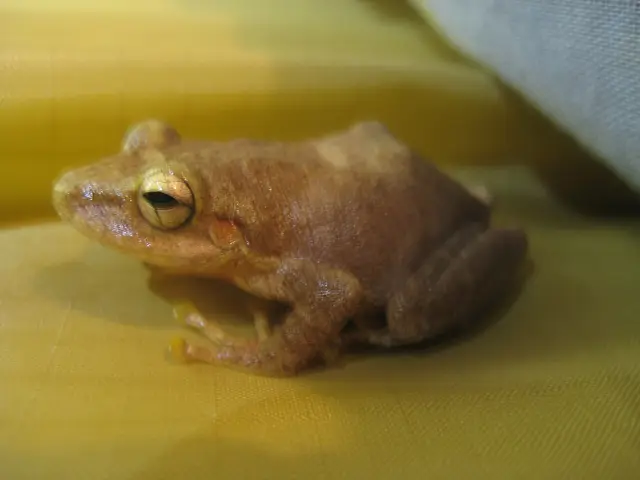
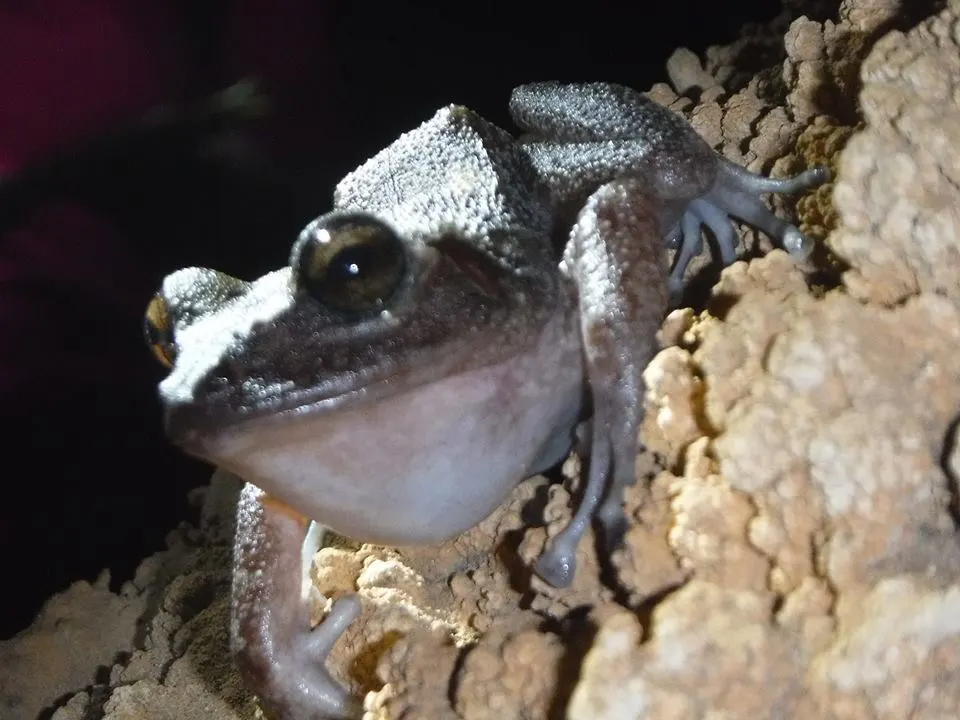
This is a large frog by robber frog standards, and females are much bigger than males. In a sample of 92 frogs from caves in Viñales National Park, males measured 57.5 to 71.1 mm from snout to vent, females 65.5 to 114 mm, and juveniles 14.7 to 48.7 mm.
Adults are olive brown with a mottled black back and a darker brown snout. The upper eyelids are usually clear green, there are yellowish spots behind the shoulders, and the arms and thighs carry lichen-like grey markings. The hidden surfaces of the thighs are a dull brownish purple. Albert Schwartz described the species in 1958.
Where it lives
It is endemic to western Cuba, in the Cordillera de Guaniguanico: the Sierra de los Órganos and the Sierra del Rosario, in Pinar del Río and Artemisa provinces. It lives in rock crevices and caves in limestone forest, between about 70 and 500 m above sea level. The IUCN estimates its extent of occurrence at roughly 2,986 square kilometres and counts 4 to 10 locations (2023). It occurs in at least one protected area, and Viñales National Park is one place where it has been studied.
Pins are Wikidata “endemic to” fields. Orange dots, when present, are GBIF occurrence tiles — survey bias included.
How it lives
Individuals have been seen active inside caves during the day, and at night they call from the ground and rocks both inside and outside the caves. The frog seems to depend on caves for breeding and on the surrounding forest for feeding.
It is a sit-and-wait predator. A 2022 study in Caribbean Herpetology, based on stomach flushing of frogs in Viñales National Park, found that adults eat mostly snails, crickets, cockroaches and caterpillars, while juveniles take more spiders, ants and isopods. One juvenile had swallowed an anole lizard. In a 2017 survey of Santo Tomás cave, 11 of 43 frogs (26 percent) had patches of missing pigment, a condition called piebaldism. They behaved normally and looked healthy.
Why it is in trouble
The IUCN gives the population trend as decreasing and records continuing loss in the area the frog occupies. The threats it lists are tourism and recreation areas, recreational activities, small-holder farming, and unintended effects of small-scale harvesting.
The frog's first Endangered listing, in 2004, cited a range under 5,000 square kilometres, severe fragmentation and a shrinking extent and quality of habitat. The 2012 Red Book of Cuban Vertebrates, which re-evaluated 61 amphibian species and listed 27 as threatened, did not include it.
What is being done
The IUCN names site and area management and habitat restoration as the conservation actions needed. Researchers working in the Viñales caves have called for studies of how common piebaldism is across western Cuba and whether it harms the species.
Sources
Written for this catalog in our own words from the sources below, checked against them on 12 November 2026. Population figures are estimates and carry the year they were made. Status and assessment year: IUCN. 2026. The IUCN Red List of Threatened Species. Version 2026-1. iucnredlist.org.
- IUCN Red List assessment, Eleutherodactylus zeus (2023)
- Garcia-Padron and Alonso Bosch 2019, Anomalous colour in a Cuban cave-dwelling frog, Herpetological Bulletin 147
- Garcia-Padron 2022, Diet of juveniles and adults of the Cuban Giant Frog, Caribbean Herpetology 85
- Eleutherodactylus zeus (encyclopedia article)