Endangered
Gephyromantis zavona
Gephyromantis zavona
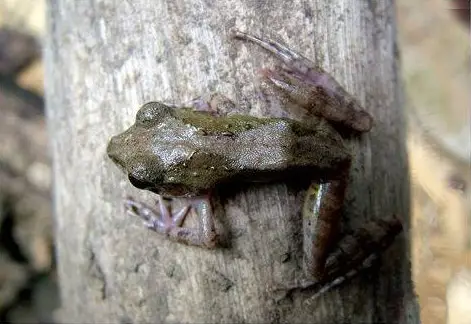
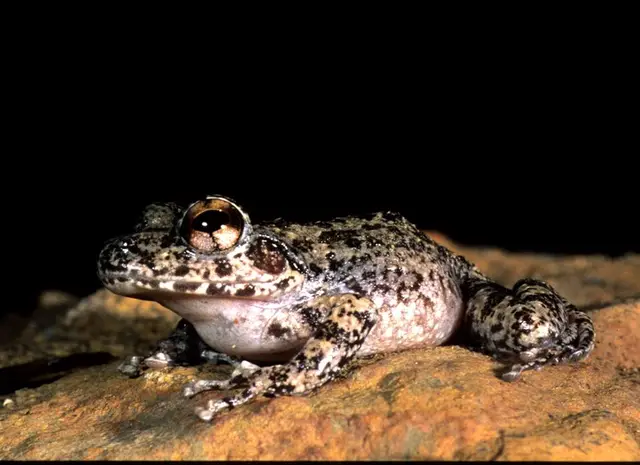
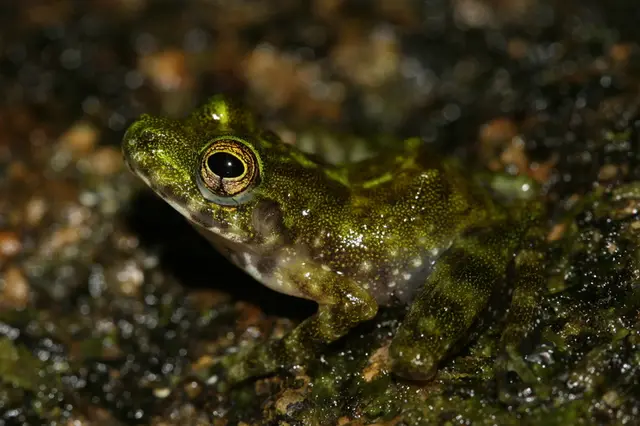
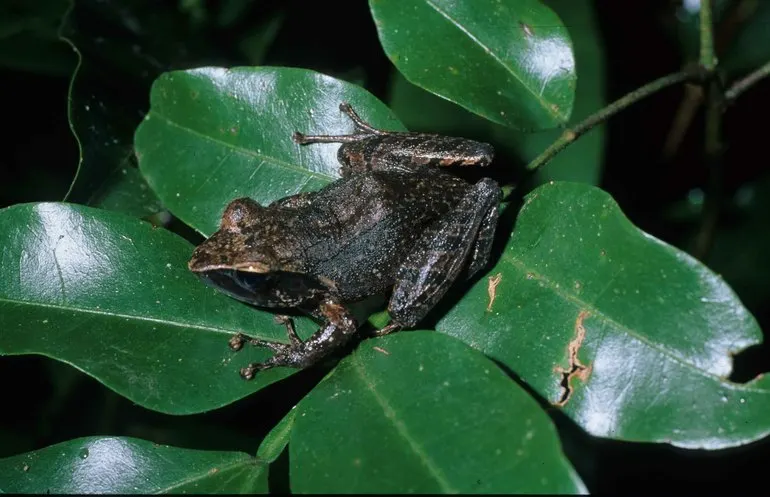
The Antsahamarana Madagascar frog (Gephyromantis zavona) is a small forest frog known only from northern Madagascar, in the Tsaratanana mountain region. The IUCN Red List lists it as Endangered (assessed 2016), with a declining area of habitat. It was recognised as a separate species only in 2003.
How to recognise it
This is a mantellid frog, placed in the subgenus Duboimantis. It was first told apart from a close relative that shares its mountains, Mantidactylus granulatus. The 2003 description found that the new frog has a smaller body than that neighbour and a shorter, wider head.
Little has been published about its colour or size in life, so identification relies on experts using call and genetic data.
Where it lives
The frog was described from Antsahamarana, in the Manarikoba Forest of the Tsaratanana Strict Nature Reserve in central northern Madagascar, at about 1,100 m above sea level. The Red List records it at 800 to 1,000 m and counts between one and four locations, all in Madagascar, with an extent of occurrence of about 3,286 square kilometres.
Its habitat is listed as moist lowland forest and moist montane forest. The Red List gives it as not a migrant, does not consider the population severely fragmented, and records it in at least one protected area.
Pins are Wikidata “endemic to” fields. Orange dots, when present, are GBIF occurrence tiles — survey bias included.
How it was recognised
Vences, Andreone, Glaw and Randrianirina published the species in African Zoology in 2003, as Mantidactylus zavona. Their paper compared calls and mitochondrial DNA (16S rRNA) across northern Madagascar. The Tsaratanana frogs differed from the rest of Mantidactylus granulatus by 8.6 percent, while other northern populations differed by up to 1.4 percent.
The team suggested that the endemic species at higher elevations on Tsaratanana may point to a longer history of isolation there. The species was later moved to Gephyromantis. Some web pages give the year as 2002, but the journal record says 2003.
Why it is in trouble
Forest loss is the problem. The Red List lists small-holder farming, shifting agriculture, housing and urban growth, and small-holder grazing as threats, and records a continuing decline in the area of habitat.
Earlier Red List assessments (2004 and 2008) rated the species Data Deficient. The 2016 assessment classed it as Endangered under criterion B1ab(iii), which covers a small range, few locations and continuing habitat decline.
What is being done
Part of its range lies inside protected land, and the Red List records site and area protection, site and area management, and resource and habitat protection as conservation actions. No population estimate has been published, and there is no detail on how well these measures are working.
Sources
Written for this catalog in our own words from the sources below, checked against them on 12 November 2026. Population figures are estimates and carry the year they were made. Status and assessment year: IUCN. 2026. The IUCN Red List of Threatened Species. Version 2026-1. iucnredlist.org.