Endangered
Gephyromantis webbi
Gephyromantis webbi
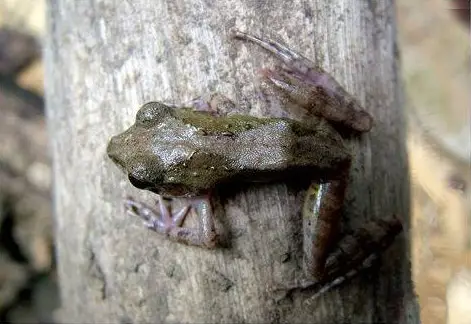
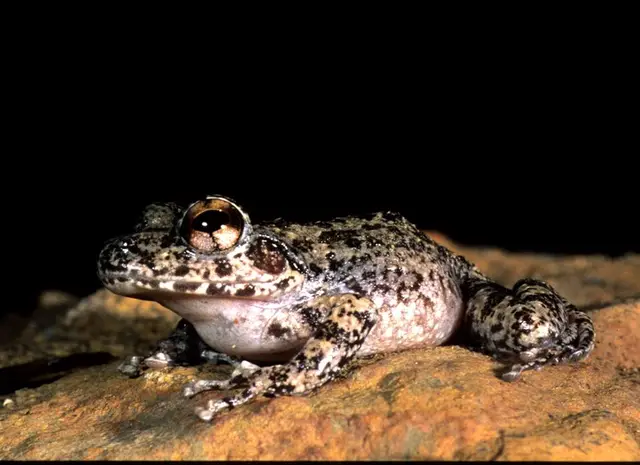
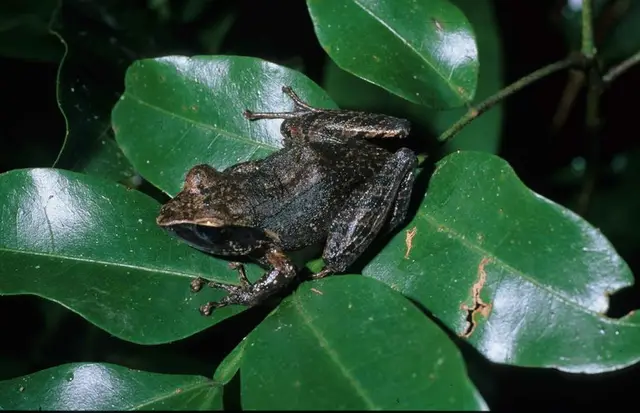
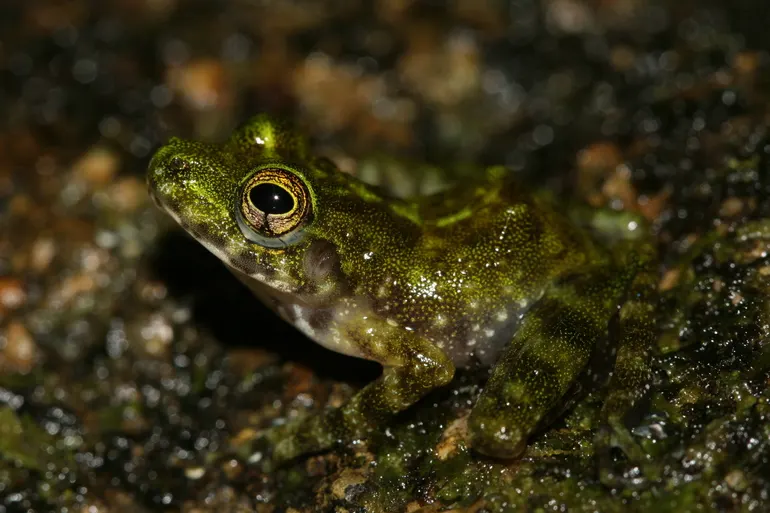
Webb's Madagascar frog (Gephyromantis webbi) is a frog of the lowland rainforest and forest streams of north-eastern Madagascar. The IUCN Red List classes it as Endangered (2016 assessment), because its forest is being cleared and it is known from only a handful of locations.
Where it lives
The frog was first described by Grandison in 1953 from Mangabe Island in Antongil Bay, off north-eastern Madagascar, under the name Rhacophorus webbi. It now sits in the genus Gephyromantis, in the subgenus Vatomantis, and is found only on Madagascar. Some sites still list it under the older name Mantidactylus webbi.
It lives in moist lowland forest and along permanent streams and rivers, from sea level up to about 160 m. The Red List puts its range at roughly 4,768 square km but counts only one to four locations. Photographs from the uninhabited island of Nosy Mangabe, off the north-east coast, show it on the forest floor.
Pins are Wikidata “endemic to” fields. Orange dots, when present, are GBIF occurrence tiles — survey bias included.
How it lives
Little has been published about its day-to-day life. A 2014 study in Herpetology Notes recorded Webb's frog and two relatives, Gephyromantis rivicola and G. silvanus, on the same day beside a small stream in a forest fragment near Andranofotsy. Webb's frog had the shortest call of the three, with long gaps between calls.
It does not migrate.
Why it is in trouble
The Red List reports a continuing decline in the area the frog occupies and a decreasing population trend. The threats it names are small-holder farming, shifting agriculture and the spread of housing, all of which eat into the lowland forest and the streams that run through it.
No population count exists, so the number of frogs left is unknown.
What is being done
The frog occurs in at least one protected area. The Red List calls for site protection and management and for resource and habitat protection, along with more research on its threats and on how many there are and where.
Sources
Written for this catalog in our own words from the sources below, checked against them on 12 November 2026. Population figures are estimates and carry the year they were made. Status and assessment year: IUCN. 2026. The IUCN Red List of Threatened Species. Version 2026-1. iucnredlist.org.