Endangered
Gephyromantis atsingy
Gephyromantis atsingy
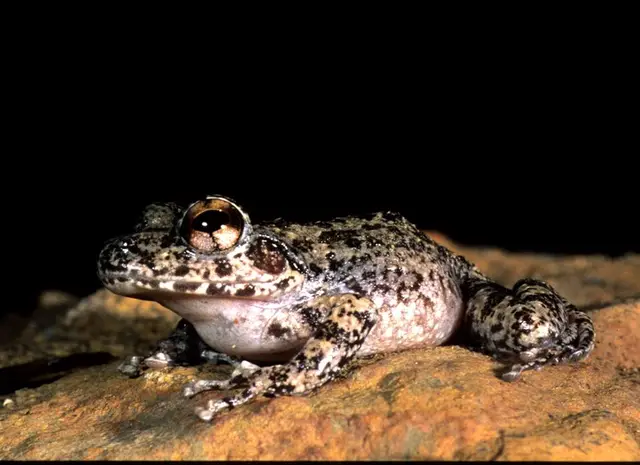
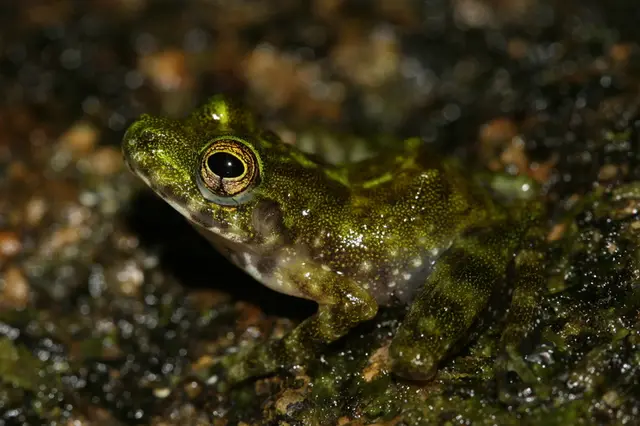
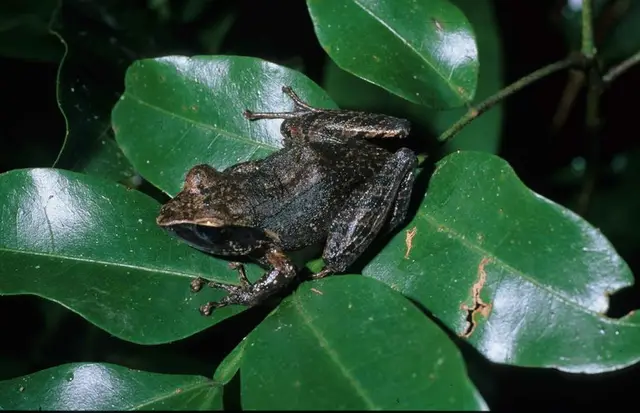
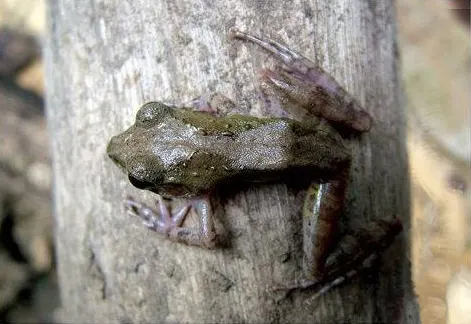
Gephyromantis atsingy is a medium-sized frog that clings to the sharp limestone pinnacles and caves of the Tsingy de Bemaraha in western Madagascar. Scientists only described it in 2011. The IUCN Red List rated it Endangered in 2016, because it lives in a very small area and its forest is being cleared.
How to recognise it
Adults measure about 35 to 43 mm from snout to vent. In life the frog is light brownish, sometimes tinged with green, with darker dots and marbling and a darker X-shaped mark across the shoulders. The belly is whitish, and the finger and toe tips are paler than the limbs.
Mature males have yellowish glands on the thighs. Young frogs have a pale stripe down the middle of the back. The fingertips are widened into triangular discs.
Where it lives
It is known only from the Bemaraha plateau, within Tsingy de Bemaraha National Park. The 2011 description listed it from sites between about 57 and 427 m above sea level. The massif covers roughly 1,577 square kilometres, and the IUCN puts the frog's extent of occurrence at about 3,060 square kilometres across two locations.
Most of the original specimens came from humid rock cavities and canyon walls and from limestone caves. The IUCN lists caves, rocky areas and dry tropical forest as its habitats. Part of its range lies inside a protected area.
Pins are Wikidata “endemic to” fields. Orange dots, when present, are GBIF occurrence tiles — survey bias included.
How it lives
The frog is active at night on the tsingy rock and shelters in caves and rock cavities by day. Researchers have watched it jumping between pinnacles far from any water.
Very little else is known. The original description states that nothing had been recorded about its mating behaviour, its call or its tadpoles, so how and where it breeds remains an open question.
Why it is in trouble
The IUCN gives its population trend as decreasing and records continuing loss of habitat. The listed threats are small-scale farming, shifting agriculture and accidental harm from local harvesting. The 2011 paper also named charcoal production in some forest areas.
The discoverers originally suggested Near Threatened, noting that the humid canyons where it lives are generally well protected. The IUCN later assessed it as Endangered under its range-size criteria (B1ab(iii)), because the species occurs at so few places.
What is being done
Its main safeguard is protection of the Bemaraha area through the national park. The IUCN lists site protection and habitat protection as the conservation actions relevant to it, and records no captive breeding programme and no population count.
Sources
Written for this catalog in our own words from the sources below, checked against them on 12 November 2026. Population figures are estimates and carry the year they were made. Status and assessment year: IUCN. 2026. The IUCN Red List of Threatened Species. Version 2026-1. iucnredlist.org.