Endangered
Osornophryne angel
Osornophryne angel
Osornophryne angel is a small Andean plump toad from the high grasslands of northern Ecuador, named for the Páramo de El Ángel in Carchi province. It was described in 2010, and the IUCN Red List rated it Endangered in 2022, based on a tiny range of about 413 square kilometres.
How to recognise it
This is a stocky toad with granular skin, glandular ridges and small tubercles. Adults are dark brown on the back and limbs, with yellowish-brown ridges on the back and mustard-yellow ridges along the sides. The throat is reddish yellow and the belly mustard yellow, sometimes with dark brown spots. Hands and feet are reddish.
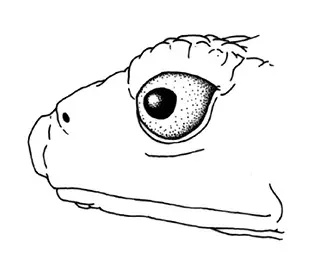
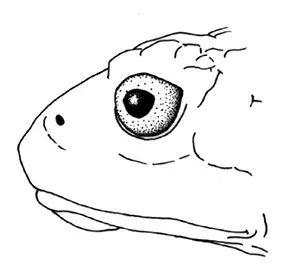
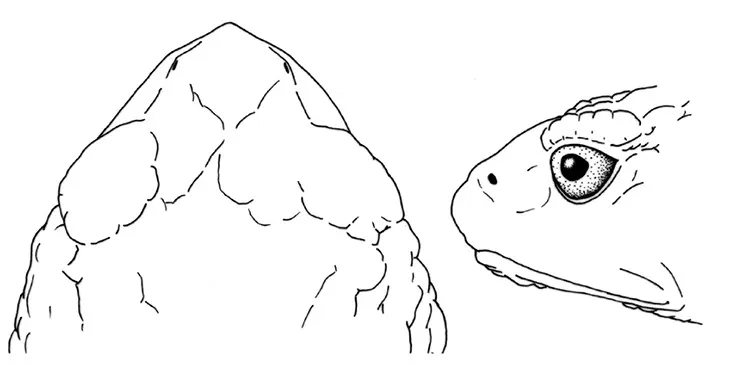
The tip of the snout carries a small projection. Males have a proboscis-like snout tip, while females have a shorter papilla. The two sexes differ strongly in size. In the original description, eight females averaged 29.8 mm from snout to vent (range 21.2 to 36.3 mm), while two males measured about 18 mm.
Males also have keratinised nuptial pads on the first finger. Differences like these between the sexes have caused identification errors in this genus, because males and females of different species were sometimes matched wrongly.
Where it lives
The species was described from páramo on the western slope of the Cordillera Occidental in northern Ecuador. The holotype, a female, was collected in September 2008 at the Lagunas del Voladero in Reserva Ecológica El Ángel, at 3,797 m. Other specimens had been collected in 2004 at a research station in the reserve's buffer zone. Records run from the reserve and its buffer zone north to the Chiles volcano in Carchi province, between about 3,250 and 3,800 m.
The IUCN assessment gives an elevation of 3,200 to 4,000 m and an extent of occurrence of 413.4 square kilometres, in two to four locations. Because the habitat continues across the border, the original description judged its presence in Colombia highly probable, and the IUCN lists Colombia as a possible range country. Some Colombian specimens might belong to this species, but their condition prevented a firm identification.
Pins are Wikidata “endemic to” fields. Orange dots, when present, are GBIF occurrence tiles — survey bias included.
How it lives
It lives in tussock grass páramo, in páramo dominated by frailejón (Espeletia pycnophylla), at the edge of subpáramo and in remnant high montane evergreen forest. In the grassland it has usually been found inside living and rotting giant bromeliads (Puya herculis), and in forest remnants among moss on the ground. It shares this habitat with several páramo rain frogs of the genus Pristimantis and with lizards.
Little else is recorded about its breeding or diet.
Why it is in trouble
With so small a range, the toad is exposed to anything that changes its habitat. The Red List names fire as an ongoing threat, with its frequency and intensity increasing and capable of causing fluctuations in numbers. Grazing by livestock, small-holder farming and ranching are also listed, and they convert or degrade páramo. Volcanic activity is listed as a possible future threat. The assessment records an ongoing decline in habitat area and a decreasing population trend.
What is being done
The species occurs in at least one protected area, Reserva Ecológica El Ángel, and the assessment lists site protection, site management and habitat protection as relevant actions. When they described the species, Yánez-Muñoz and colleagues pointed out that most Osornophryne toads are already rated threatened and that more information is urgently needed for effective conservation.
Taxonomy
The toad's status as a separate species has been questioned. A 2012 study by Páez-Moscoso and Guayasamin in Molecular Phylogenetics and Evolution tested species limits across the genus using DNA and body measurements. It supported most described species but found contradictory evidence about whether O. angel is distinct, and it treated the related O. bufoniformis as a species complex needing more study.
Sources
Written for this catalog in our own words from the sources below, checked against them on 12 November 2026. Population figures are estimates and carry the year they were made. Status and assessment year: IUCN. 2026. The IUCN Red List of Threatened Species. Version 2026-1. iucnredlist.org.
- IUCN Red List assessment, Osornophryne angel (2022)
- Yanez-Munoz et al. 2010, original description, Avances en Ciencias e Ingenierias 2(3): B46-B53
- Crossref record of the original description (DOI 10.18272/aci.v2i3.44)
- Paez-Moscoso and Guayasamin 2012, Species limits in the Andean toad genus Osornophryne, Molecular Phylogenetics and Evolution 65: 805-822 (abstract)
- IUCN Red List taxon record