Endangered
Osornophryne antisana
Osornophryne antisana
The Napo plump toad (Osornophryne antisana) is a tiny, warty toad of the high Andes of eastern Ecuador, named for Antisana volcano. The IUCN Red List rated it Endangered in 2022. It lives in cold grassland and shrub paramo, mostly between about 3,400 and 4,000 m above sea level.
How to recognise it
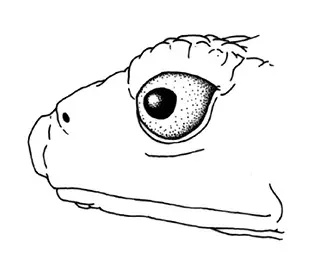
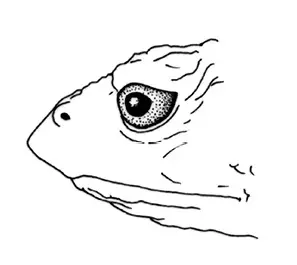
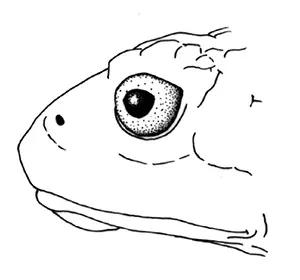
This is a small, stocky toad. Males reach about 19 mm from snout to vent and females about 29 mm. The back ranges from yellow to dark or greyish brown and carries small warts, and the sides have small to medium warts. The iris is black with gold flecks.
Several close relatives in the genus have prominent ridges along the back. In this species the dorsolateral ridges are broken, and the small body size helps separate it from similar plump toads. A 2011 study of the genus found that its DNA is not clearly distinct from that of Osornophryne puruanta, though the two differ in body size.
Marinus Hoogmoed described the species in 1987, from a specimen collected on the slopes of Antisana volcano, in what is now the Antisana Ecological Reserve.
Where it lives
The toad is endemic to Ecuador, in the eastern Andes. The IUCN gives an elevation range of 3,400 to 4,000 m and an extent of occurrence of about 4,480 square kilometres, while an older published range runs from 2,609 to 4,128 m and about 2,930 square kilometres.
Museum specimens used in the 2011 study came from paramo near Oyacachi and Salvefaccha in Napo province (about 3,900 m) and from Llanganates in Tungurahua province (about 3,600 m). The IUCN lists high-altitude grassland and shrubland as its habitat. Other accounts add moist montane forest and spots near lakes, and mention individuals under stones and under dead frailejon (Espeletia) plants.
Pins are Wikidata “endemic to” fields. Orange dots, when present, are GBIF occurrence tiles — survey bias included.
Why it is in trouble
The IUCN records its population trend as decreasing and its population as severely fragmented, with a continuing decline in the area it occupies. The listed threats are all ongoing: small-holder farming and grazing, roads, small-scale harvest effects, more frequent fires, habitat shifting and drought. Each is scored as low impact on its own.
What is being done
The species occurs in at least one protected area. The IUCN lists protection of sites and habitat and site management among the actions needed. It was rated Endangered in 2004 and again in 2022, so its status has not improved. No figure for how many toads remain has been published.
Sources
Written for this catalog in our own words from the sources below, checked against them on 12 November 2026. Population figures are estimates and carry the year they were made. Status and assessment year: IUCN. 2026. The IUCN Red List of Threatened Species. Version 2026-1. iucnredlist.org.