Critically Endangered
Osornophryne cofanorum
Osornophryne cofanorum
The Cofan plump toad (Osornophryne cofanorum) is a tiny, semi-arboreal toad from montane forest on the Amazonian slopes of the Ecuadorian Andes. It was described only in 2010. The IUCN Red List rated it Critically Endangered in 2023, because its known range is very small and shrinking.
How to recognise it
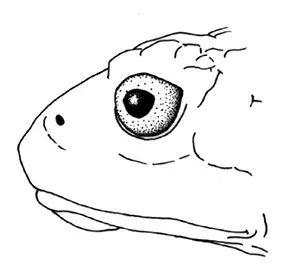
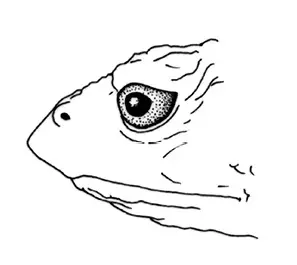
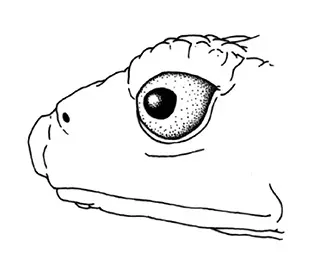
Males reportedly reach about 1.8 cm from snout to vent and females about 3.4 cm. Males have a green head and eyelids, a grey body, and warts in several colours, including yellow pustules on the snout, eyelids and limbs. Females are brown with a bluish-grey belly and yellow warts. The fourth and fifth toes are long, which the describers suggested is an adaptation for climbing.
Its skin is fused to the skull and vertebrae, giving it a skeleton-like look that sets it apart from other toads in its genus.
Where it lives
The toad is known from montane forest in Sucumbíos Province, northeastern Ecuador. The original description gave an altitude of 2,600 to 2,800 metres, and the type specimen reportedly came from 2,614 metres. The IUCN assessment gives 2,625 to 2,943 metres, counts a single location, and estimates the extent of occurrence at about 47 square kilometres, where another source gives 49. The range could be larger, since no obvious barrier is reported to limit spread, and the toad may reach into Colombia. The IUCN records it in at least one protected area.
Pins are Wikidata “endemic to” fields. Orange dots, when present, are GBIF occurrence tiles — survey bias included.
How it lives
It is nocturnal. Small toads have been found on the leaves of bromeliads and shrubs. Females reportedly lay about a dozen large cream eggs, along with a couple of smaller ones, and development is direct: there is no free-swimming tadpole. The name honours the Cofán people, in whose territory it was reportedly found. A 2012 genetic analysis reportedly placed it as the sister species of Osornophryne guacamayo.
Why it is in trouble
The IUCN names mining and quarrying as the threat, causing ecosystem degradation, and records a continuing decline in the area it occupies and a decreasing population. With one location, a single development could affect much of the species.
The IUCN lists resource and habitat protection, and site protection and management, among its conservation actions.
Sources
Written for this catalog in our own words from the sources below, checked against them on 12 November 2026. Population figures are estimates and carry the year they were made. Status and assessment year: IUCN. 2026. The IUCN Red List of Threatened Species. Version 2026-1. iucnredlist.org.