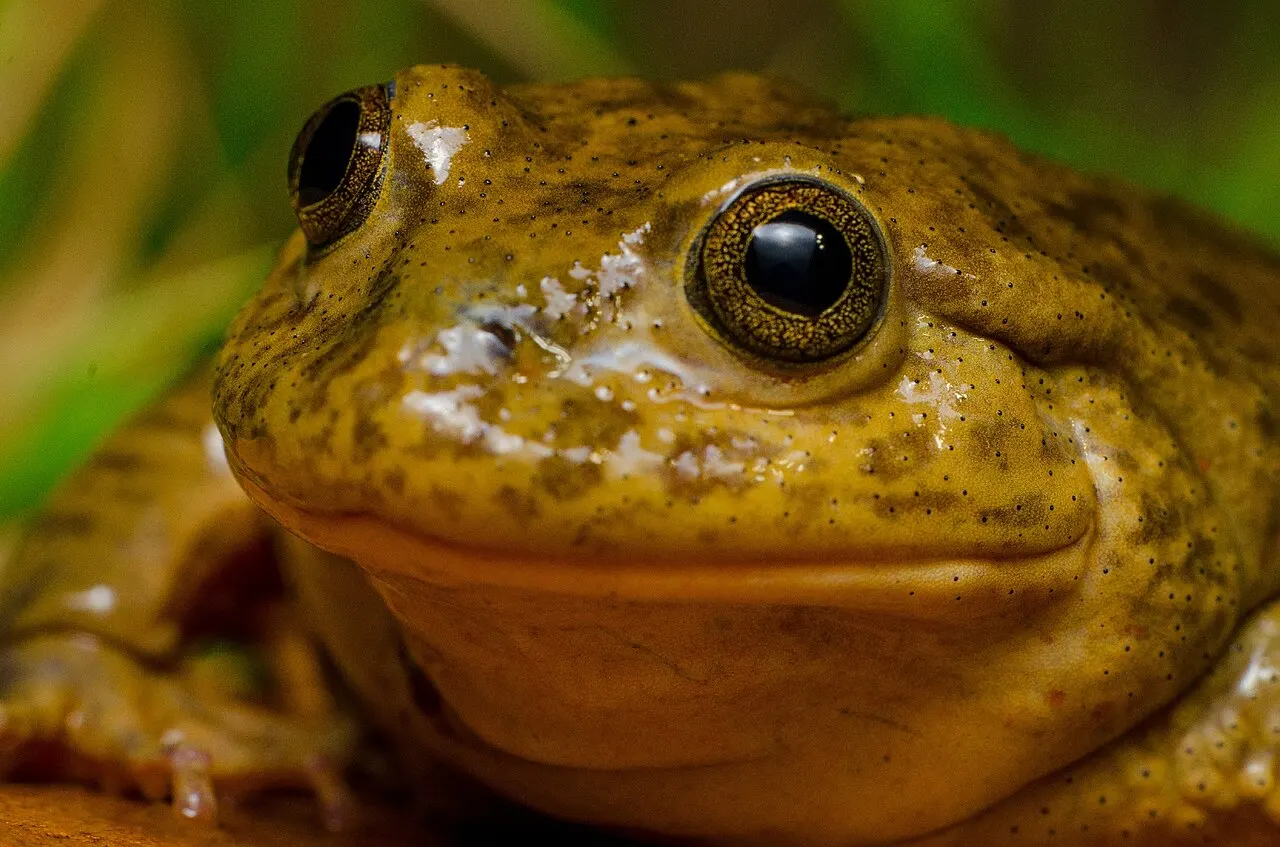
Critically Endangered
Telmatobius simonsi
Telmatobius simonsi
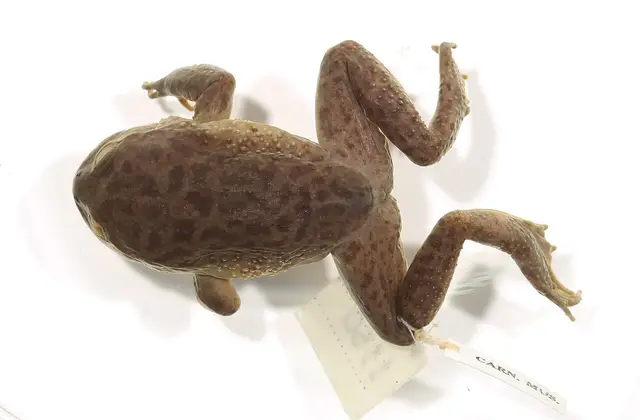
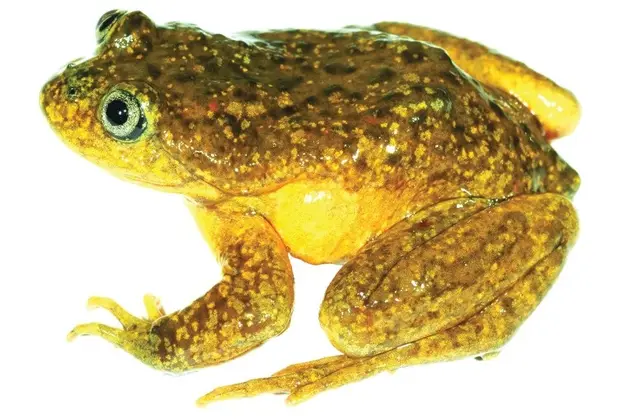
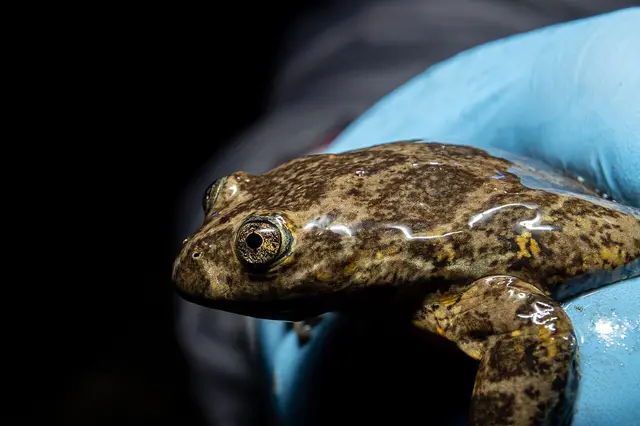
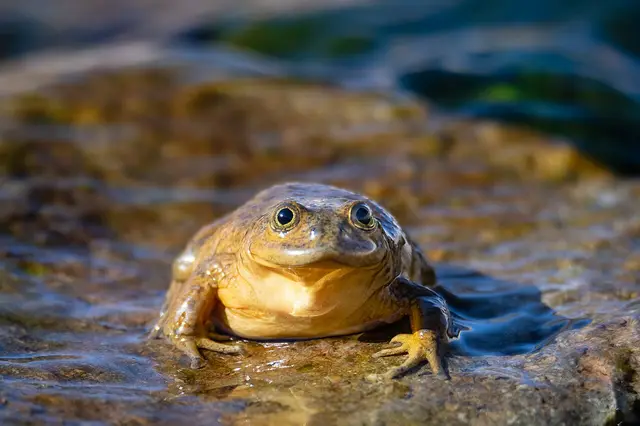
Telmatobius simonsi is a water frog from the eastern Andean slopes of Bolivia, living in cloud-forest and valley streams between 1,000 and 2,800 m. The IUCN Red List rated it Critically Endangered in 2020, estimating that its numbers fell by about 80 percent over three generations.
Where it lives
The species is found only in Bolivia, in Andean valleys and cloud forest. It has been recorded in two national parks, El Palmar and Amboro.
Water frogs of the genus Telmatobius are aquatic. This one has been seen on rocks and in mud on the bottom of streams in cloud forest and Yungas forest. The IUCN also lists it from montane moist forest, high-altitude shrubland and grassland, small ponds, ditches and marshes, and even farmland and degraded former forest, so it can persist in altered places where water remains. It is not a migrant. The IUCN estimates its extent of occurrence at about 63,000 square kilometres.
Pins are Wikidata “endemic to” fields. Orange dots, when present, are GBIF occurrence tiles — survey bias included.
Naming and taxonomy
Hampton Wildman Parker described the frog in 1940 and named it for the collector Perry O. Simons. In 2003 the herpetologists Ignacio De la Riva and Michael Harvey redescribed it in the journal Herpetologica, in a paper that also described a similar new Telmatobius from cloud forests of Santa Cruz and adjacent Cochabamba.
Why it is in trouble
The IUCN estimates a population drop of about 80 percent over three generations (a generation here is 6 years). It bases that on direct observation, loss of habitat and the effects of pathogens and pollutants. The cause of the decline is recorded as not understood and not stopped, and the area the frogs occupy is still shrinking.
The pathogen the IUCN names is the chytrid fungus Batrachochytrium dendrobatidis, and a die-off attributed to it has reportedly occurred. Other ongoing pressures the IUCN lists, each scored as low impact, are soil erosion and sedimentation, small-holder farming and grazing, herbicides and pesticides, and small-scale harvesting.
Across the region, Bolivian biologists reported in 2009 that other Telmatobius frogs once abundant in Cochabamba, Chuquisaca and Potosi could no longer be found at some sites they revisited. That report did not name this species.
What is being done
The IUCN notes that the frog occurs in at least one protected area and that conservation sites have been identified over part of its range. Its list of recommended actions includes site protection and management, and captive breeding.
The same Bolivian group said in 2009 that, against chytrid, the only response available for Telmatobius frogs was taking some animals from the wild to start captive programmes. No captive population of T. simonsi is documented.
Sources
Written for this catalog in our own words from the sources below, checked against them on 12 November 2026. Population figures are estimates and carry the year they were made. Status and assessment year: IUCN. 2026. The IUCN Red List of Threatened Species. Version 2026-1. iucnredlist.org.