Endangered
Pseudophilautus auratus
Pseudophilautus auratus
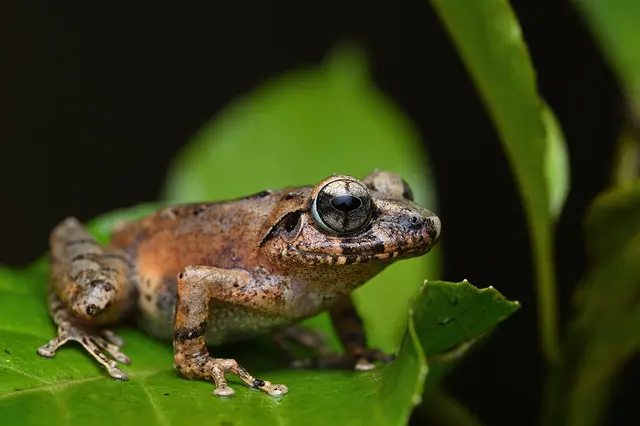
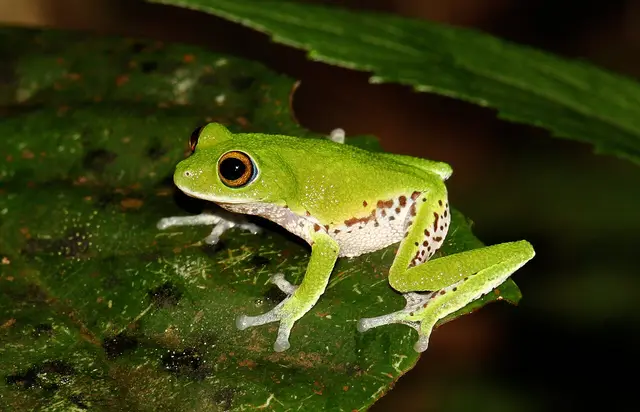
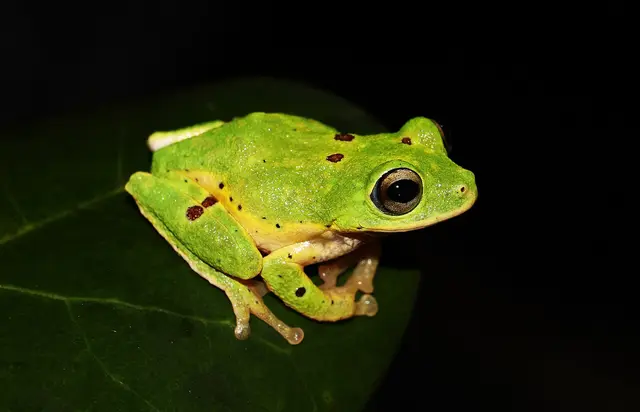
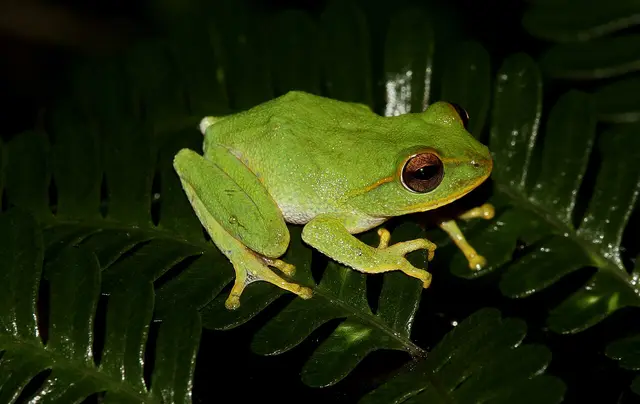
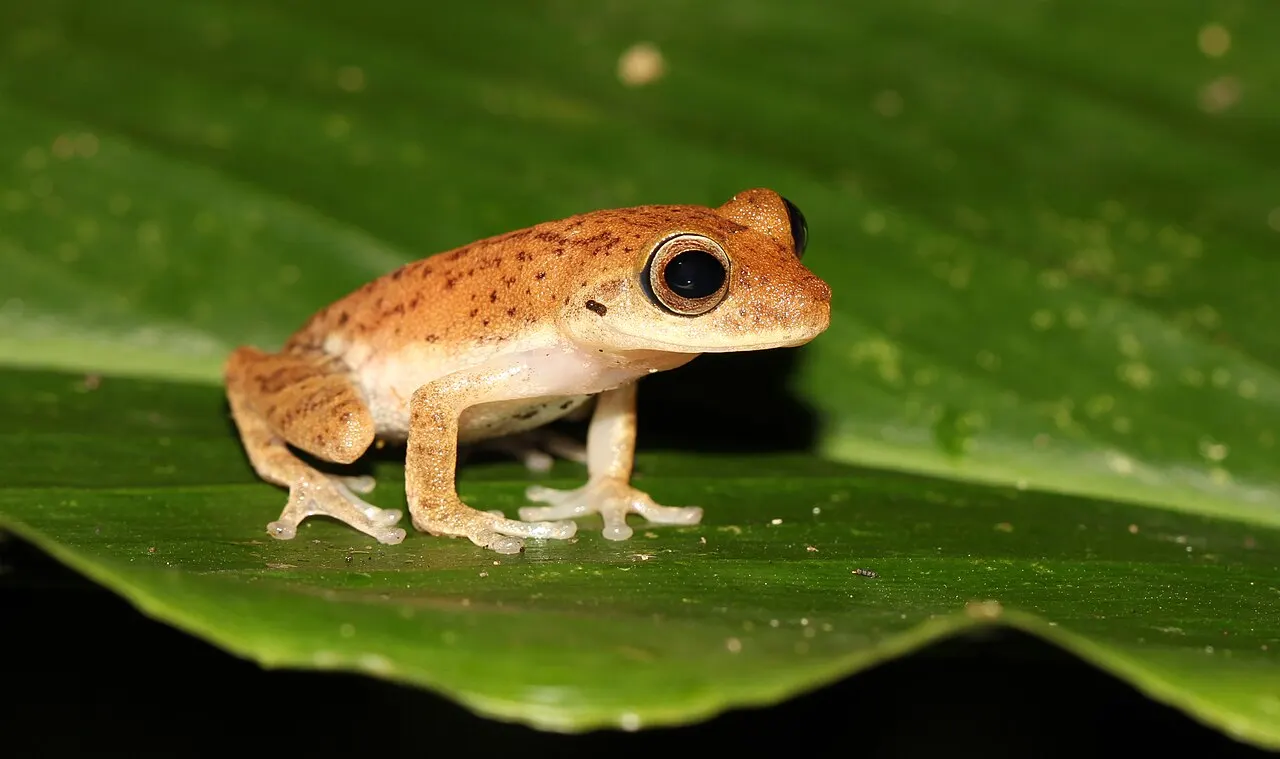
The golden shrub frog (Pseudophilautus auratus) is a Sri Lankan frog of the island's wet-zone forests, best known from Sinharaja and a handful of other forest patches. The IUCN Red List rated it Endangered in 2020. Its colour ranges from yellow to pink, and it breeds without needing standing water.
How to recognise it
Its scientific name points to the colouring, since auratus means golden. Individuals vary a good deal, from yellow through pink to brownish pink, so colour alone is a shaky guide in the field. It belongs to the shrub frogs, family Rhacophoridae.
Where it lives
The species is endemic to Sri Lanka. It was described in 2005, originally in the genus Philautus. It is recorded from the island's wet zone, including the Sinharaja World Heritage Site (with its Morningside and Sooriyakanda forest reserves) and the Kanneliya Forest.
It lives in closed-canopy cloud forest at 513 to 1,270 m, and is reported to be common at the higher elevations of Sinharaja. The IUCN gives a wider elevation span of 100 to 1,270 m, and lists lowland and montane moist forest, streams, pools and marshes, and plantations among its habitats. It reports only two to five locations, which is a small footprint for a species.
Pins are Wikidata “endemic to” fields. Orange dots, when present, are GBIF occurrence tiles — survey bias included.
How it lives
Breeding does not depend on open water. The frog develops directly, so the eggs hatch into tiny froglets without a tadpole stage. The IUCN lists it as not a migrant.
Why it is in trouble
The Red List criterion B1ab(iii) reflects a small range, few locations and a continuing decline in habitat quality, and the population is listed as decreasing. The species has been rated Endangered in 2004, 2014 and 2020.
The IUCN names a long list of pressures: housing, industrial-scale and small-holder farming, pesticides and herbicides, habitat alteration, drought, more frequent fires, renewable energy development, recreation, light pollution and rubbish. Most act through loss or degradation of forest. Deforestation and agriculture are the main drivers named in a Sri Lankan nature blog.
What is being done
The frog occurs inside at least one protected area, and the recorded conservation actions are site and area management, site protection, and habitat protection. Sinharaja, a World Heritage Site, holds part of its range.
Sources
Written for this catalog in our own words from the sources below, checked against them on 12 November 2026. Population figures are estimates and carry the year they were made. Status and assessment year: IUCN. 2026. The IUCN Red List of Threatened Species. Version 2026-1. iucnredlist.org.