Critically Endangered
Pseudophilautus mooreorum
Pseudophilautus mooreorum
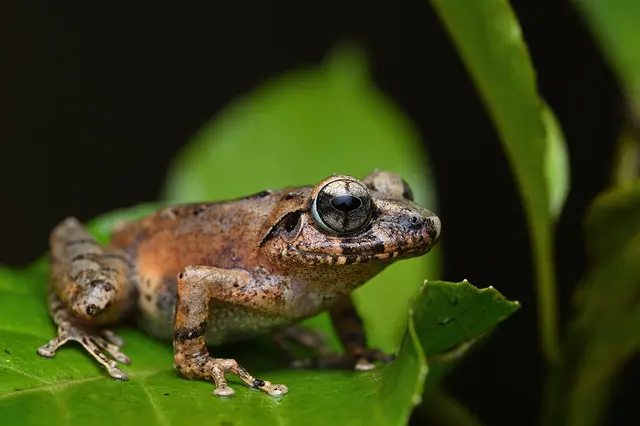
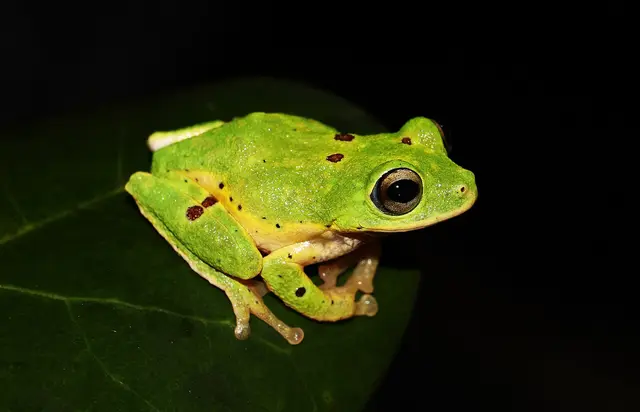
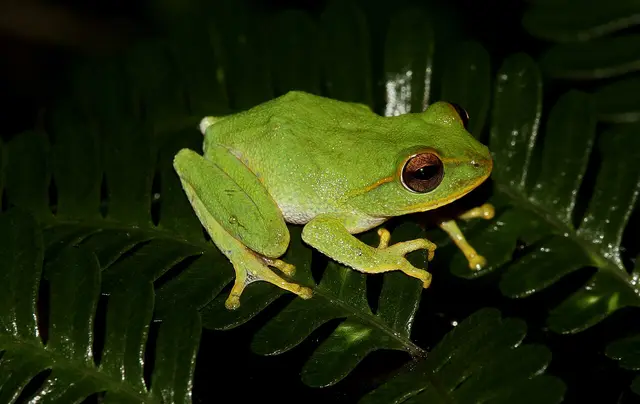
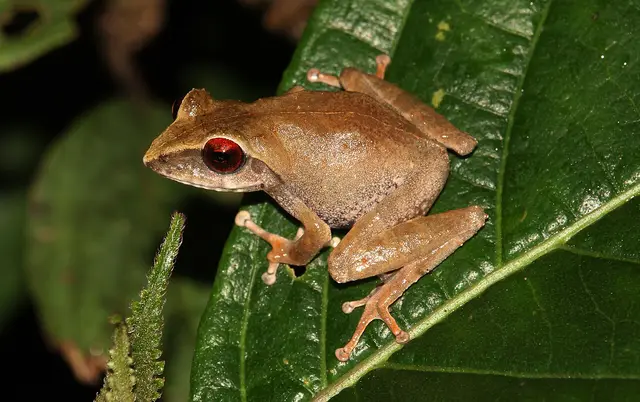
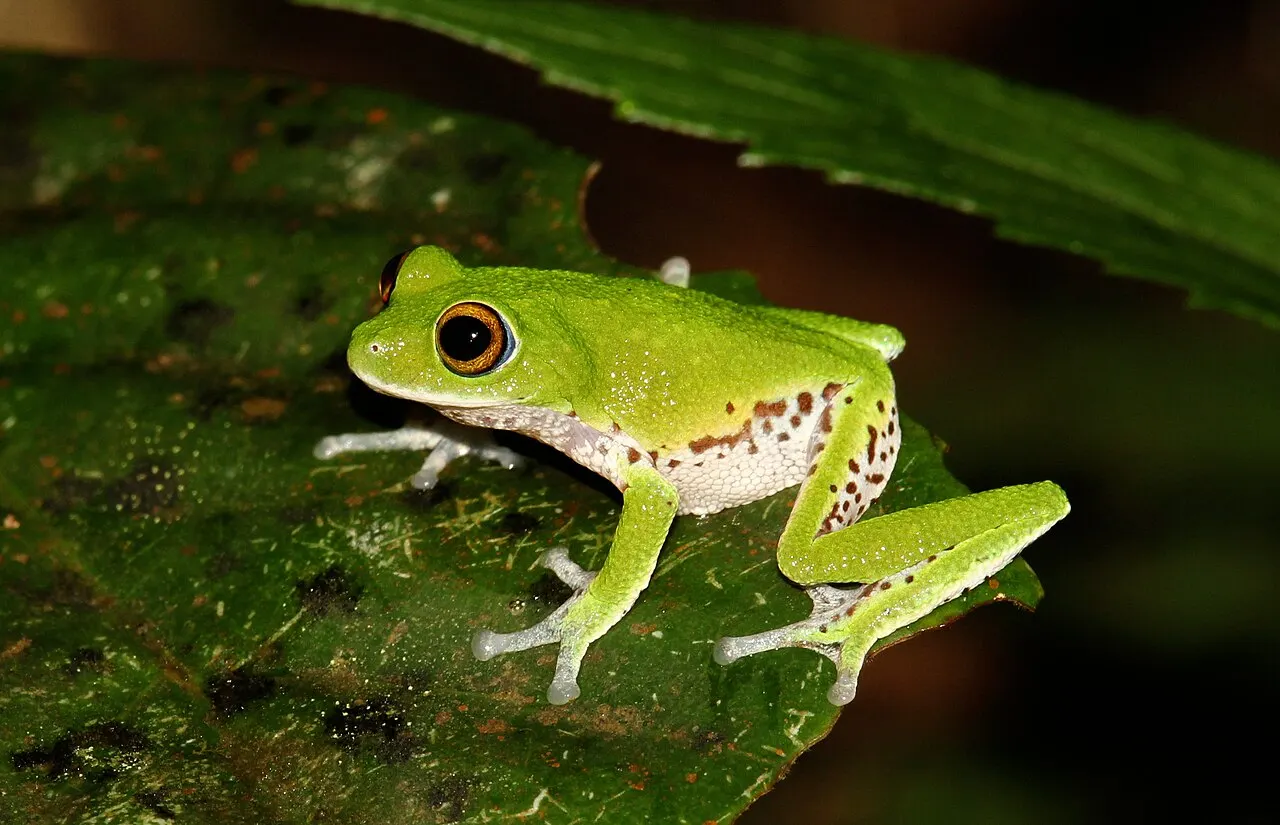
Moore's shrub frog is a small, bright green frog found only in the cloud forests of Sri Lanka's Knuckles hills. The IUCN Red List classed it as Critically Endangered in 2020, with a shrinking population known from a single location. It reportedly skips the tadpole stage entirely.
How to recognise it
This is a small frog. Adult males measure about 29 to 31 mm from snout to vent, and females are a little bigger at roughly 34 to 35 mm.
The colouring sets it apart. The head is reportedly a vivid, almost luminous green, while the flanks are yellow and white. The tops of the hind legs are green with white patches, and all four feet end in white toes with white adhesive pads.
Where it lives
Moore's shrub frog is endemic to Sri Lanka, which means it occurs nowhere else. It has been recorded in the Knuckles hills, between about 1,100 and 1,245 m above sea level, in moist montane forest, described as cloud forest with a closed canopy. The Red List counts all known records as a single location.
Most of its habitat is natural forest, though the assessment also lists plantations as a habitat it uses. The Red List records that it occurs in at least one protected area.
Pins are Wikidata “endemic to” fields. Orange dots, when present, are GBIF occurrence tiles — survey bias included.
How it lives
It is a shrub dweller. Males have been seen perched in understory shrubs roughly 1 to 3 m above the ground.
Like other frogs in its genus, it reportedly develops directly. Eggs hatch into tiny froglets rather than swimming tadpoles, so it would not depend on ponds or streams for breeding. Little is recorded about its diet, calls or lifespan.
Why it is in trouble
The frog was described to science in 2005, as one of eight new shrub frogs from Sri Lanka. At its 2020 assessment its population was judged to be decreasing and the area of its habitat was still shrinking.
The Red List names a long list of ongoing pressures: small-holder farming, herbicides and pesticides, changes to the forest itself, housing, tourism and recreation areas, and more frequent or intense fires. Unintentional harm from small-scale harvesting is listed too. Because the frog is known from such a small area, any one of these can matter a great deal.
Sources
Written for this catalog in our own words from the sources below, checked against them on 12 November 2026. Population figures are estimates and carry the year they were made. Status and assessment year: IUCN. 2026. The IUCN Red List of Threatened Species. Version 2026-1. iucnredlist.org.