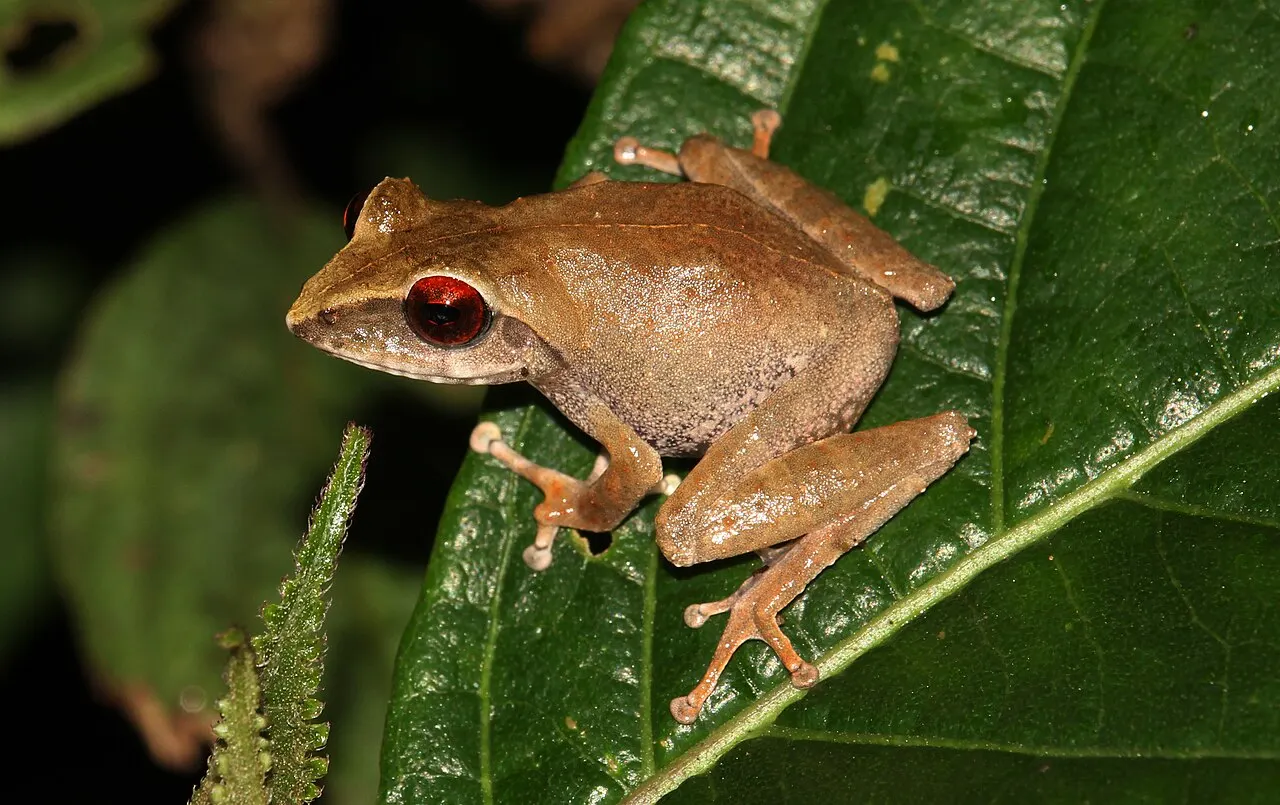
Endangered
Pseudophilautus alto
Pseudophilautus alto
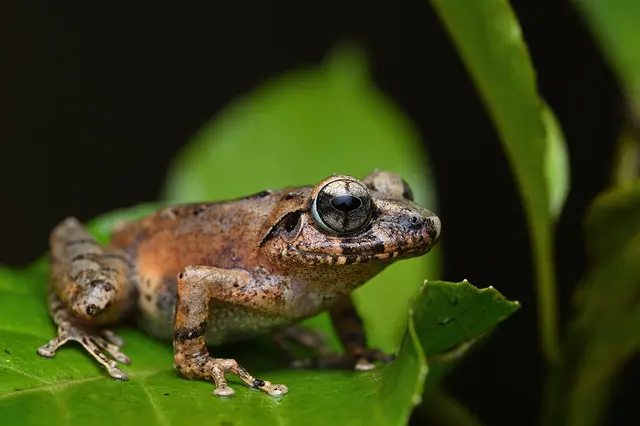
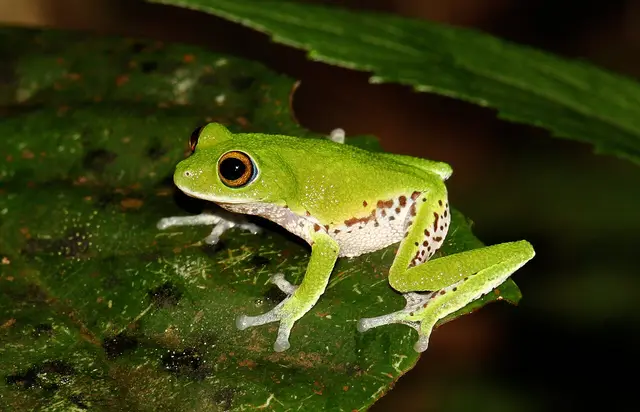
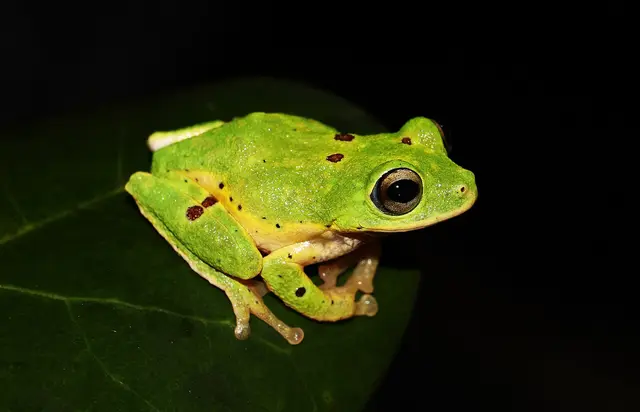
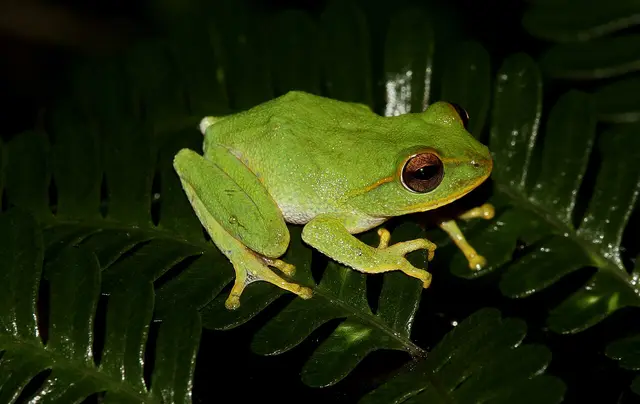
The Horton Plains shrub frog (Pseudophilautus alto) is a small tree-dwelling frog found only in the Central Highlands of Sri Lanka. The IUCN Red List assessed it as Endangered in 2020, with continuing loss of its habitat. It lives in montane forest, mostly on low shrubs, and is known from only a handful of sites.
What it is
This is a shrub frog in the family Rhacophoridae, the group that includes the Asian tree frogs. Manamendra-Arachchi and Pethiyagoda described it in 2004 (one reference gives 2005), originally as Philautus alto, before the Sri Lankan shrub frogs were moved to the genus Pseudophilautus.
Where it lives
The frog is endemic to Sri Lanka's Central Highlands. It is known from Horton Plains and Pattipola. The IUCN counts four to five locations between about 1,300 and 2,135 m above sea level and estimates its extent of occurrence at roughly 2,600 square kilometres. It is not a migrant, and the IUCN does not consider its population severely fragmented.
Horton Plains National Park is a cool, wet plateau of about 31 square kilometres, with roughly 2,000 hectares of montane grassland and 1,160 hectares of evergreen montane forest. Mean annual temperature there is about 13 C and rainfall exceeds 2,000 mm a year. The frog occurs inside the park, which became a national park in 1988 and is part of the Central Highlands of Sri Lanka World Heritage site.
Pins are Wikidata “endemic to” fields. Orange dots, when present, are GBIF occurrence tiles — survey bias included.
How it lives
Its natural habitat is tropical montane forest. It also turns up along forest edges beside tea plantations and in other human-altered places, so it tolerates some disturbance. Individuals are usually found in shrubs between 0.3 and 2 m above the ground. Its size, breeding and diet are poorly documented.
Why it is in trouble
The IUCN lists small-holder farming, herbicides and pesticides, utility and service lines, and acid rain as ongoing threats, each rated low impact, all acting through the conversion or degradation of its forest. It records that the area the species occupies is still shrinking.
Horton Plains itself faces forest dieback, gem mining and invasive plants such as gorse, though none of these has been tied to this frog specifically.
What is being done
The IUCN lists site protection, site management and habitat protection as the actions needed. It records that the species occurs in at least one protected area and that some animals are held in ex-situ conservation, but gives no further detail.
Sources
Written for this catalog in our own words from the sources below, checked against them on 12 November 2026. Population figures are estimates and carry the year they were made. Status and assessment year: IUCN. 2026. The IUCN Red List of Threatened Species. Version 2026-1. iucnredlist.org.