Critically Endangered
Pseudophilautus poppiae
Pseudophilautus poppiae
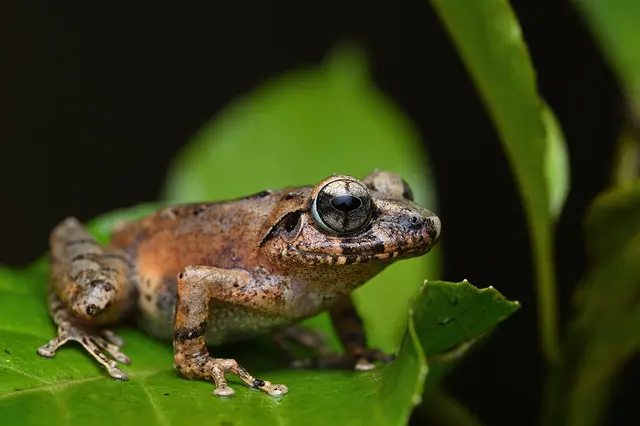
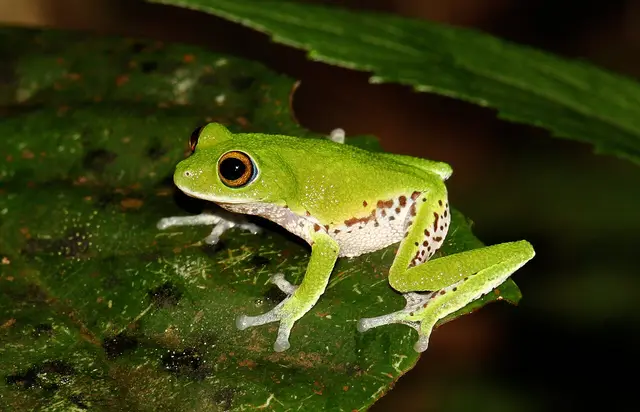
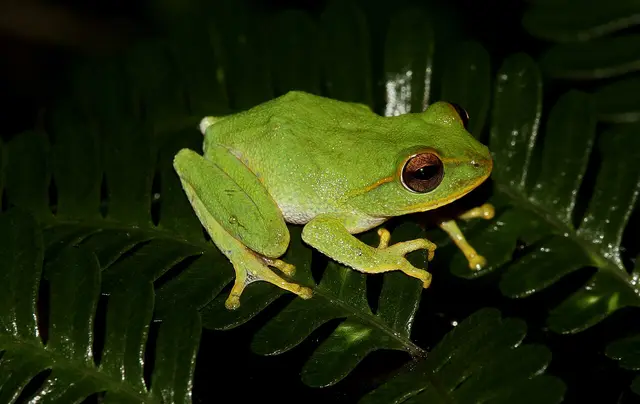
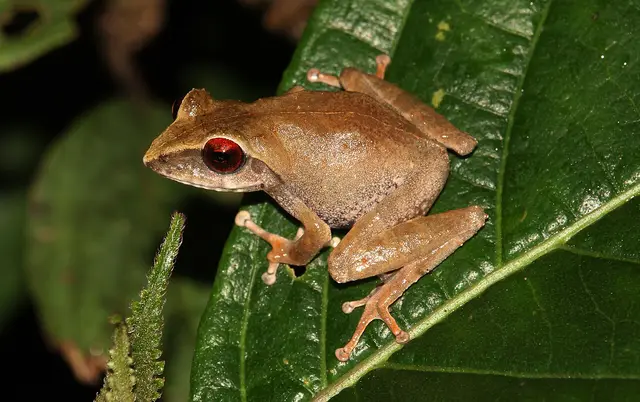
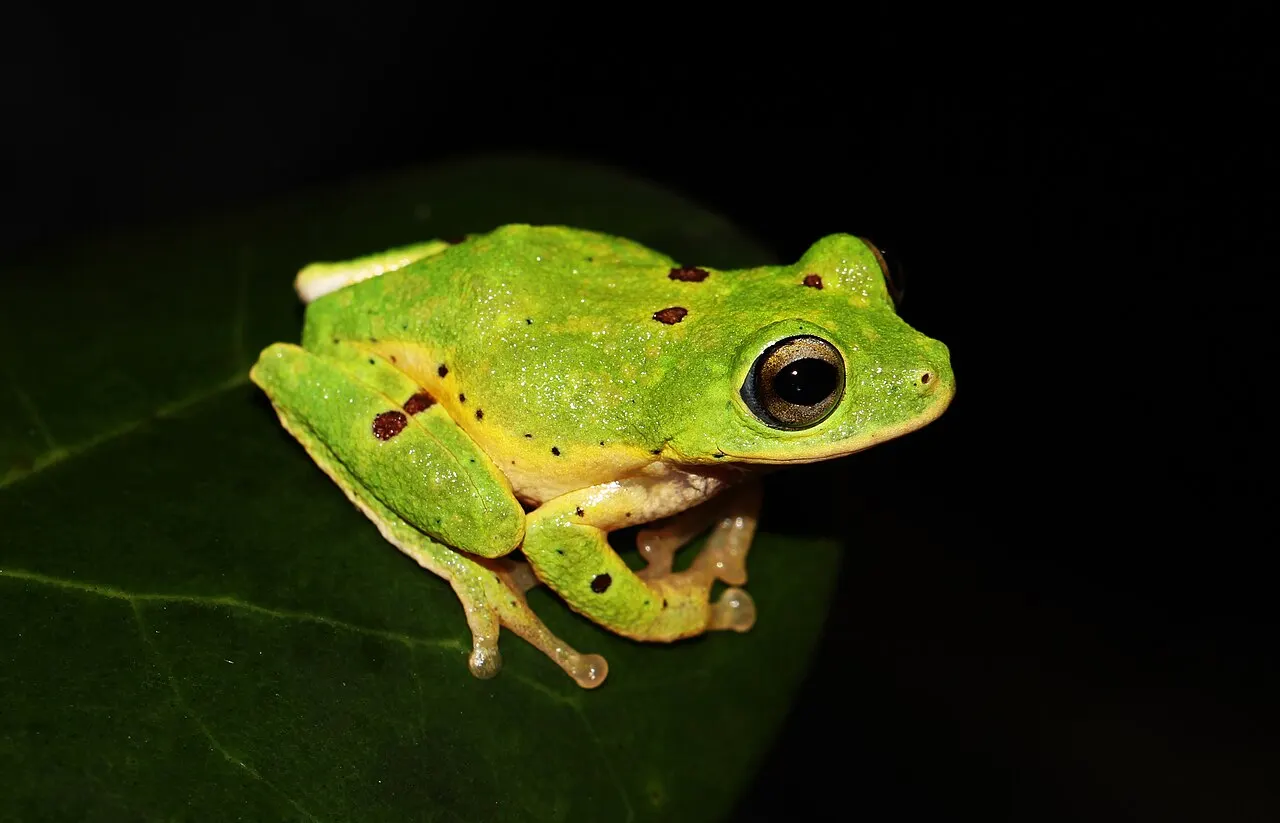
Poppy's shrub frog (Pseudophilautus poppiae) is a small, bright green tree frog found only in Sri Lanka, in moist montane forest between about 1,060 and 1,270 metres. The IUCN assessed it as Critically Endangered in 2020, with a single known location, a range of roughly 100 square kilometres, and a decreasing population.
How to recognise it
This is a tiny frog. Males reportedly measure about 21 to 25 millimetres from snout to vent, and the larger females about 26 millimetres. The head is described as a vivid, almost luminous green. Most frogs carry black spots on the back, though some have red ones. The flanks and belly are yellow, and the forelimbs have white edging.
It belongs to the shrub frogs of the genus Pseudophilautus (family Rhacophoridae) and was described in 2005 by Madhava Meegaskumbura and Kelum Manamendra-Arachchi, originally under the older genus name Philautus. The name reportedly honours Poppy Valentina Meyer, whose parents supported the Global Amphibian Assessment.
Where it lives
The species is endemic to Sri Lanka. The 2020 assessment counts one location, with an estimated extent of occurrence of about 99.9 square kilometres, at 1,060 to 1,270 metres above sea level.
Its main habitat is moist montane forest. The IUCN also records it from plantations and from small freshwater marshes and pools of under 8 hectares. It reportedly occurs in lightly planted cardamom plots, so it may not depend entirely on untouched forest.
Pins are Wikidata “endemic to” fields. Orange dots, when present, are GBIF occurrence tiles — survey bias included.
How it lives
It is reportedly strictly arboreal, living on lower branches and shrubs in cloud forest, with males seen perched 1 to 3 metres above the ground. Like other Pseudophilautus frogs, it reportedly skips the free-swimming tadpole stage, and young hatch as small froglets. The IUCN lists the frog as not migratory.
Why it is in trouble
The Red List criterion, B1ab(iii), applies to species with a very small range and a continuing decline in the extent or quality of habitat. The IUCN lists mining and quarrying, small-holder and industrial farming, housing and urban development, increased fire frequency and intensity, shifting and altered habitat, herbicides and pesticides, droughts, and unintentional losses from small-scale harvest of other resources.
Habitat loss is also named as the main threat in other summaries. The IUCN records whether the population is fragmented as unknown, and no population count exists.
What is being done
The frog occurs in at least one protected area. The IUCN lists site and area protection, site and area management, and resource and habitat protection as conservation actions. No species-specific recovery programme or captive population is recorded.
Sources
Written for this catalog in our own words from the sources below, checked against them on 12 November 2026. Population figures are estimates and carry the year they were made. Status and assessment year: IUCN. 2026. The IUCN Red List of Threatened Species. Version 2026-1. iucnredlist.org.