Endangered
Hyperolius rubrovermiculatus
Hyperolius rubrovermiculatus
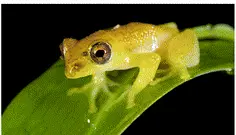
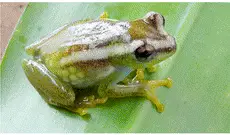
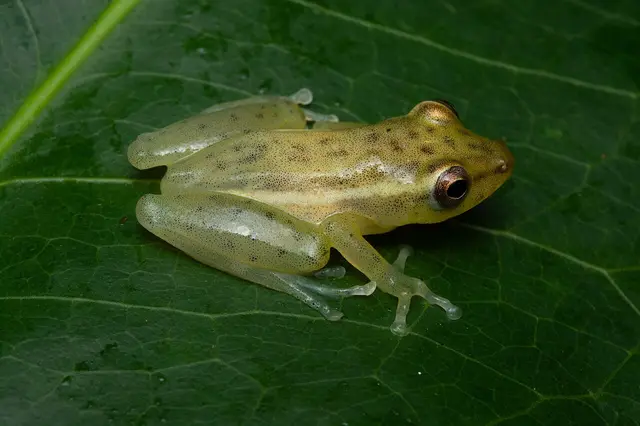
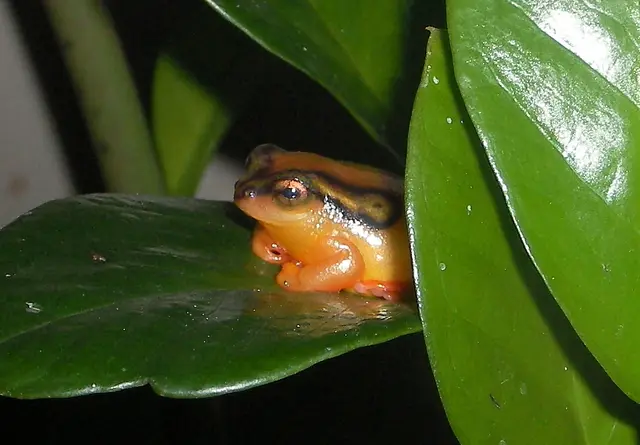
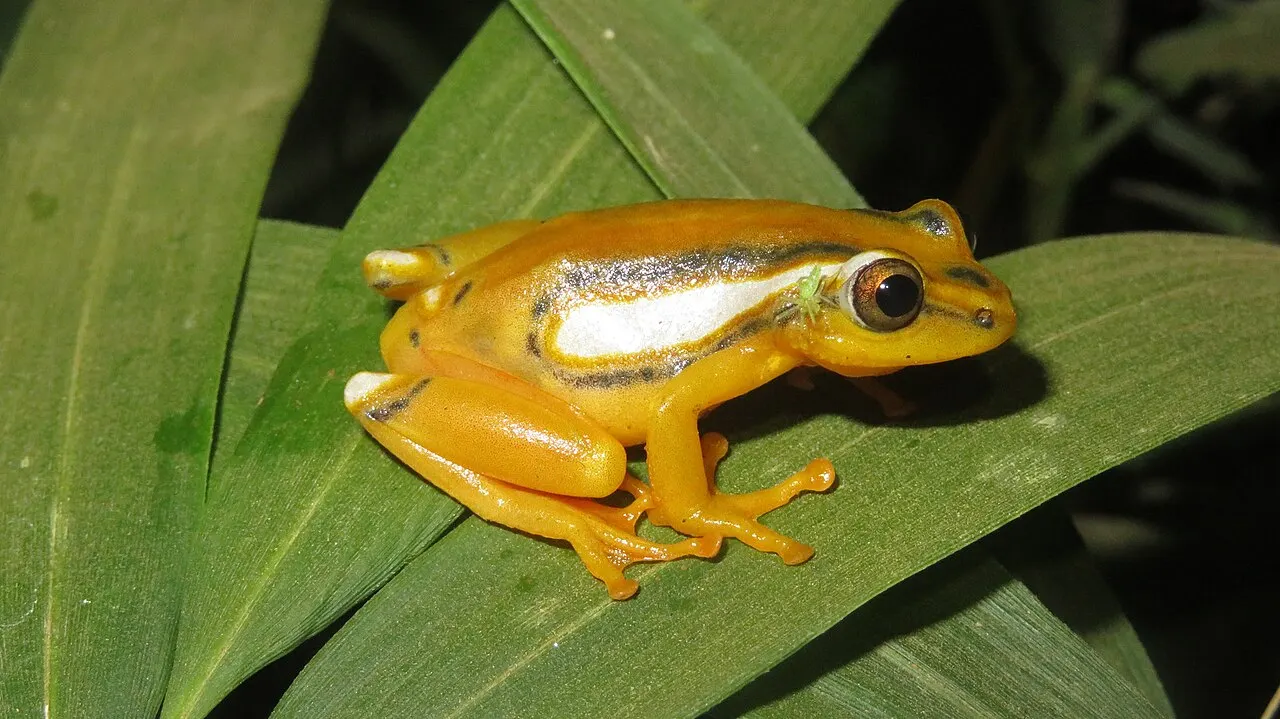
The Shimba Hills reed frog (Hyperolius rubrovermiculatus) is a small tree frog found only in Kenya, in and around the Shimba Hills on the coast. The IUCN Red List assessed it as Endangered in 2016, with a shrinking range of about 426 square kilometres and just two known locations.
How to recognise it
It's a small frog. Males measure roughly 24 to 30 mm and females 28 to 32 mm, so even the larger females are only a little over three centimetres long. The Norwegian herpetologist Arne Schiøtz described the species in 1975.
Where it lives
The frog is endemic to Kenya. The Red List puts its range at 30 to 400 metres above sea level and counts only two locations. Field surveys of the Shimba Hills area, run from July 2012 to June 2017, recorded it in wetlands inside Shimba Hills National Reserve (including near Shimba Lodge, at Mwadabara, at Sheldrick Falls and along the Mwele Forest stream), in Gongoni and Buda forests, and around the Mukurumudzi Dam on private land.
The habitats listed for it are moist lowland forest, swamps and seasonal marshes or pools. It has also been recorded in heavily degraded former forest. The survey team, writing in Zoological Research in 2018, named it as one of two flagship reptile and amphibian species of the Shimba Hills ecosystem, alongside the Forest spiny reed frog.
Pins are Wikidata “endemic to” fields. Orange dots, when present, are GBIF occurrence tiles — survey bias included.
Why it is in trouble
The Red List says the population is decreasing. Small-holder farming and housing are the recorded threats, both rated as low impact in 2016. Conservation groups working in the area also point to the growth of farmland and towns, unplanned infrastructure, and use of wetlands and river edges for grazing, burning, drainage and planting of exotic trees.
The chytrid fungus Batrachochytrium dendrobatidis is listed as a possible threat, but how much it matters for this frog is unknown.
What is being done
Part of the frog's range lies inside Shimba Hills National Reserve, and the Red List records site management as an action in place. In June 2014 a small grant was awarded to study its population dynamics, distribution, the effects of human activity and its habitat preferences. A more recent project, profiled in October 2024, is working with local communities on habitat conservation, awareness and nature-based ecotourism for this frog and the Forest spiny reed frog.
Sources
Written for this catalog in our own words from the sources below, checked against them on 12 November 2026. Population figures are estimates and carry the year they were made. Status and assessment year: IUCN. 2026. The IUCN Red List of Threatened Species. Version 2026-1. iucnredlist.org.
- IUCN Red List assessment (IUCN SSC Amphibian Specialist Group, 2016)
- Biogeography of the Shimba Hills ecosystem herpetofauna in Kenya (Malonza et al., Zoological Research 39(2), 2018; full text read via Europe PMC)
- Hyperolius rubrovermiculatus (Wikipedia)
- Rufford Foundation, nature based ecotourism for two endangered reed frogs in Shimba Hills (profile 30 October 2024)
- Species Conservation Fund small grant, Shimba Hills reed frog (2014)