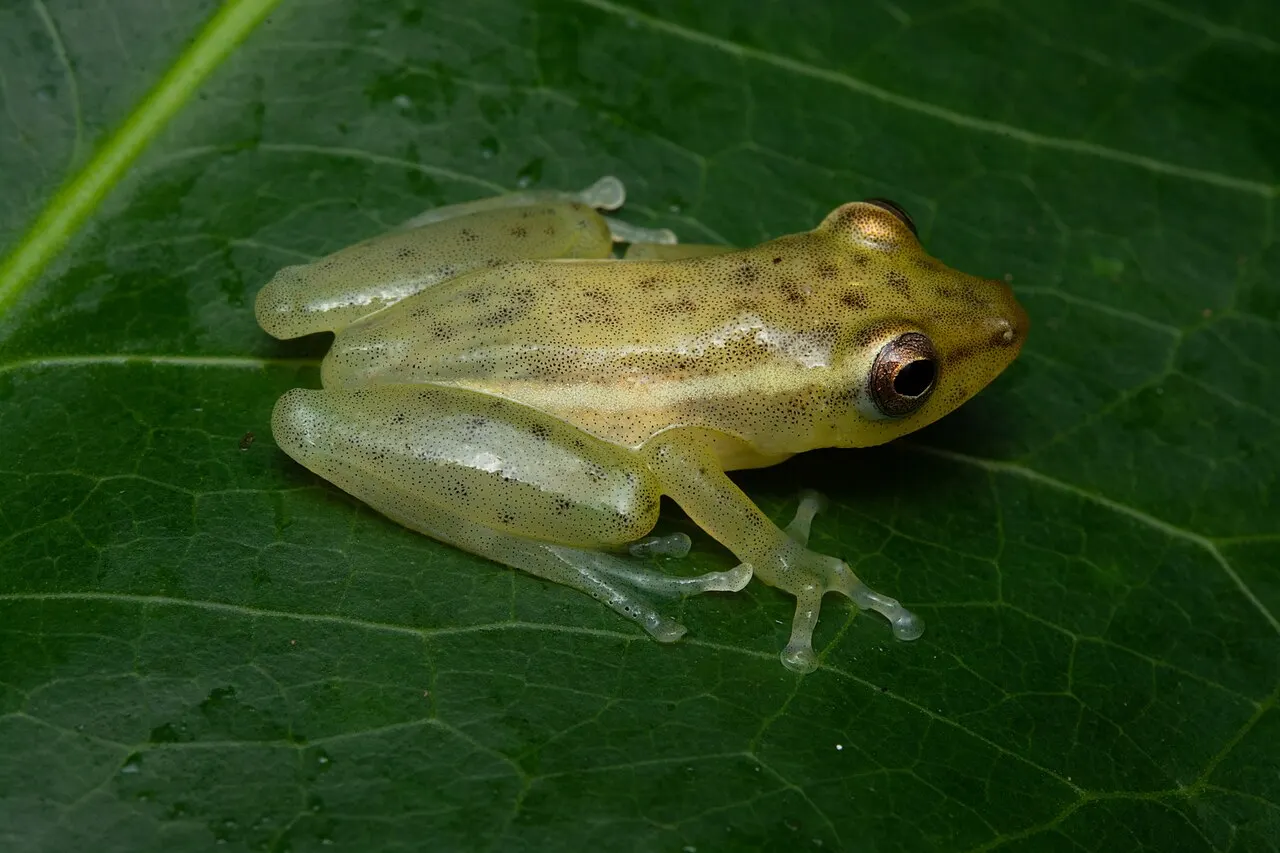
Critically Endangered
Ngezi Reed Frog
Hyperolius watsonae
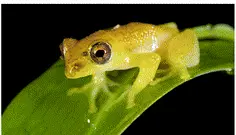
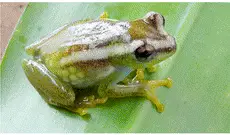
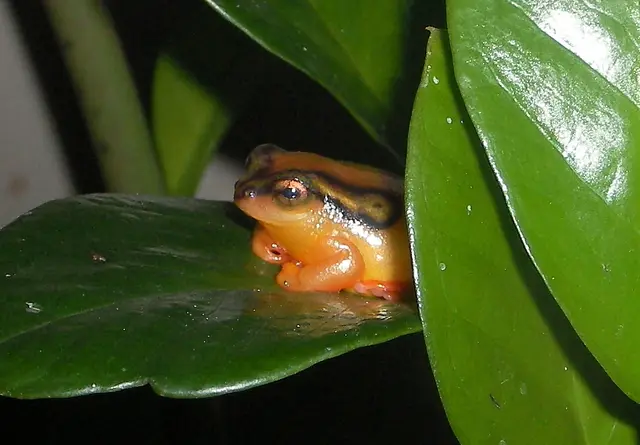
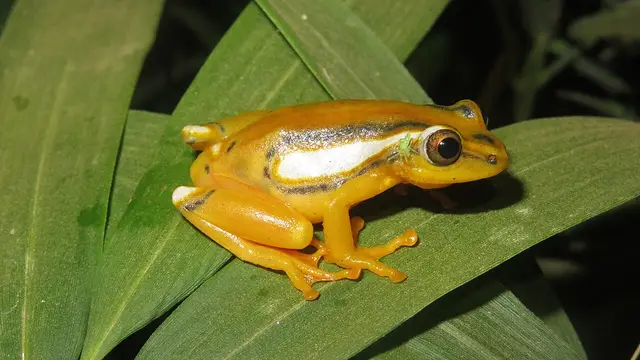
The Ngezi reed frog, also called Watson's reed frog, is a forest frog known only from Pemba Island, off the coast of Tanzania. It was described as a new species in 2007. The IUCN Red List rates it Critically Endangered, in its 2020 assessment, and it is linked to a single forest reserve.
Where it lives
The species was named by Pickersgill in 2007 and belongs to the reed frog family, Hyperoliidae. Its type locality is the Ngezi Forest Reserve on Pemba. Conservation reporting describes it as an endemic frog of the moist forest at Ngezi and says it is known only from Pemba.
Very little else has been published in the sources available. Its size, call, breeding habits and diet are not described there, so how the frog lives day to day remains poorly known.
Pins are Wikidata “endemic to” fields. Orange dots, when present, are GBIF occurrence tiles — survey bias included.
The forest it depends on
The Ngezi-Vumawimbi Nature Forest Reserve is the largest forest remnant on Pemba. Reports give its area as about 1,440 to 1,500 hectares. A botanist working there calls it probably the last large area of evergreen rainforest on the East African coast, and more than 80 plant species new to science have been identified there in recent years.
Other rare species share the reserve. The Pemba flying fox is endemic to it, and the Critically Endangered Pemba featherleg damselfly is known only from Pemba. A rare stand of intsia trees and several endemic plants are also at risk from the planned development.
Ten villages with a combined population of over 20,000, according to Tanzania's 2022 census, surround the reserve. Residents enter it to collect firewood and wild fruit and to visit ancestral graves.
Why it is in trouble
The Red List rating rests on criterion B1ab(iii), which applies to species with a very small range and a continuing decline in habitat quality. With the frog tied to one reserve, a single disturbance could affect much of the population.
A newer concern is the Mantuli resort, planned along about 3 km of Vumawimbi Beach next to the reserve. In September 2025, conservationists and researchers published an open letter in Science opposing the project, and 14 international scientists urged the Zanzibar government to consider relocating it. A narrow forest road was widened and tarred in late 2025, and a wall was built at the reserve's edge in March 2026. One estimate is that the development would affect nearly a quarter of the reserve's tall, mature, closed-canopy trees.
Entomologist Viola Clausnitzer warned that construction would destroy the last remaining habitats of species already on the rim of extinction. Reporting names the reed frog as one that could be at risk.
What is being done
No conservation action aimed at this frog alone appears in the sources available. The frog lives inside a protected forest reserve, yet development presses on its edges.
By early November 2026, heavy machinery had reportedly been removed from the reserve, and sources said no further work had happened since the wall was finished, so the resort looked stalled. Neither the government nor the project owners had published detailed information. Botanists have said they would attempt a rescue of endemic plants if construction begins.
Sources
Written for this catalog in our own words from the sources below, checked against them on 12 November 2026. Population figures are estimates and carry the year they were made. Status and assessment year: IUCN. 2026. The IUCN Red List of Threatened Species. Version 2026-1. iucnredlist.org.