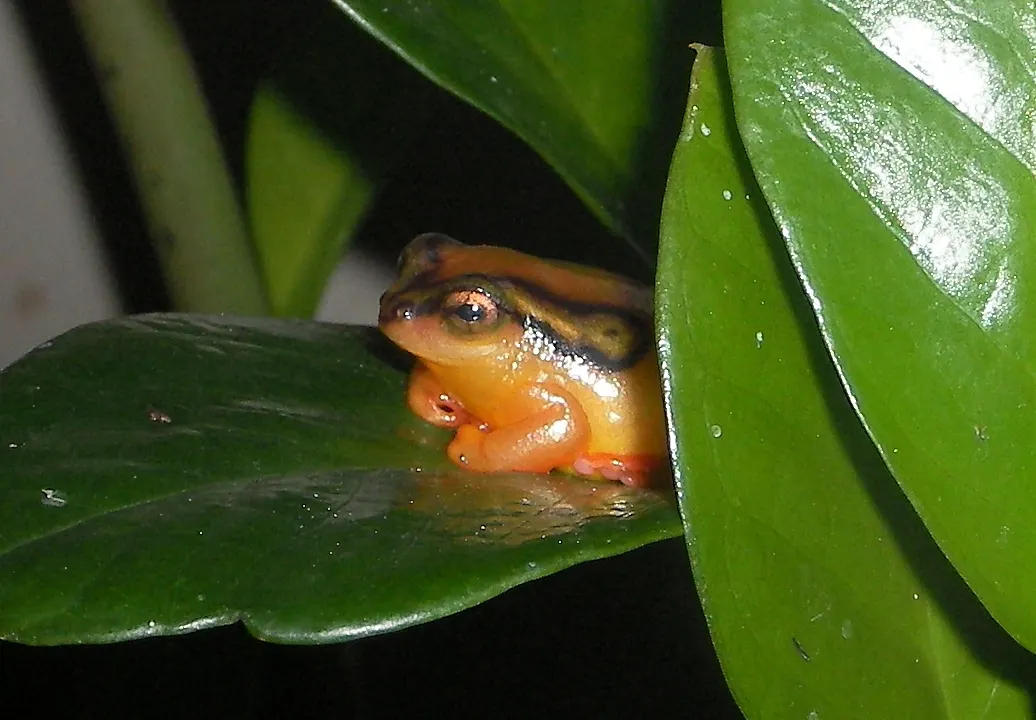
Endangered
Hyperolius puncticulatus
Hyperolius puncticulatus
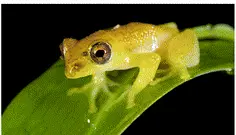
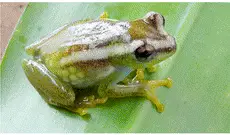
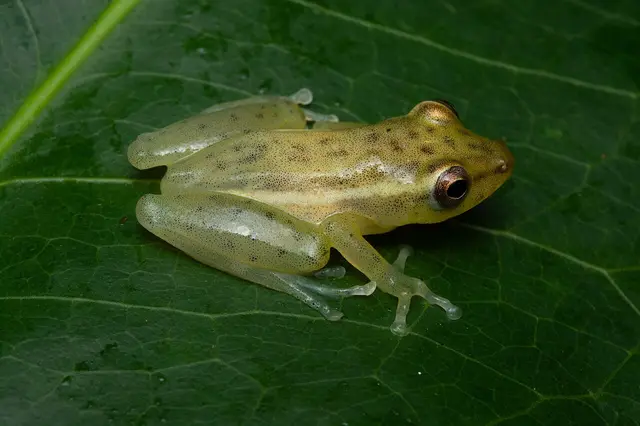
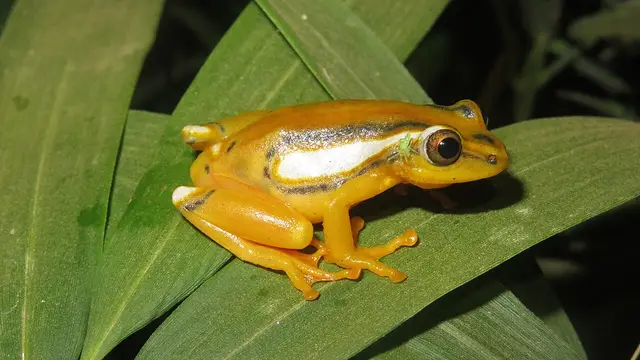
The Zanzibar reed frog (Hyperolius puncticulatus) is a small frog found only on Unguja, the main island of Zanzibar in Tanzania. It lives in forest and bushland at very low elevations and breeds in pools. The IUCN Red List rated it Endangered in 2016, mainly because its habitat is shrinking.
Where it lives
This reed frog is endemic to Unguja, which is the larger island of the Zanzibar archipelago off Tanzania's coast. The Red List puts its extent of occurrence at about 1,625 square kilometres and its elevation range between sea level and 50 metres.
The habitats on record are dry forest, moist lowland forest, subtropical moist shrubland, and small marshes and pools, both seasonal and permanent. A 2025 conservation grant is funding survey work in Masingini Forest Reserve in the west of the island, where researchers will study breeding sites, forest edges and stream-side zones.
Pins are Wikidata “endemic to” fields. Orange dots, when present, are GBIF occurrence tiles — survey bias included.
How it lives
Males call from the vegetation around the pools, and breeding takes place in the water. The Red List marks the species as congregatory, meaning the frogs gather together, which fits frogs concentrating at the few places that hold water.
The species was first described in 1893 by Georg Johann Pfeffer, under the name Rappia puncticulata. It now sits in the reed frog genus Hyperolius, family Hyperoliidae.
Why it is in trouble
Within its small range the frog is reportedly quite common, yet the population trend is listed as decreasing. The assessment gives the criterion as B1ab(iii), meaning a restricted range, few locations and a continuing decline in habitat quality.
The threats listed are small-holder farming, shifting agriculture, small-scale harvesting that harms it unintentionally, tourism and recreation areas, and housing. Each is rated as a low impact on its own, and together they degrade or convert the forest and wetland the frog lives in.
What is being done
The Red List calls for site management, protection of the habitat and protection of the sites themselves, and records that it is unknown whether the frog occurs in a protected area. A project funded in July 2025 through a small conservation grant aims to survey the frog at Masingini Forest Reserve and to raise awareness with local communities about the frog and the forest and stream habitat it depends on.
Sources
Written for this catalog in our own words from the sources below, checked against them on 12 November 2026. Population figures are estimates and carry the year they were made. Status and assessment year: IUCN. 2026. The IUCN Red List of Threatened Species. Version 2026-1. iucnredlist.org.