Endangered
Eleutherodactylus pinchoni
Eleutherodactylus pinchoni
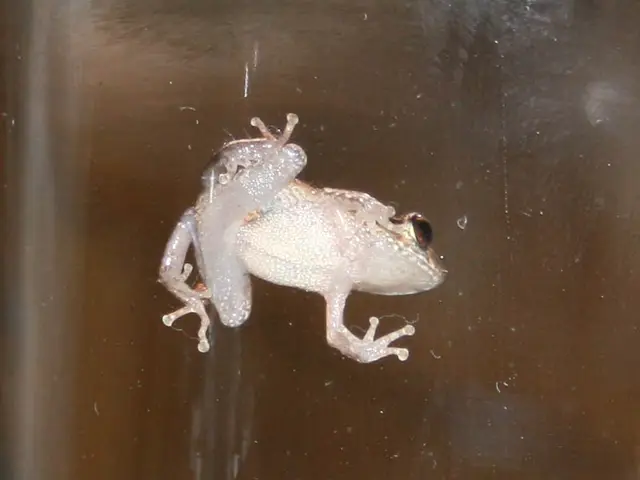
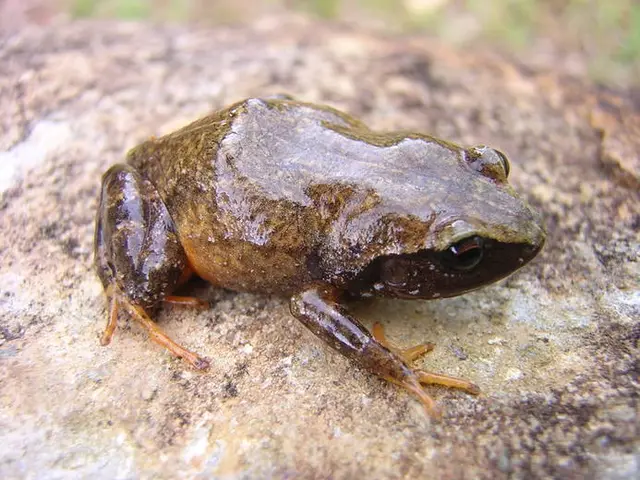
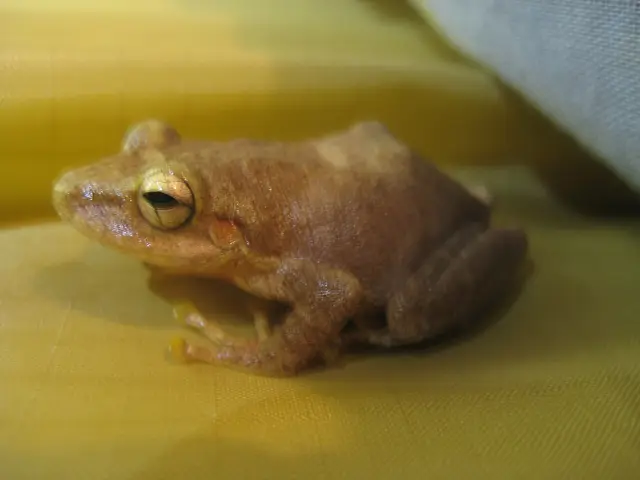
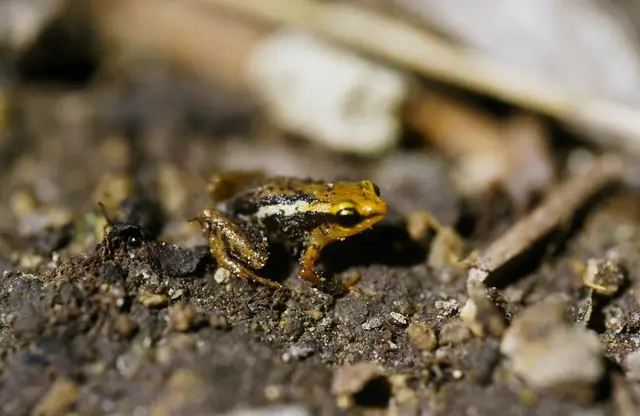
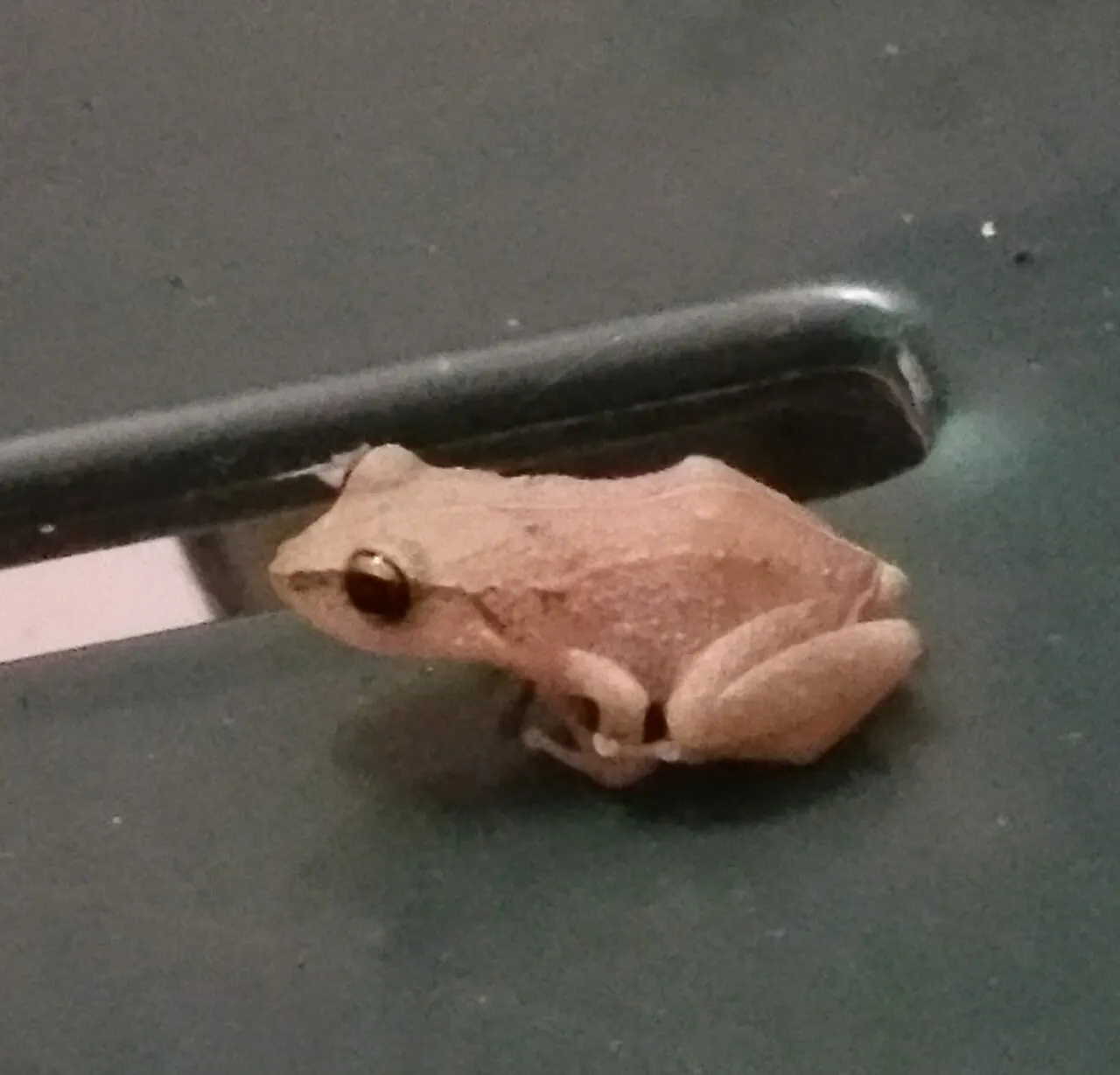
Eleutherodactylus pinchoni is a tiny forest frog found only on Basse-Terre, the western island of Guadeloupe in the French Antilles. Adults measure about 1.4 to 2 cm from snout to vent. The IUCN Red List assessed it as Endangered in 2021 and records its population as decreasing.
How to recognise it
This is one of the smallest frogs in the Guadeloupe archipelago. Males measure 14.4 to 16.0 mm from snout to vent and females 15.2 to 20.2 mm. The smallest egg-bearing female on record was 16.6 mm. The back is a dark wood brown, with patterns that fall into four basic types. The commonest is a pair of broad chevrons with a diagonal bar down each flank. The belly is orange, though dark brown mottling often hides it.
The skin on the back is very finely granular, the fingers are long, slender and unwebbed, and the toes have only vestigial webbing.
Where it lives
It is endemic to Guadeloupe and known only from Basse-Terre. The IUCN assessment gives an elevation band of 180 to 1,467 m and an extent of occurrence of about 489 square kilometres, split among one to five locations. Other accounts give a range from sea level to 1,250 m, so the exact limits vary by source.
It lives on the ground in moist lowland and montane forest, and also persists in secondary forest. The common name, Grand Cafe robber frog, comes from the place near where it was first collected.
Pins are Wikidata “endemic to” fields. Orange dots, when present, are GBIF occurrence tiles — survey bias included.
How it lives
Males call from the ground or from low plants, and eggs are laid on the ground and on bromeliads. It reportedly eats insects. Little else about its behaviour or life cycle appears in the sources available.
Why it is in trouble
The forest it needs is limited and declining in quality. The assessment lists farming, tourism and housing development, pesticides, introduced species and natural hazards such as drought and volcanic activity. Pesticide pollution from banana plantations and introduced rats, cats and mongooses are also reportedly a problem.
The introduced frog Eleutherodactylus johnstonei appears to be displacing it. The Red List records a continuing decline in both habitat area and population.
What is being done
The frog occurs in at least one protected area, and a Guadeloupe biodiversity portal describes it as a protected species. The assessment lists site protection, site management and captive breeding among the actions needed. No species-specific recovery programme is recorded as running.
Sources
Written for this catalog in our own words from the sources below, checked against them on 12 November 2026. Population figures are estimates and carry the year they were made. Status and assessment year: IUCN. 2026. The IUCN Red List of Threatened Species. Version 2026-1. iucnredlist.org.