Endangered
Raorchestes sushili
Raorchestes sushili
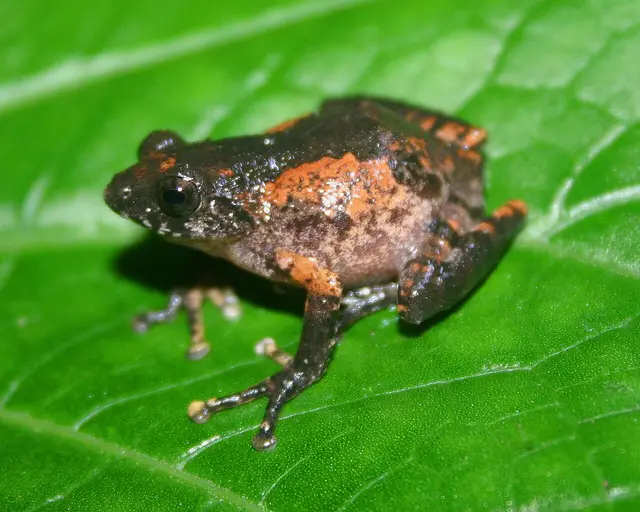
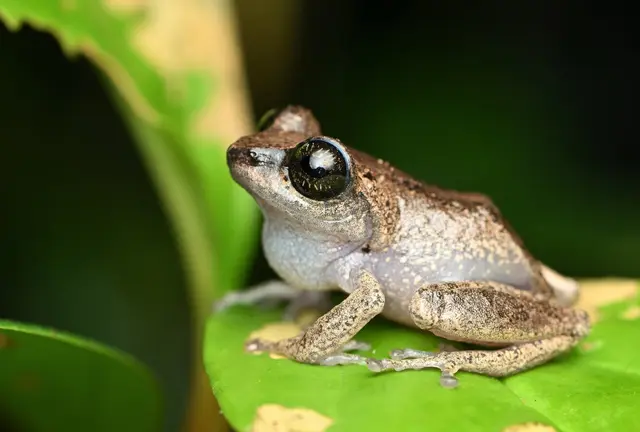
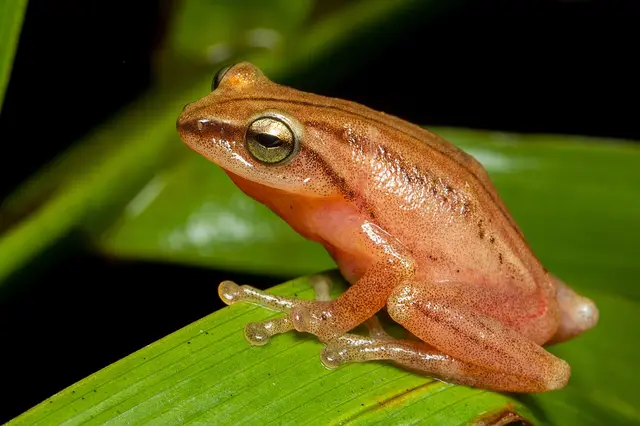
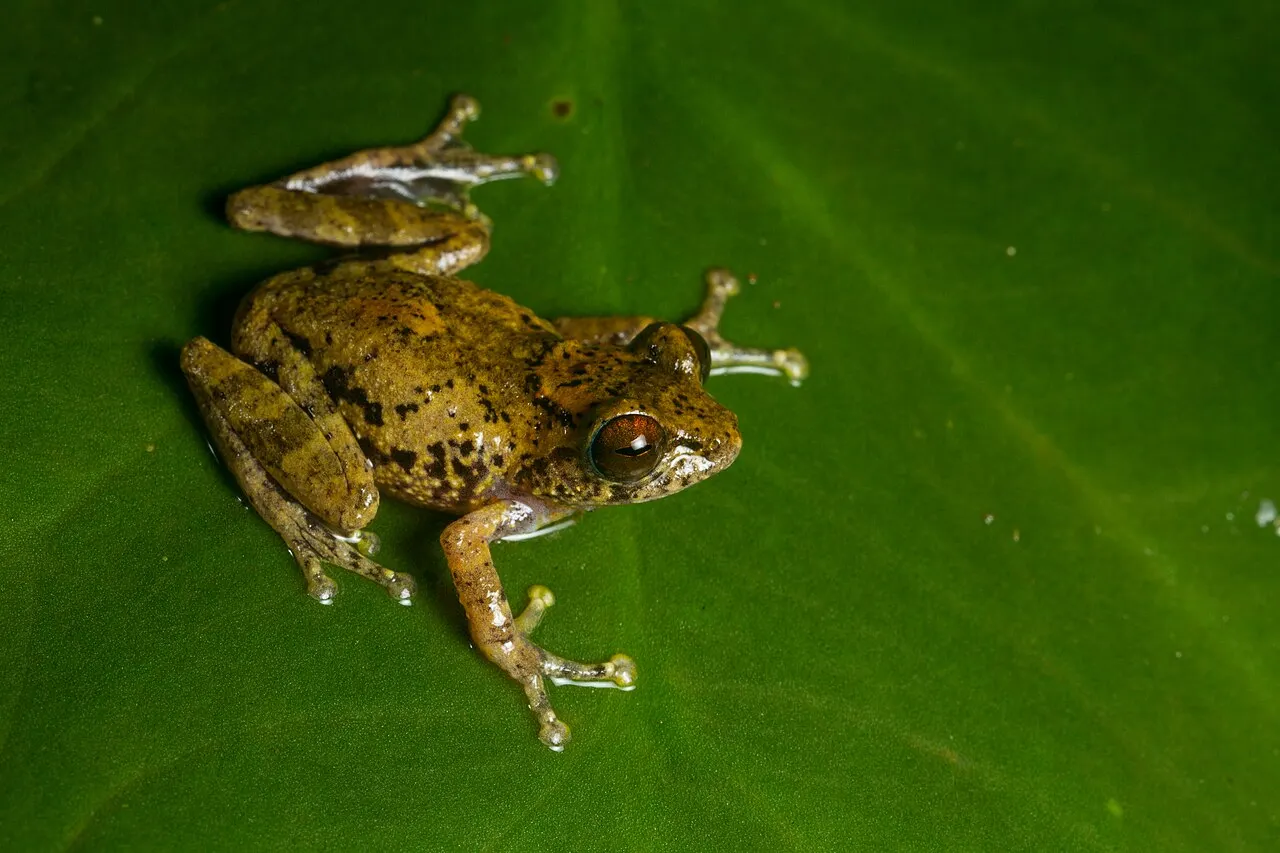
Sushil's bush frog (Raorchestes sushili) is a small tree frog from the wet evergreen forests of the southern Western Ghats, India. The IUCN Red List assessed it as Endangered in 2023 because its range is small, broken up and shrinking.
How to recognise it
Sushil's bush frog belongs to Raorchestes, a group of small, mostly tree-dwelling frogs. Adults across the genus measure roughly 15 to 45 millimetres from snout to vent, and no size is recorded for this species alone. The species sits on leaves and stems about 1 to 3 metres above the ground.
It was formally described in 2009 by Sathyabhama Das Biju and Franky Bossuyt, in a paper in the Zoological Journal of the Linnean Society that named 12 new Western Ghats frogs. They placed it in the genus Philautus. It was later moved to Raorchestes, a genus erected in 2010.
Where it lives
The frog is endemic to India. It was described from the Andiparai Shola, a forest patch in the Valparai municipality of Coimbatore district, Tamil Nadu, and is reportedly known only from there. The Red List also gives Kerala as part of its range. It has been recorded from evergreen forest between 1,000 and 1,600 metres above sea level, and the estimated extent of its range is about 2,565 square kilometres.
Reportedly it has not been found in disturbed habitat. The Red List describes its population as severely fragmented.
Pins are Wikidata “endemic to” fields. Orange dots, when present, are GBIF occurrence tiles — survey bias included.
How it lives
Eggs of this species develop directly, as in the rest of the genus. They hatch into tiny froglets, with no free-swimming tadpole stage, so the frog does not need a pond or stream to breed. Raorchestes frogs are largely nocturnal, and males call using a large, see-through vocal sac. The call and breeding season of this particular species have not been described.
Why it is in trouble
The Red List records a decreasing population, and loss of habitat to farming drives it. Both large-scale and small-holder farming affect the majority of the species' range (50 to 90 percent). Pesticide and herbicide use is also listed as an ongoing, low-impact threat.
Disease is a possible concern. The assessment lists the chytrid fungus Batrachochytrium dendrobatidis as a threat, noting it has been found in other Raorchestes species, and how much it affects this frog is unknown. Climate-driven habitat shifts are listed as a future threat with negligible impact.
These pressures sit within a wider picture. The Western Ghats hold 121 amphibian species, 94 of them found nowhere else (a 2010 report), and forests there were heavily fragmented by clearing for plantations.
What is being done
Between 91 and 100 percent of the population is estimated to live inside protected areas, a real advantage for a species with a small range. Beyond that, the assessment records no area-wide management plan, no invasive species control and no captive breeding. Site and area management is the one conservation action listed.
Sources
Written for this catalog in our own words from the sources below, checked against them on 12 November 2026. Population figures are estimates and carry the year they were made. Status and assessment year: IUCN. 2026. The IUCN Red List of Threatened Species. Version 2026-1. iucnredlist.org.